How to Sell Bags Online: Cost, Setup & Marketing Tips
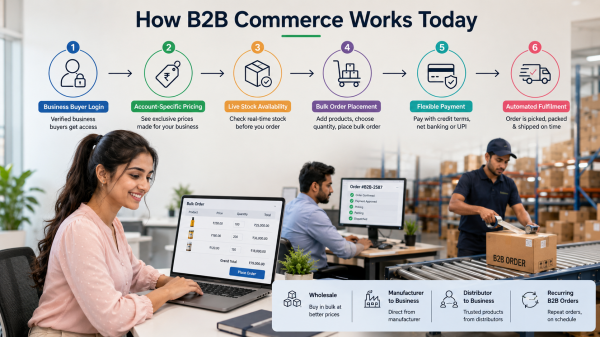
What Does It Mean to Sell Bags Online? Selling bags online means listing handbags, totes, backpacks, travel bags, or other bag categories on a branded ecommerce website or marketplace and shipping orders to customers worldwide. Successful online bag sellers operate their own branded store, photograph products consistently, accept multi currency payments, and use search content, short video, and paid ads with Facebook Pixel and Google Merchant Center to drive consistent traffic and repeat orders. |
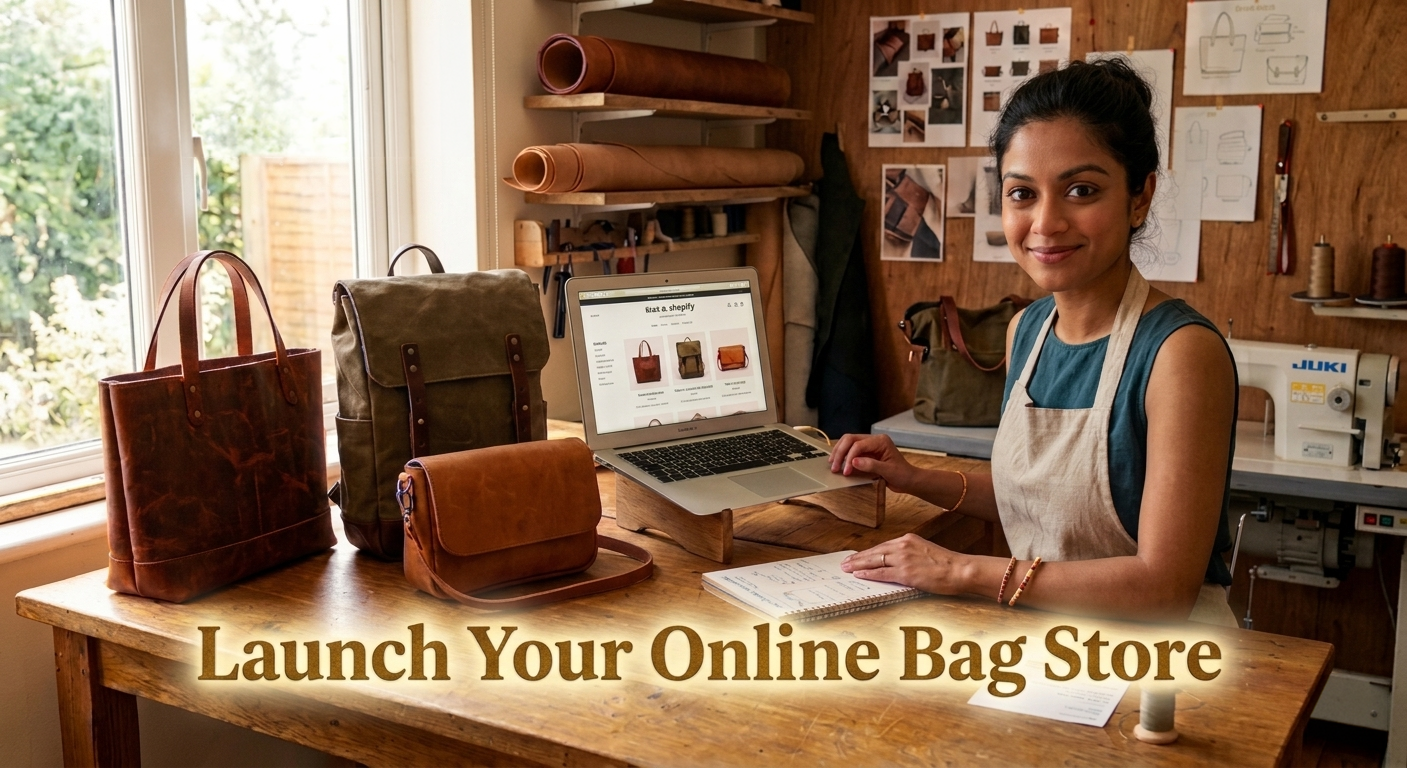
If you have been running a bag business offline, watching customers scroll their phones in your shop and order similar products from a website, you already know where the market has moved. Working out How to Sell Bags Online is no longer optional for established retailers, manufacturers, or wholesalers. It is the next channel, and increasingly it is the largest one.
This guide is built differently from a generic e-commerce playbook. It treats the move online as a real construction project, not a marketing exercise. Four phases. Foundation. Build. Launch.
Grow. Each phase covers what you do, what it costs, and what tends to go wrong. By the end you will have a clear blueprint for moving your bag business online and a realistic view of what the work actually involves.
Before we start, a useful reality check. Bags are one of the highest performing online categories in fashion. They travel well in transit, sit photogenically, and customers buy them as gifts, replacements, and aspirational purchases throughout the year. The opportunity is real. The execution decides whether your business captures it.
Who Should Read This Guide and Who Can Use Shopaccino for It?
This blueprint is written for established bag businesses ready to move online. Specifically, the readers most likely to benefit are:
- Offline retailers selling bags in city shops or shopping districts who want to expand beyond walk-in customers
- Bag manufacturers and factories supplying retailers who want to add a direct-to-customer channel without giving up wholesale
- Wholesalers and distributors building a branded D2C presence alongside their bulk business
- Established leather goods workshops and craft-based bag makers are ready to reach buyers worldwide
- Exporters with existing manufacturing capacity who want to launch their own online label
- Multi-outlet retail brands are moving from offline retail to a hybrid retail and online model
Ready to build your store first? Start with our Bags Ecommerce Website Builder and come back to this guide for the full marketing playbook. Shopaccino is SaaS ecommerce software that anyone running an established bag business can use to build a branded online store on their own domain. The same store builder used for fashion, electronics, home decor, beauty, marble and stone, or B2B trading also supports bag sellers, with each bag listed as a product in the catalogue. Shopaccino is not built for first-time entrepreneurs without inventory or operations. It is built for businesses with existing supply, ready to add an online bag business channel to what they already do.
Important Clarification on Shopaccino Shopaccino is SaaS ecommerce software for building an online store. It provides the storefront, the dashboard, the integrations, and the order workflows. It does not source bags, run marketing, or promise sales. The platform gives you the foundation. The product, the brand, the customers, and the growth remain yours to operate. |
PHASE 1 • Foundation
Before you list a single bag online, the work in this phase decides whether the launch is built on solid ground or on assumptions that collapse three months later. Foundation is about defining what you sell, who buys it, and how the maths actually works.
What Type of Bag Niche Should You Choose to Sell Online?
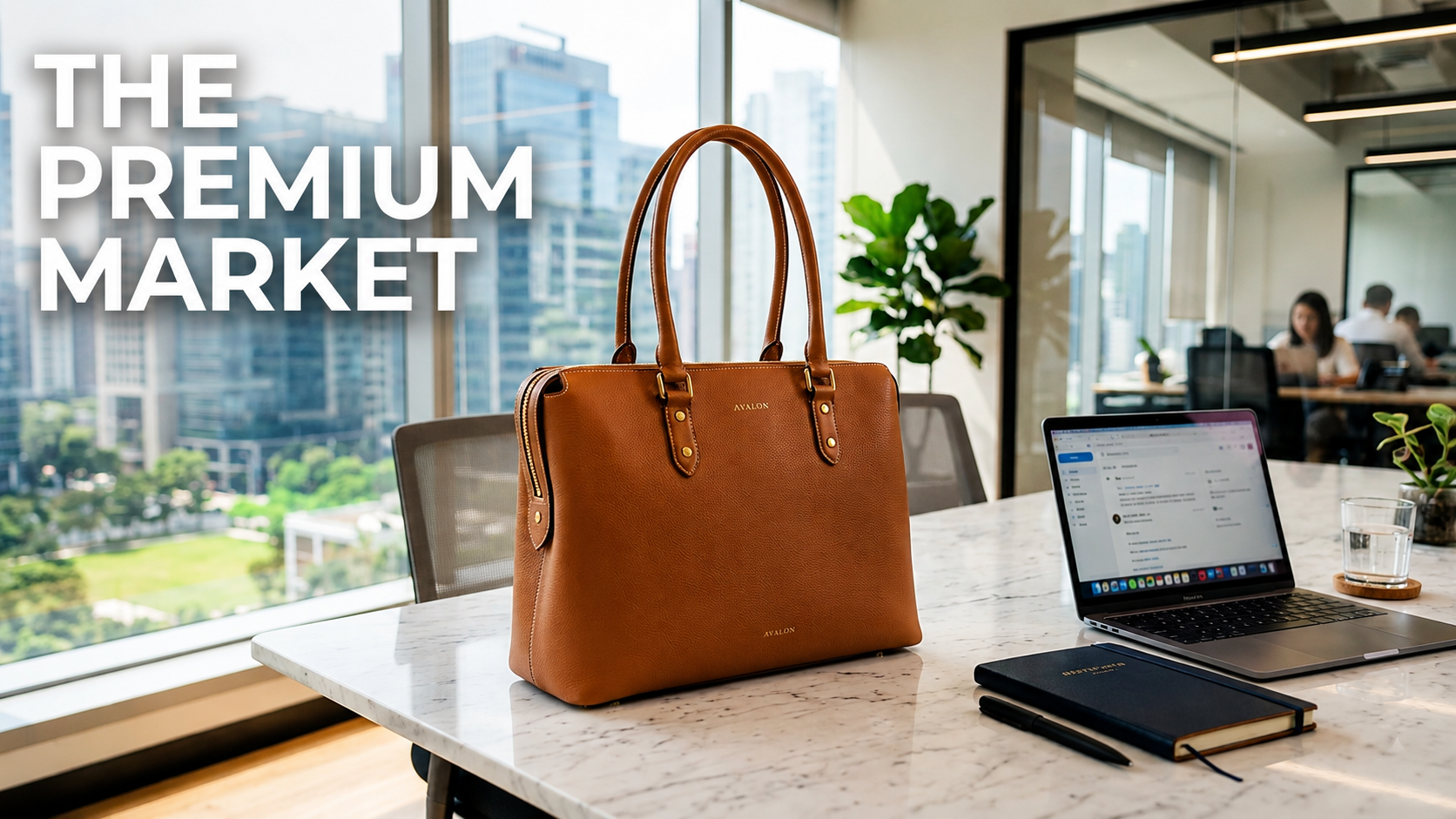
Bags is not a niche. Hand stitched leather totes for working professionals aged 28 to 45 is a niche. Niches that are working consistently for online bag sellers worldwide today include:
- Premium leather handbags and totes for working professionals
- Backpacks for digital nomads, students, or commuters with laptop pockets and tech features
- Vegan and sustainable bags in cork, recycled canvas, or plant based leather
- Travel bags including duffels, weekenders, and structured cabin luggage
- Handcrafted ethnic and regional bags like Kantha, jutti style clutches, or Banjara work
- Gym, sports, and athleisure bags with technical fabric and dedicated compartments
- Children's school bags and themed daypacks
- Wholesale and B2B bag ranges sold to retailers in bulk
The niche decides almost everything that follows. Photography style. Ad creative. Pricing. Return policy. Trying to sell every type of bag to every buyer is the fastest way to be invisible in search and confused in branding. Pick one. Build there. Expand later from a position of strength.
How Much Does It Cost to Start an Online Bag Business?
Costs vary based on scale, niche, and country, but here is a realistic monthly cost picture for a serious bag ecommerce store in its first six months. All figures in USD to keep things globally relevant.
Cost Category | Range (USD per month) | Notes |
|---|---|---|
Ecommerce platform subscription | 20 to 200 | Depends on plan tier and feature needs |
Domain name | 1 to 2 | Annual cost averaged monthly |
Product photography setup | 100 to 400 one time | Phone, tripod, lights, backdrop |
Payment gateway fees | 1.5 to 3 percent per order | Varies by method and region |
Inventory (initial stock) | 1,000 to 8,000 one time | Depends on niche and price point |
Packaging materials | 0.50 to 2 per order | Branded dust bag, mailer, insert |
Shipping (charged to customer) | Recovered in order | Build into pricing or charge separately |
Paid ads (optional, early) | 200 to 1,500 | Scale only after first organic traction |
Email and tools | 20 to 80 | Email marketing, analytics, basic apps |
A bootstrapped launch can stay under 2,000 USD in initial outlay for an established offline business already holding stock. A funded launch with paid ads and professional photography typically sits between 5,000 and 15,000 USD across the first quarter. The biggest hidden cost is almost always inventory variety. Resist stocking 80 designs at launch. Start with 12 to 20 hero products. Add range based on what sells.
Reality Check An offline bag retailer with existing stock can move online for the cost of the platform subscription, a basic photography setup, and a few weekends of work. The shop you already run becomes the warehouse, the brand story, and the fulfilment point. This is not a startup investment. It is an extension of an existing business. |
PHASE 2 • Build
With foundation set, the next phase is constructing the actual store. This is where most retailers underestimate the work, then overestimate the difficulty. A modern ecommerce platform handles the technical complexity. The work that remains is operational.
How Do You Photograph Bags Properly for an Online Store?
In bag ecommerce, the photo is the product. Customers cannot touch the leather, feel the weight, or open the zippers. The photography compensates. The minimum viable photo set for each bag includes:
- Hero shot at three quarter angle on a clean cream or grey background
- Front and back flat views
- Top down shot showing inside compartments and lining
- Close up details of stitching, hardware, and brand label
- Strap and handle detail showing how the bag is carried
- On model lifestyle shot showing real scale and how the bag looks worn
- A short 8 to 12 second video showing the bag from multiple angles
You do not need a studio. A window with north facing daylight, a white wall, a tripod, and a phone with a good camera will produce better results than expensive equipment used inconsistently. Consistency across all products matters more than peak quality on any single product. A catalogue with consistent styling looks like a brand. A catalogue mixing studio shots, phone photos, and stock images looks like a marketplace listing.
What Features Should Your Bag Selling Website Include?
Bag ecommerce has specific feature needs that go beyond a generic product website. Some features that matter less elsewhere become essential here. The list below covers what genuinely matters.
How Should You Manage Product Listings and Variants?
Bags often have variants. Multiple colours per design. Different leather finishes. Custom monograms. The platform must handle these as variants under one product, not as separate product listings. Variant management also feeds into inventory accuracy and product page clarity.
Why Do High Quality Image Galleries Matter So Much?
Each product page should support six to ten images with zoom, swipe on mobile, and fast loading. A bag listing with one small thumbnail will not sell, regardless of how good the product is.
Which Payment Gateways Should You Integrate for Global Buyers?
Cards. Wallets. UPI for buyers in India. Net banking. EMI for premium pricing. International payment processors for cross border buyers. The wider the payment support, the wider the customer base you can serve.
Do You Need Multi Currency and Multi Language Support?
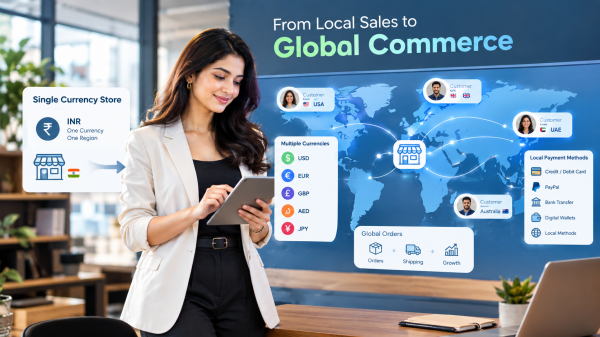
If you plan to sell handbags worldwide, multi currency pricing matters. A buyer in Berlin should see EUR. A buyer in Toronto should see CAD. Some platforms auto detect location and display the correct currency. Manual currency switchers also work for stores serving multiple regions.
How Important Is a Clear Return and Exchange Policy?
Bag buyers worry about size, colour accuracy, and quality versus the photograph. A clearly stated return and exchange policy on every product page, in plain language, increases conversion. Hide the policy in a footer link and watch first time buyers walk away.
Why Does Mobile First Design Matter?
Most bag browsing happens on phones. The product gallery, the size selector, the cart, and the checkout all need to work smoothly on small screens. Test every step on a real phone, not just on a desktop browser's mobile preview.
What Does Built In Inventory Management Need to Do?
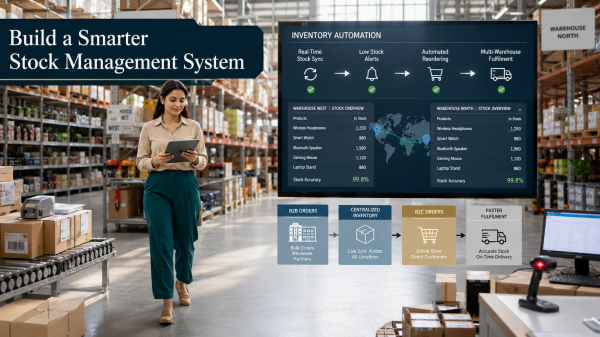
Real time stock updates prevent the worst customer experience, which is paying for a bag only to receive a cancellation email. Low stock alerts help you reorder bestsellers before they run out.
How Should Order Management and Shipping Integration Work?
A single dashboard where every order, payment status, customer detail, and shipping label sits together. Integrations with major couriers for global shipping. Tracking notifications that go to customers automatically.
How Shopaccino Fits Here Shopaccino is SaaS ecommerce software that provides each of these capabilities natively. Branded storefronts on your own domain. Product catalogues with size and colour variant management. Native payment integrations across cards, UPI, wallets, net banking, and international gateways. Multi currency support for global selling. Mobile responsive themes. Built in inventory, order management, and shipping connections. Zero transaction fees on the platform itself. |
PHASE 3 • Launch
With foundation built and the store constructed, launch is where intent becomes commerce. The first 60 days post launch are operationally intense. Treat them as a system test, not a finish line.
How Do You Price Bags for Profit, Not Just for Sales?
Pricing is where many bag sellers quietly sabotage themselves. They look at a similar bag on a marketplace, undercut by 10 percent, and call it competitive. By month three, they realise the maths does not work. Online selling carries hidden costs that retail does not.
A reliable bag pricing formula across most price bands looks like this:
- Step 1: Start with the actual cost of the bag (manufacturing or wholesale).
- Step 2: Add packaging, shipping, payment processing, and replacement reserve (typically 1.6 to 2 times bag cost).
- Step 3: Add the margin you want to keep (40 to 60 percent for D2C bag brands).
- Step 4: Sense check against competing brands at the same quality tier.
That final number, not the bag cost plus a markup, should be your retail price. Brands that learn this in month one usually still exist in year three. Brands that learn it in month nine often do not.
Which Marketing Channels Actually Work for Online Bag Sellers?
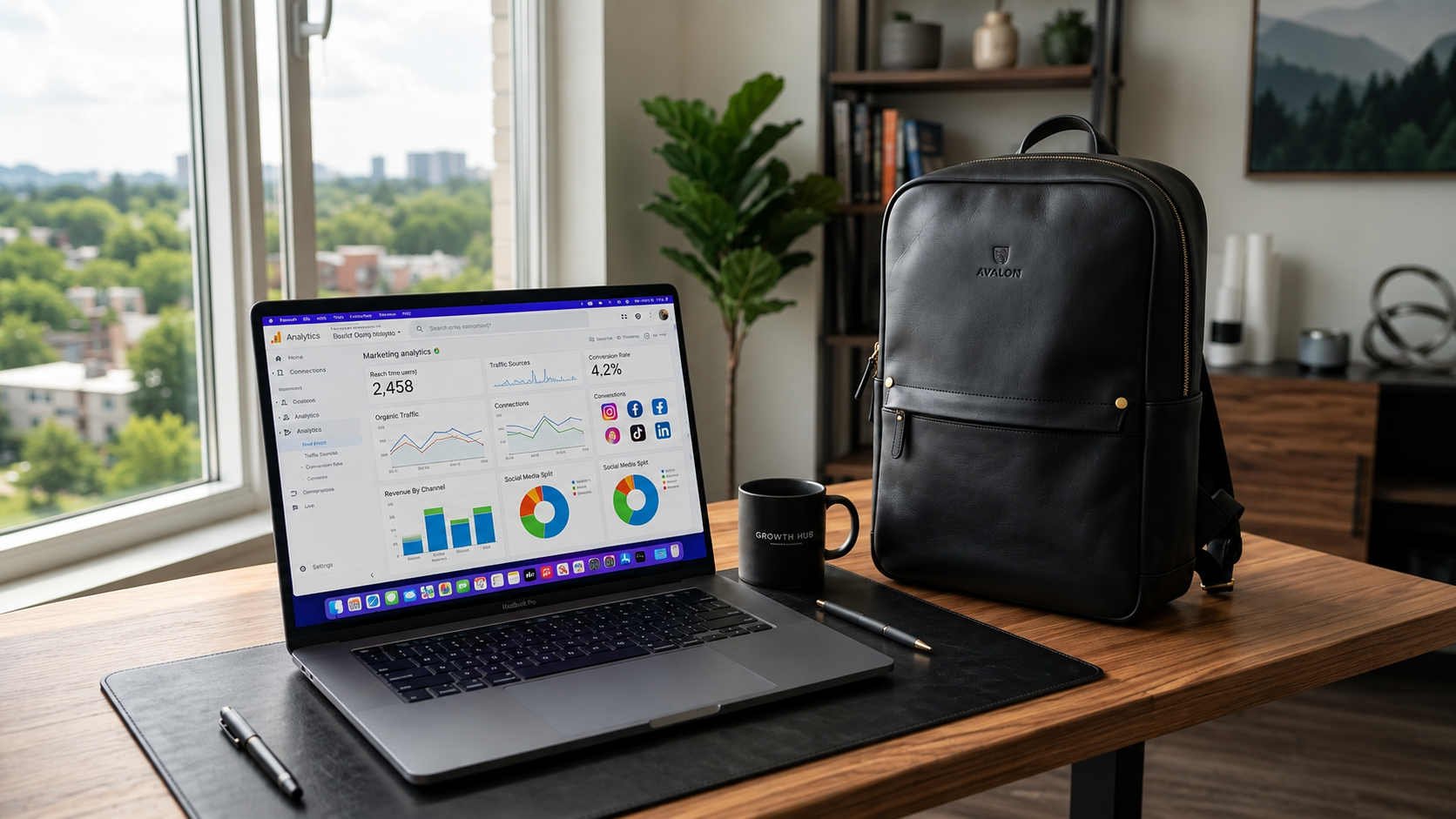
Six channels do most of the heavy lifting for bag businesses. Each one compounds differently, and most of them connect directly to features inside a modern e-commerce platform like Shopaccino. Set up the channel inside the store once, then run it consistently.
Which Short Form Video Platforms Work Best for Selling Bags?
Instagram Reels, TikTok, and YouTube Shorts are the most efficient discovery channel for bags currently. On hand product videos, packing videos, and lifestyle clips outperform polished promotional content. Each video has a chance to reach buyers who never searched for your brand. Add the direct product link from your Shopaccino store to the video caption or bio, and use UTM tags so you can see which videos drove which orders in your analytics dashboard.
How Does Search Engine Content Drive Bag Sales?
Long form articles answering buyer questions bring high intent traffic for years. Guides on choosing the right tote for work, how to care for leather, and bag size comparisons all attract buyers actively researching purchases. This compounds slowly, then dominates after 6 to 12 months. Shopaccino includes a built in blog module so the content sits on your own domain rather than on a separate platform, which keeps the SEO authority on your store rather than donating it elsewhere.
Why Does Email Marketing Outperform Most Channels for Repeat Bag Sales?
Build the email list from day one with a useful offer such as 10 percent off the first order in exchange for an email address. Send a weekly update. New launches. Behind the scenes content. Customer photos. Email consistently outperforms paid ads for repeat customer revenue in bag ecommerce. Shopaccino captures customer emails at signup and checkout, sends automated abandoned cart recovery emails with timed discount coupons, and lets you segment customers by purchase history so the right campaign reaches the right buyer at the right time.
How Do You Set Up Facebook Pixel for Bag Retargeting?
Cold paid traffic is expensive. Retargeting visitors who saw a product page but did not buy is significantly more efficient. The Facebook Pixel is the technology that makes retargeting possible. It is a small piece of code that runs on every page of your store and reports back to Meta whenever a visitor views a product, adds to cart, or completes a purchase. Meta then uses that data to show ads to those visitors on Facebook and Instagram across the next 7 to 90 days, gently bringing them back to the bag they were considering.
For bag sellers, this is one of the highest return paid marketing investments you can make. Bags are considered purchases. Most buyers visit a product page two or three times before ordering. Without retargeting, you lose those buyers. With it, you get a second and third chance to close the sale.
Shopaccino includes a native Facebook Pixel integration. You generate the Pixel ID once inside Meta Business Suite, paste it into your Shopaccino dashboard, and the pixel automatically fires on the right events across your store. No developer needed. From there, you build retargeting audiences in Meta Ads Manager (visitors in the last 30 days, add-to-cart abandoners, past purchasers) and run campaigns targeting those audiences. Spend the first ad budget on retargeting, then expand to cold traffic only when you have data to know what creative and audience combinations actually convert.
How Do You List Bags on Google Shopping with Google Merchant Center?
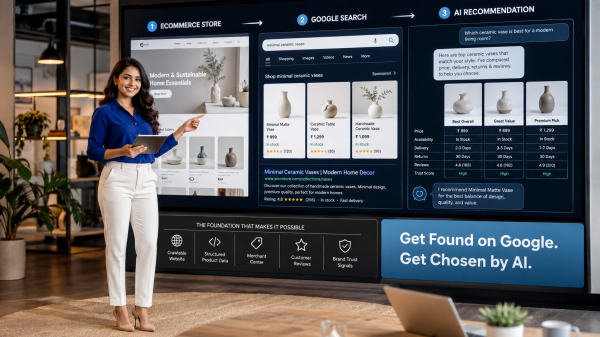
Google Shopping is the visual search experience that appears when someone searches for product queries like 'leather tote bag' or 'travel backpack' on Google. Each result shows a product photo, price, brand name, and a direct link to buy. For bag sellers, this is some of the highest intent traffic available anywhere. Buyers searching this way are very close to a purchase decision.
To appear in Google Shopping results, you list your products through Google Merchant Center. This is a free Google product that holds a structured feed of your bag catalogue (titles, descriptions, prices, photos, availability, shipping rules, and so on). Google then matches those products to relevant searches across Google Shopping, regular search results, the Shopping tab, and Google's image search.
Shopaccino can pass your entire product catalogue directly to Google Merchant Centre, and Google starts indexing your bags within a few days. From there you can run free Shopping listings (no ad spend) and paid Shopping ads when you are ready to scale. Most bag sellers see meaningful traffic from free listings alone within the first month of setup.
The two channels (Facebook Pixel for retargeting and Google Merchant Center for fresh search demand) work well together. Google Merchant Center finds new buyers searching for what you sell. Facebook Pixel brings them back when they did not buy on the first visit. Together they cover both halves of the paid customer journey.
How Do You Make Customer Reviews and Referrals Work for You?
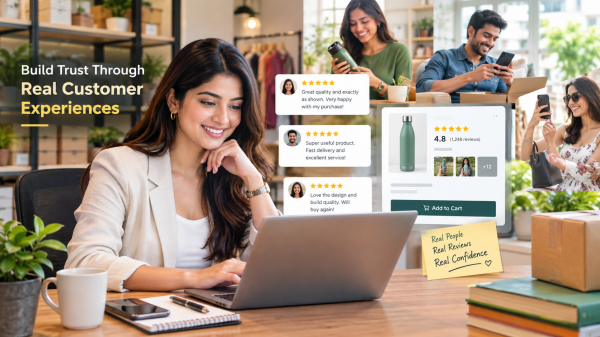
Reviews from real buyers are one of the strongest trust signals on a bag product page. Set up post purchase review request emails that go out 7 to 10 days after delivery, and offer a small discount on the next order for buyers who leave a review with a photo. Customer photos in real settings outperform studio photography on conversion. Shopaccino supports automated review collection workflows and built in coupon discounts that you can attach to review and referral programs.
According to the U.S. Census Bureau Quarterly E-Commerce Report, apparel and accessories (the broader category bags fall into) remain among the largest segments of online retail sales in mature markets, with the share rising steadily each year. Demand is durable. Execution decides whether you capture it.
PHASE 4 • Grow
Once orders are flowing, the next 6 to 18 months decide whether the business stays a side channel or becomes the main one. Growth is not just more traffic. It is better unit economics, deeper customer relationships, and operational systems that hold up at higher volume.
How Do You Turn First Time Buyers Into Repeat Customers?

First time buyers are expensive to acquire. Repeat buyers are pure profit. The post purchase experience decides which group your buyers end up in. The patterns that consistently increase repeat rate in bag ecommerce include:
- Branded packaging that makes unboxing feel like a real brand experience
- A handwritten thank you note in the first 100 orders, even at scale
- Care instructions and a small bag care kit are included with leather products
- Email follow-up 7 days after delivery, asking for honest feedback
- Loyalty discount on the second order, sent automatically 30 days after the first purchase
- Early access to new launches for past buyers, before public release
None of this requires a developer. All of it requires intent. The brands that build the most loyal customer bases in bag ecommerce are typically not the largest. They are the most consistent at small acts that signal real care.
What Are the Common Mistakes Bag Sellers Make Online?
Some mistakes show up across every bag business that struggles to scale. Most are completely avoidable once you know to watch for them.
- Listing 80 products at launch instead of 12 to 20 well-photographed hero items
- Using factory product photos that look identical to ten other brands using the same factory
- Pricing too low because of imposter syndrome rather than maths
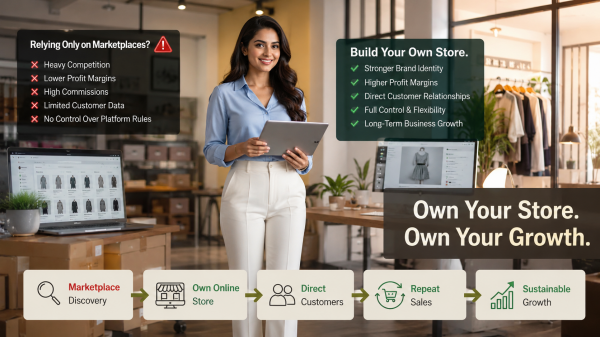
- Selling only on marketplaces and never building a direct customer database
- Treating launch day as the finish line rather than day one of an ongoing business
- Ignoring email, which is consistently the highest return channel for repeat revenue
- Charging customers for return shipping on first orders, which kills first time conversion
- Adding heavy promotional banners that distract from the product photography
- Skipping Facebook Pixel setup and losing the ability to retarget warm visitors
- Not setting up Google Merchant Center and missing the highest intent free traffic available
Trusted Global Resources for Bag Sellers
Government and international body sources worth bookmarking for trade, tariff, and quality guidance relevant to online bag sellers worldwide:
- World Trade Organization
- UNCTAD Ecommerce and Digital Economy
- OECD Digital Economy Policies
- U.S. Census Bureau Quarterly E-Commerce Report
- European Commission Trade and Ecommerce
- World Intellectual Property Organization (WIPO)
Putting the Blueprint Together: What Comes Next?
Working out How to Sell Bags Online rewards businesses that move methodically. Foundation first. Then a properly built store. Then a focused launch with one clear product range and marketing channels set up properly, including Facebook Pixel and Google Merchant Center from day one. Then growth driven by repeat customers and compounding content. None of these phases are glamorous. All of them work.
Shopaccino is SaaS ecommerce software anyone running an established branded handbag store, manufacturer, wholesaler, or leather goods online business can use to build their own branded online store. The platform handles your storefront, your catalogue, your payments, your customer records, your tax handling, native Facebook Pixel and Google Merchant Center integrations, and the order communication that runs in the background. The product, the brand, the supply, and the customer relationships remain yours to build.
Pick a niche. Validate with your existing offline customers first. Build the store carefully. Launch with 12 to 20 hero products. Set up retargeting and Google Shopping early. Take real orders. Reply to every customer like the relationship matters. Refine the website monthly. That is how a small bag business becomes a real bag brand, one well shipped order at a time.
FAQs
Yes. Bags are one of the higher margin online fashion categories, with gross margins typically between 50 and 70 percent for well operated D2C bag brands. Profitability depends on product cost discipline, packaging restraint, and repeat purchase rate. Brands that crack repeat purchases past 25 percent typically become highly profitable within 12 to 18 months.
Yes. Most countries require basic business registration before you can accept online payments. The exact form varies by country and turnover. Consult a chartered accountant or business advisor in your region. Tax registration (GST, VAT, sales tax) may also be required depending on where you sell and how much you turnover.
With an established offline business and existing stock, you can launch a branded online store within two to four weeks on a modern SaaS platform. Photography, product entry, payment setup, shipping configuration, Facebook Pixel installation, and Google Merchant Center listing are the main time consumers. Custom development projects take three to six months minimum and are rarely needed for bag ecommerce today.
Yes. A modern ecommerce platform supports multi currency display, international payment gateways, and integrations with global couriers. The main operational considerations are customs documentation, accurate weight and dimensions on each product, and a clear shipping cost calculator at checkout. Many bag businesses serve buyers across 20 plus countries from a single branded website.
A clear, public return and exchange policy on every product page builds first time buyer trust. Offer 7 to 15 day returns on unused products. Cover return shipping on first orders to reduce purchase hesitation. Process refunds back to the original payment method through your platform's order screen. Document the policy publicly so customers know what to expect.
Facebook Pixel is a small piece of code that runs on your ecommerce store and reports visitor activity back to Meta. It tracks who viewed which product page, who added to cart, and who completed a purchase. Bag sellers use this data to retarget visitors who left without buying, with targeted Facebook and Instagram ads showing the bag they were considering. Retargeting consistently delivers 3 to 5 times better return on ad spend than cold traffic for bag businesses.
Selling bags online in India works best with GST-compliant invoicing, UPI and cash-on-delivery support since both remain high-usage payment methods, and courier partners experienced with fragile leather and hardware components. Platforms like Shopaccino include India-specific payment gateways and shipping integrations out of the box.