
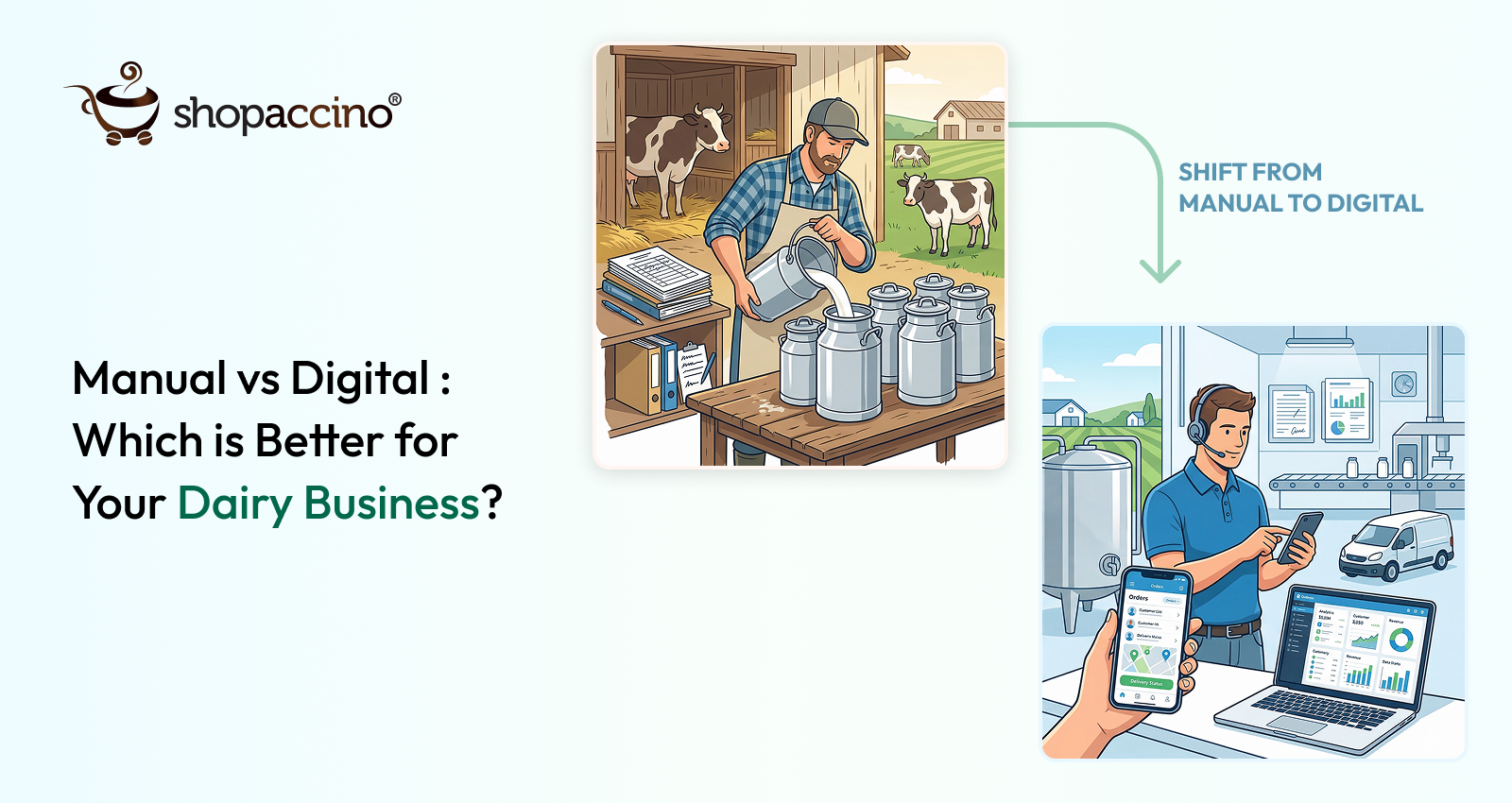
Milk Delivery Software vs Manual Management: Which Is Right for Your Dairy Business?
The dairy industry has traditionally relied on manual processes for managing daily milk distribution. Many dairy businesses still depend on notebooks, spreadsheets, phone calls, and physical records to track milk orders, customer subscriptions, delivery routes, and payments.
While these traditional methods worked for small operations in the past, they often create challenges as dairy businesses grow. Managing hundreds of customers, handling daily milk delivery schedules, and tracking payments manually can become complicated and time-consuming.
Today, many dairy businesses are turning to digital tools to simplify their operations. One of the most effective solutions is Milk Delivery App Development, which helps automate and organize the entire milk distribution process.
Instead of managing deliveries and customer records manually, dairy businesses can use software to track subscriptions, manage deliveries, handle billing, and monitor payments from one centralized system.
In this article, we will explore the differences between manual dairy management and digital milk delivery systems, and why many dairy businesses are choosing digital solutions to improve efficiency and scalability.
How Traditional Milk Delivery Management Works
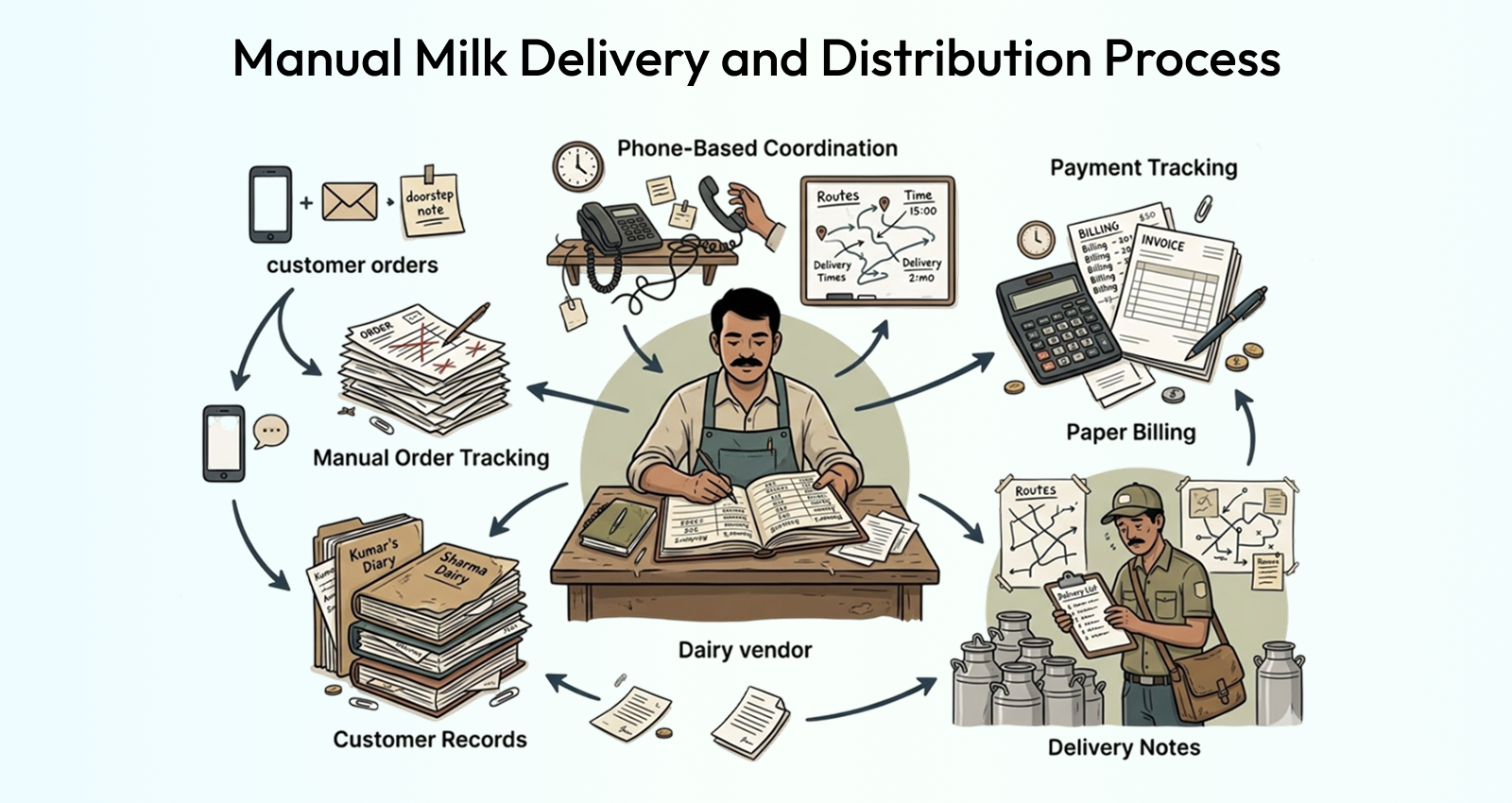
For decades, milk delivery businesses have operated using manual systems. Dairy vendors typically maintain physical registers to track customers, delivery schedules, and payment records.
A typical manual workflow often includes several steps.
- Recording customer details in notebooks
- Tracking daily milk delivery quantities manually
- Maintaining paper records of payments and outstanding balances
- Coordinating delivery routes through phone calls or written notes
- Calculating monthly bills manually
Although this system may work for small operations with a limited number of customers, it becomes increasingly difficult to manage as the business grows.
Manual management often leads to inefficiencies and errors that can affect both business operations and customer experience.
Challenges of Manual Dairy Business Management
Manual processes may appear simple, but they can create several operational challenges for dairy businesses.
Some of the most common issues include:
Order Tracking Errors
When customer orders are recorded manually, it becomes easy to make mistakes. Incorrect delivery quantities or missed orders can lead to customer dissatisfaction.
Payment Tracking Difficulties
Keeping track of customer payments manually can be complicated. Dairy businesses may struggle to monitor outstanding balances or generate accurate monthly bills.
Delivery Route Confusion
Without a digital system, managing delivery routes can become inefficient. Delivery staff may not have clear schedules, which can lead to delays or missed milk deliveries.
Limited Business Insights
Manual systems do not provide clear insights into business performance. Dairy owners often struggle to track customer growth, delivery trends, and revenue patterns.
These challenges show why many dairy businesses are now exploring digital alternatives.
The Shift Toward Digital Dairy Management
Technology has transformed many industries, and the dairy sector is no exception. As consumer expectations change and businesses scale their operations, digital management systems have become increasingly valuable.
Digital tools allow dairy businesses to automate tasks that were previously handled manually.
Instead of maintaining physical records, businesses can store customer data, delivery schedules, and payment information within a centralized digital system.
This shift toward digital management offers several advantages.
Improved operational efficiency
Automation reduces the time required to manage daily operations.
Better accuracy
Digital systems minimize errors related to billing, delivery tracking, and order management.
Enhanced customer experience
Customers can receive timely updates, accurate billing, and consistent delivery services.
As a result, many dairy businesses are moving toward digital solutions that help streamline their operations.
What Is Milk Delivery Software, Compared to Manual Methods?
Milk delivery software is a specialized digital platform designed to help dairy businesses manage their daily operations more efficiently.
This type of software allows dairy owners to track customer subscriptions, manage delivery schedules, generate bills, and monitor payments through one integrated system.
Instead of relying on manual records, businesses can use software dashboards to manage their operations in real time.
Key functions of milk delivery software include:
- customer subscription management
- delivery route planning
- order tracking and updates
- billing and payment management
- delivery staff coordination
These features allow dairy businesses to operate more efficiently while reducing administrative workload.
Comparing Manual Management vs Digital Milk Delivery Systems
The advantages of digital dairy management become clearer when comparing manual processes with software-based solutions.
|
Management Method |
Manual System |
Digital Milk Delivery System |
|
Customer records |
Paper registers |
Digital customer database |
|
Order tracking |
Manual entries |
Automated order tracking |
|
Billing |
Handwritten calculations |
Automated monthly billing |
|
Delivery coordination |
Phone calls and notes |
Route and schedule management |
|
Business insights |
Limited visibility |
Data and performance analytics |
This comparison highlights why many dairy businesses are choosing to adopt digital tools.
Why Dairy Businesses Are Adopting Technology
Dairy businesses today face increasing competition and growing customer expectations. Consumers expect reliable deliveries, transparent billing, and convenient payment options.
Digital management systems help dairy businesses meet these expectations while improving operational efficiency.
Technology adoption also helps dairy owners focus more on business growth instead of spending time on repetitive administrative tasks.
By implementing digital tools, dairy businesses can improve accuracy, streamline delivery operations, and provide better service to customers.
How Digital Dairy Management Systems Improve Daily Operations
As dairy businesses grow, managing customers, deliveries, and payments manually becomes increasingly complicated. Digital systems help simplify these operations by bringing all business activities into one centralized platform.
Modern dairy management software is designed to automate routine tasks and provide better control over daily milk distribution operations. Instead of maintaining multiple notebooks or spreadsheets, dairy owners can track everything digitally.
This type of system allows businesses to manage customer subscriptions, delivery schedules, billing records, and payments from one dashboard.
By using digital tools, dairy businesses can reduce operational workload while improving service quality.
Some of the most important improvements include:
Automated customer management
Customer records can be stored digitally, making it easy to update addresses, delivery preferences, and subscription plans.
Accurate order tracking
Daily milk orders and quantity changes can be recorded automatically, reducing the chances of delivery mistakes.
Centralized data management
All business data remains organized in one system, allowing dairy owners to monitor operations more efficiently.
These improvements help dairy businesses operate more smoothly and handle larger customer bases.
Key Features That Replace Manual Milk Delivery Management
A modern milk delivery management system includes several features that simplify milk distribution and subscription management.
These features are designed to automate routine tasks while giving dairy owners better control over their business operations.
Subscription-Based Delivery Management
Many milk delivery businesses operate on a subscription model where customers receive milk daily or on specific days.
A digital system allows businesses to manage these subscriptions easily. Customers can update their delivery quantity, pause deliveries, or change schedules without creating confusion for the delivery team.
Automated Billing and Payment Tracking
Generating monthly bills manually can be time-consuming and prone to errors. Digital systems automatically calculate customer bills based on delivery records.
This ensures accurate billing and helps dairy businesses track pending payments more efficiently.
Delivery Route Planning
Delivery staff often need clear schedules and optimized routes to complete deliveries on time.
A digital management system helps organize delivery routes and provides real-time updates to delivery personnel.
This improves delivery efficiency and reduces operational delays.
Customer Notifications
Many digital systems provide automated notifications that inform customers about delivery updates, payment reminders, or subscription changes.
These notifications help maintain clear communication between the dairy business and its customers.
Role of Mobile Apps in Replacing Manual Milk Delivery Processes
Mobile technology has become an important part of modern dairy management systems. Mobile applications allow both customers and dairy businesses to interact with the delivery system more conveniently.
A professional milk delivery app development company typically designs applications that provide separate interfaces for customers, administrators, and delivery staff.
These mobile apps can provide several useful features.
Customer mobile app
Customers can manage their subscriptions, view delivery schedules, update preferences, and make digital payments.
Admin dashboard
Business owners can monitor orders, track deliveries, and manage billing operations.
Delivery staff interface
Delivery personnel can access daily delivery schedules, update order status, and confirm completed deliveries.
Mobile apps improve communication between all stakeholders involved in the milk delivery process.
How Digital Tools Improve Customer Experience
Customer experience plays a crucial role in the success of subscription-based milk delivery businesses. Customers expect reliable service, accurate billing, and convenient payment options.
Digital systems help improve the overall customer experience by providing transparency and convenience.
Important benefits include:
Consistent delivery schedules
Customers receive their milk deliveries on time without confusion or missed orders.
Transparent billing
Digital systems provide clear billing records that customers can review easily.
Flexible subscription management
Customers can modify their milk delivery quantity or schedule through the system.
Digital payment options
Customers can make payments through mobile apps or online payment gateways.
Providing these features helps dairy businesses build trust and maintain long-term customer relationships.
Why Digital Milk Delivery Systems Support Business Growth
As dairy businesses expand their customer base, operational efficiency becomes increasingly important.
Manual systems often limit business growth because they require more time and effort to manage increasing orders.
Digital milk delivery platforms help businesses scale their operations by automating administrative tasks.
Benefits for growing dairy businesses include:
- faster order management
- improved delivery coordination
- Reduced manual errors
- better visibility of business performance
- simplified payment tracking
With digital tools, dairy businesses can handle larger customer volumes without significantly increasing administrative workload.
Advanced Capabilities That Make Digital Milk Delivery Systems More Powerful
As dairy businesses expand their operations, they require more than just basic tools for recording orders and generating bills. Growing milk delivery businesses must handle larger customer bases, complex delivery schedules, and increasing operational demands.
Modern Milk Delivery Software platforms are designed to support these growing needs by providing advanced automation, real-time monitoring, and data-driven decision-making tools.
These capabilities help dairy businesses move beyond manual record keeping and operate with greater efficiency and control.
Intelligent Delivery Route Management
Delivery efficiency is one of the most important aspects of milk distribution businesses. When delivery routes are poorly organized, businesses may face delays, increased transportation costs, and dissatisfied customers.
Digital milk delivery systems often include route management tools that help optimize delivery schedules.
These systems can:
- Organize customer addresses efficiently
- Assign delivery routes to specific delivery staff.
- Reduce unnecessary travel distances.
- improve delivery time management
By optimizing delivery routes, dairy businesses can serve more customers while reducing operational costs.
Real-Time Operational Visibility for Dairy Businesses
One of the biggest limitations of manual dairy management is the lack of clear operational visibility. When businesses rely on notebooks or spreadsheets, it becomes difficult to track daily operations and monitor performance.
Digital systems solve this problem by providing real-time dashboards that display important business information.
Dairy business owners can monitor:
- total daily deliveries
- active customer subscriptions
- pending and completed payments
- delivery staff performance
- daily and monthly revenue
This level of visibility helps business owners make informed decisions and quickly identify operational issues.
For example, if delivery delays occur frequently in certain areas, managers can adjust delivery routes or assign additional staff.
Using Data Insights to Improve Dairy Business Growth
Digital platforms do more than automate operations—they also generate valuable business insights.
These insights help dairy businesses understand customer behavior, delivery patterns, and revenue trends.
For example, data analytics can reveal:
- Which delivery areas have the highest demand
- How customer subscription patterns change over time
- Which products generate the most revenue
- which customers frequently modify delivery quantities
With this information, dairy businesses can make better decisions about expanding delivery routes, introducing new products, or adjusting pricing strategies.
This data-driven approach helps businesses grow more strategically.
How Digital Systems Improve Customer Satisfaction
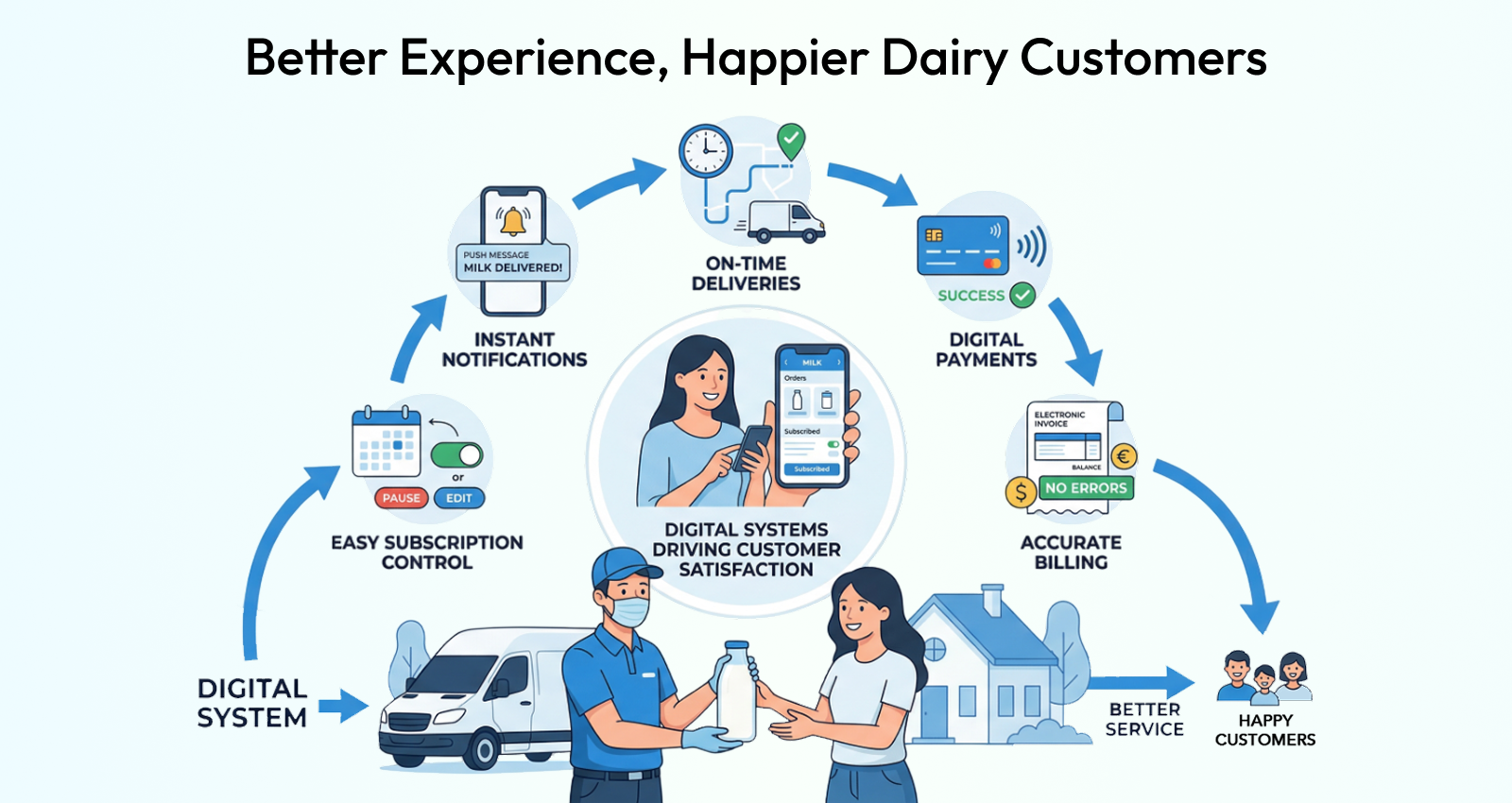
Customer satisfaction plays a major role in the success of subscription-based milk delivery businesses. Customers expect reliable service, accurate billing, and convenient communication with the dairy provider.
Digital milk delivery platforms improve customer experience in several ways.
Transparent Billing
Customers can clearly see their monthly bills, delivery quantities, and payment history. This transparency reduces billing disputes.
Flexible Subscription Management
Customers can modify delivery quantities, pause deliveries during travel, or update their delivery schedule easily.
Automated Notifications
Customers can receive notifications about deliveries, billing updates, and payment reminders.
Convenient Digital Payments
Digital payment options allow customers to pay their bills quickly without needing to visit the dairy vendor physically.
These features improve customer trust and help dairy businesses maintain long-term customer relationships.
Why Dairy Businesses Are Moving Away From Manual Systems
Many dairy businesses are realizing that manual systems limit their ability to grow.
As the customer base increases, maintaining handwritten records becomes inefficient and prone to errors.
Some of the major limitations of manual dairy management include:
- difficulty tracking large numbers of customers
- billing mistakes caused by manual calculations
- inefficient delivery route planning
- lack of real-time business insights
- time-consuming administrative tasks
Digital platforms solve these problems by automating routine processes and organizing operational data efficiently.
This allows dairy business owners to focus more on business growth rather than administrative tasks.
Key Considerations When Moving From Manual to Digital Milk Delivery
Before adopting a digital platform, dairy businesses should evaluate several important factors.
A reliable system should offer features that support both operational efficiency and long-term scalability.
Some important considerations include:
User-friendly interface
The platform should be simple for business owners, delivery staff, and customers to use.
Flexible subscription management
The system should support daily, alternate-day, and custom delivery schedules.
Automated billing and payment tracking
Automated billing reduces manual work and ensures accurate monthly invoicing.
Scalability
The platform should be capable of supporting business growth as customer numbers increase.
Choosing the right software solution ensures that dairy businesses can operate efficiently while preparing for future expansion.
Key Takeaways for Dairy Businesses Going Digital
Digital transformation is becoming essential for dairy delivery businesses that want to improve efficiency and remain competitive.
Important insights include:
- Manual dairy management becomes difficult as customer numbers grow.
- Digital platforms automate delivery scheduling, billing, and payment tracking.
- Route optimization helps reduce delivery time and operational costs.
- Data insights allow businesses to understand demand and plan expansion strategies.
- Adopting digital tools helps dairy businesses scale operations while improving customer service.
Final Thoughts
The dairy industry is gradually moving toward digital management systems as businesses recognize the limitations of manual processes.
Traditional methods may work for very small operations, but they often become inefficient as the business expands.
By adopting reliable Milk Delivery Software, dairy businesses can automate routine tasks, improve delivery efficiency, and provide better service to their customers.
Digital systems not only simplify daily operations but also provide the insights and scalability needed for long-term growth in the modern dairy delivery industry.
FAQs
Milk Delivery Software is a digital platform that helps dairy businesses manage daily milk distribution efficiently. It allows businesses to track customer subscriptions, manage delivery schedules, generate automated bills, and monitor payments from a single system. This reduces manual work and improves the accuracy of dairy operations.
Manual dairy management often leads to errors in billing, missed deliveries, and difficulty tracking payments. Digital systems automate these processes and provide real-time insights into business operations. This helps dairy businesses save time, reduce operational mistakes, and provide better service to customers.
Dairy management software helps businesses organize customer records, track milk delivery quantities, generate monthly bills automatically, and monitor payments. It also helps manage delivery routes and provides useful business insights that allow dairy owners to improve efficiency and scale their operations.
A reliable milk delivery management system should include subscription management, automated billing, delivery route planning, customer notifications, and payment tracking. These features help dairy businesses streamline operations and provide a better experience for both delivery staff and customers.
Yes, digital platforms allow customers to manage their milk subscriptions easily. Customers can update delivery quantities, pause deliveries when needed, or change delivery schedules. This flexibility improves customer convenience and reduces manual coordination for dairy businesses.
Technology helps automate routine tasks such as order tracking, billing, and payment collection. Digital tools also provide delivery route planning and customer notifications. These improvements help dairy businesses operate more efficiently while reducing errors caused by manual processes.
A mobile application allows both customers and dairy businesses to interact with the delivery system easily. Customers can manage subscriptions and payments, while business owners can monitor deliveries and billing. A milk delivery app development company can build applications that support both customer and admin management features.
Yes, digital milk delivery systems are useful for both small and large dairy businesses. Even small dairy vendors can benefit from automated billing, better order tracking, and organized customer records. As the business grows, the software can support larger customer bases and more complex delivery operations.