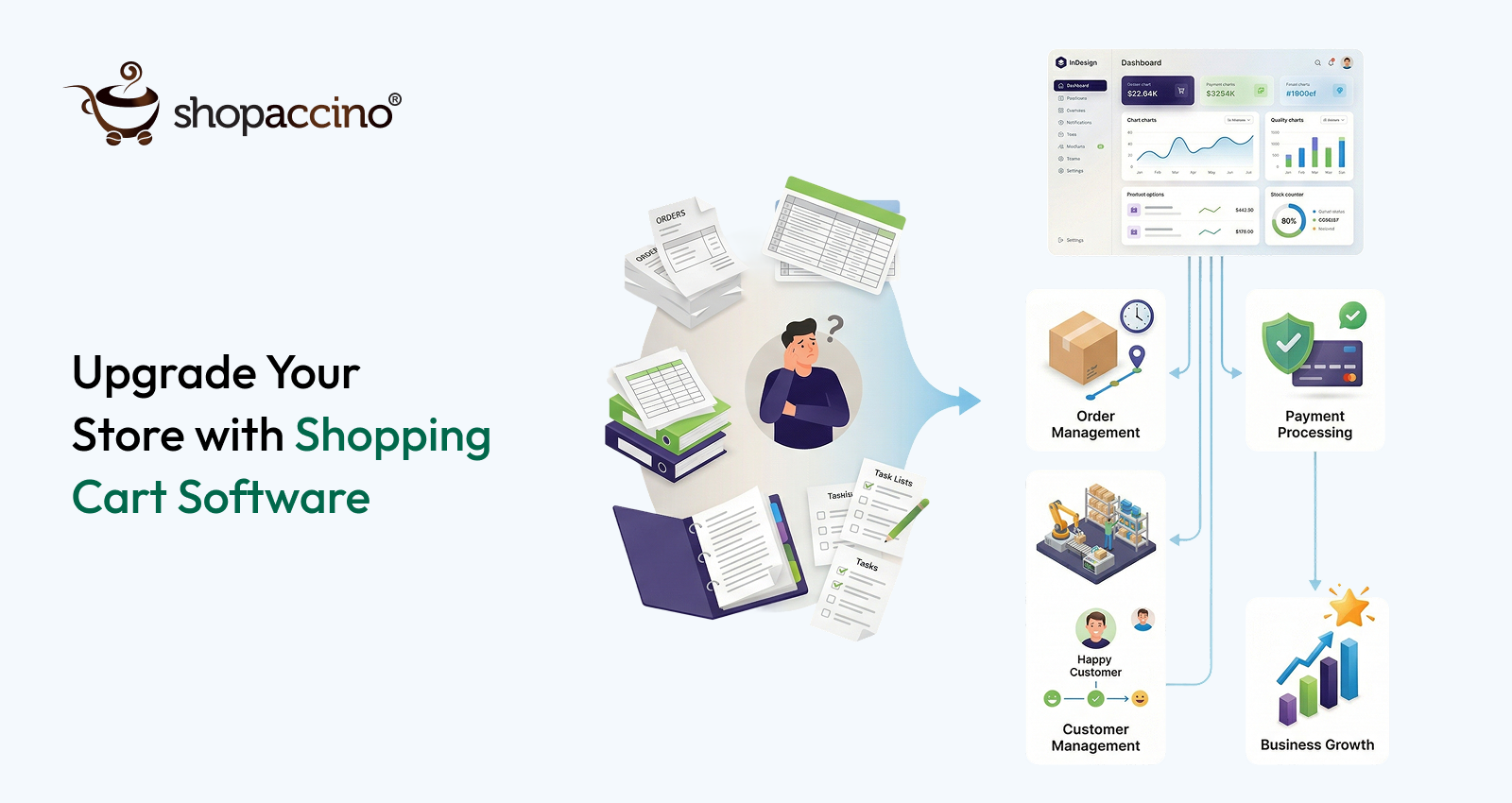
Shopping Cart Software for Growing Businesses: A Complete Guide
you have ever bought something online, you have already interacted with shopping cart software — even if you never noticed it. The system lets customers browse products, add items to a cart, and complete a purchase without confusion. But for a business owner, it is far more than a checkout button. It is the engine that powers your entire online operation.
For small businesses, D2C brands, retailers, and wholesalers, choosing the right shopping cart software is one of the most important decisions you will make. It shapes how customers experience your brand, how efficiently your team processes orders, and how confidently you can scale. The wrong platform holds you back. The right one grows with you.
This guide covers everything you need to know — what shopping cart software actually does, what features matter most for growing businesses, how to evaluate your options, and how to set up and scale your store the right way.
What Is Shopping Cart Software and How Does It Work?
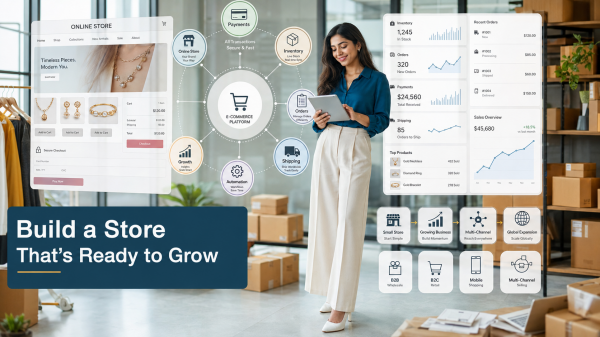
Shopping cart software is the digital infrastructure behind every successful online store. It manages the complete buying journey — from the moment a customer lands on your store and browses products, to the point they complete payment and receive an order confirmation. But in practice, it does much more than that.
A robust e-commerce shopping cart software handles product catalog management, real-time inventory tracking, payment gateway processing, shipping integration, order management, customer accounts, discount and coupon systems, and marketing automation — all under one roof. When these functions work seamlessly together, the result is a smooth shopping experience for your customer and an efficient operation for your business.
The most common question new business owners ask is: do I really need a dedicated platform, or can I get by with a simple payment link? The answer depends on your ambitions. If you plan to sell more than a handful of products, serve repeat customers, run promotions, or expand beyond one city or country, you need proper shopping cart software. Payment links are not a business — they are a workaround.
Why Growing Businesses Outgrow Basic Tools Quickly
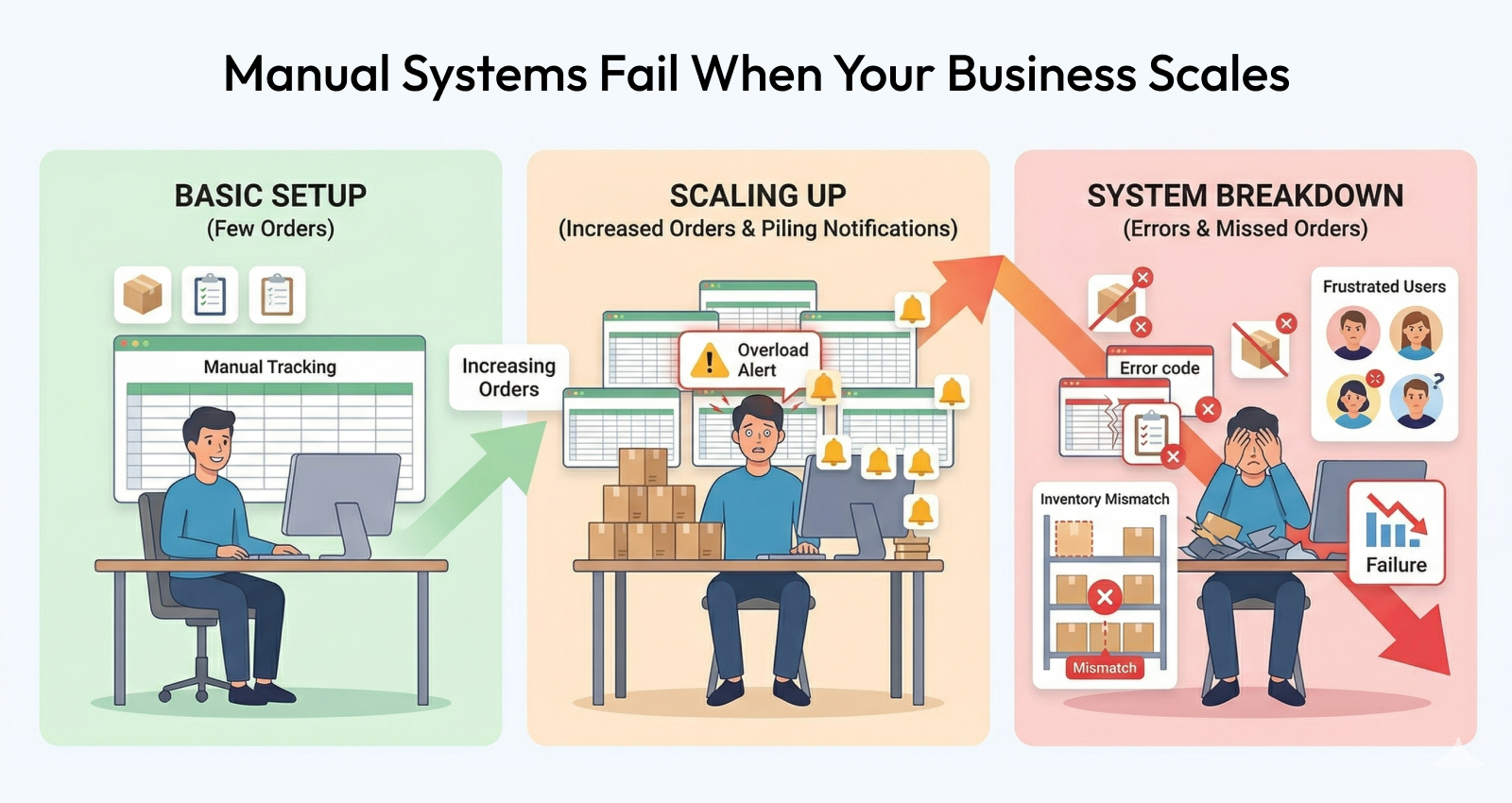
A basic setup — a simple website with manual order tracking — works fine at five orders a day. At fifty orders, it starts to crack. Inventory goes out of sync. Payments fail silently. Customers do not receive confirmation emails. Your team spends more time firefighting than selling.
This is the ceiling that basic tools impose on growing businesses. Modern online shopping cart software is specifically designed to remove that ceiling. It automates the repetitive tasks, reduces human error, and gives your business the infrastructure to handle growth without adding proportional complexity to your operations.
Core Features Every Shopping Cart Software Must Have
Not all platforms are built equally. When you are evaluating your options, there are certain capabilities that are non-negotiable for any business that is serious about growth.
Product and Inventory Management
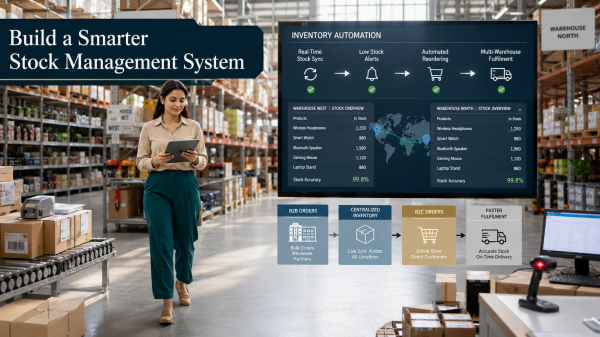
Your platform must make it easy to add products with multiple variants — size, color, material, weight — and manage stock levels in real time. Overselling is one of the fastest ways to damage customer trust. When a customer places an order for an item that is actually out of stock, the experience is frustrating, and many buyers simply do not return. Good shopping cart software prevents this by automatically updating inventory after every purchase and blocking orders when stock hits zero.
For businesses with multiple storage locations — a warehouse in Delhi and a fulfillment center in Mumbai, for example — multi-warehouse inventory management becomes essential. This allows you to route orders to the nearest or most stocked location, reducing shipping time and delivery costs simultaneously.
Checkout Experience and Payment Flexibility
Checkout is where sales are won or lost. A complicated, slow, or confusing checkout process is the single biggest driver of cart abandonment. Your shopping cart software must offer a streamlined, distraction-free checkout that works perfectly on mobile — because the majority of online shoppers today browse and buy on their phones.
Payment flexibility is equally critical. Your platform should support UPI, credit and debit cards, net banking, wallets, EMI options, and international payment methods if you are selling to buyers outside India. Each additional payment method you offer reduces the chance that a customer leaves because their preferred option was not available.
Order Management and Shipping Integration
Once a customer places an order, your platform should handle everything automatically — confirming the order, updating inventory, alerting your fulfillment team, generating an invoice, and sending tracking details to the customer. Manual order management is a liability at scale.
Shipping integration connects your store directly with logistics partners like Delhivery, Bluedart, Shiprocket, and DTDC, so orders move from your store to the customer's door with minimal manual intervention. This also means real-time tracking is available to both your team and your customer, which reduces support queries and builds post-purchase trust.
Marketing, Retention, and Loyalty Tools
Acquiring a new customer costs five to seven times more than retaining an existing one. This is not just a statistic — it is the economic foundation of profitable ecommerce. Your platform should actively support retention through built-in coupon and discount management, loyalty and reward point programs, referral programs, and abandoned cart recovery.
Abandoned cart recovery alone can reclaim a significant share of lost sales. Many shoppers add products to their cart and leave — not because they are uninterested, but because they were distracted or waiting for payday. An automated WhatsApp or email reminder sent within a few hours can bring a meaningful percentage of them back to complete the purchase.
Choosing the Best Online Shopping Cart for Small Business
The best online shopping cart for small business is not the one with the longest feature list or the lowest price. It is the one that fits your specific business model, supports the way your customers buy, and can scale without forcing you to rebuild everything when your order volume doubles.
Start your evaluation by understanding your business model clearly. Are you selling directly to consumers, or do you also supply retailers and distributors in bulk? The answer shapes which features matter most.
B2C Sellers: Prioritise Experience, Speed, and Conversion
If you sell directly to consumers — whether you are a fashion brand, a home decor business, a beauty label, or an electronics retailer — the storefront experience and conversion rate are your top priorities. Customers are comparing your store to the best they have seen online. A slow, generic-looking website loses trust before a product is even viewed.
Look for platforms that offer professionally designed, mobile-optimised themes you can customise without coding. Evaluate how quickly a new store can be set up, how easy it is to add products, and how smooth the checkout process feels from a customer's perspective. Go through the full purchase journey yourself — as a customer would — before committing to any platform.
B2B Sellers: Features That Wholesale Businesses Cannot Skip
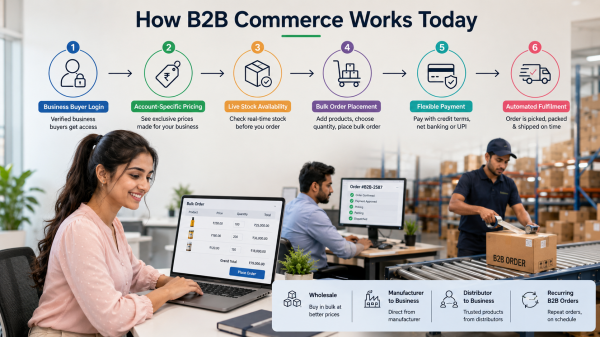
If any part of your business involves selling to retailers, distributors, or institutional buyers, your requirements are fundamentally different. B2B buyers are not impulsive shoppers — they are procurement professionals who expect account-based pricing, credit terms, minimum order quantities, and approval workflows.
Account-based pricing allows you to set different prices for different buyer segments — your retail price, your dealer price, and your distributor price — all managed within the same platform without duplicating products or maintaining separate price lists. Minimum order quantities protect your margins on bulk orders. Credit terms and invoice-based payment options reflect the real-world conditions of business trade.
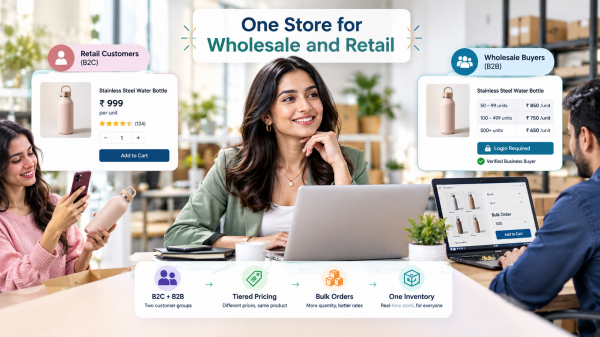
Many growing businesses serve both B2C and B2B customers simultaneously. A textile brand may sell fabric to retail consumers online while also supplying boutiques with bulk orders. If this is your reality, you need a platform capable of handling both models natively — not through workarounds or separate systems.
Global Commerce: When Your Ambition Goes Beyond Borders
Indian brands selling internationally — to buyers in the UAE, the US, the UK, and Southeast Asia — need shopping cart software that supports global commerce natively. This means multi-currency checkout so customers see prices in their local currency, multi-language storefronts, and region-specific pricing that accounts for different tax structures and shipping costs.
Platforms like Shopaccino have built global commerce capabilities into their core offering, eliminating the need to stitch together multiple plugins or maintain separate international stores. Your domestic store, export catalog, and global pricing all live within a single unified system.
Evaluating Pricing, Scalability, and Platform Transparency
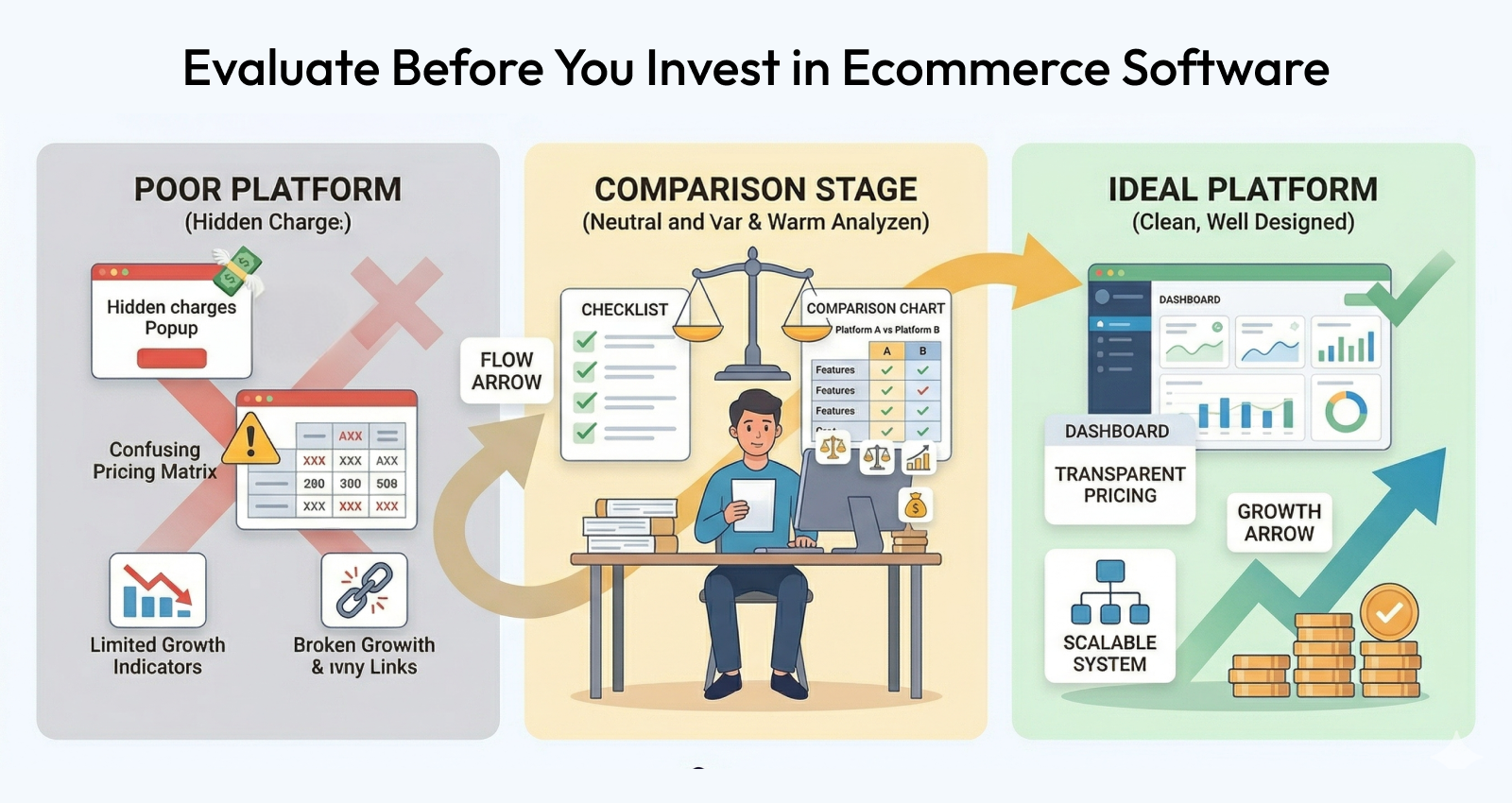
Platform pricing is one of the most misunderstood aspects of choosing ecommerce shopping cart software. The monthly subscription fee is only one part of the real cost. Many platforms also charge a per-transaction fee — a percentage of every sale that goes to the platform, on top of the payment gateway's own fees. At low volumes, this seems negligible. At higher volumes, it becomes a significant ongoing cost that directly reduces your margins.
Always calculate your effective monthly cost at your current order volume and at two to three times that volume. A platform that seems affordable today may become surprisingly expensive as you scale. Look for platforms with flat monthly fees, zero transaction charges, and transparent plan structures that make cost forecasting straightforward.
Scalability is the feature you cannot see until you need it. Ask prospective platforms how their infrastructure handles traffic spikes — a sale campaign that brings 10,000 visitors to your store simultaneously should not cause your site to slow down or crash. Ask whether you can add warehouses, new product categories, B2B buyer accounts, or international storefronts without migrating to a different platform. Switching platforms mid-growth is one of the most disruptive experiences a business can go through — choose a platform you can genuinely grow into from the beginning.
A free trial period — ideally 14 days or more — is valuable not because it saves money, but because it gives you hands-on experience before committing. Use that trial period seriously: add your real products, run a complete test order end-to-end, explore every section of the dashboard, and contact support with a question to evaluate their response time and quality.
Setting Up Your Online Store: What to Do From Day One
Many business owners rush through setup in their eagerness to go live. This is a mistake that creates problems for months. A thoughtful, deliberate setup pays dividends long after launch.
Begin with your storefront theme and navigation. Choose a theme that reflects your brand's identity, but prioritise speed over elaborate design. A fast-loading, clean storefront with intuitive navigation and a prominent search bar will outperform a heavily designed store that takes four seconds to load. Page speed directly affects both your Google rankings and your conversion rate — two things you cannot afford to compromise.
Set up your product catalog with SEO in mind from the start. Write product titles and descriptions that balance what your customers search for with what genuinely describes your product. Use descriptive, keyword-rich URLs. Add high-quality images from multiple angles. For visual categories like fashion, jewelry, home decor, and beauty, images do more selling than words.
Configure every payment gateway you plan to offer and test each one with a real transaction before going live. Configure your shipping integrations and test them with a dummy order. Confirm that order confirmation emails reach customers promptly. Verify that inventory levels update correctly after a purchase. These are not optional checks — they are the foundation your business operates on.
Common Mistakes That Cost Growing Businesses Real Money
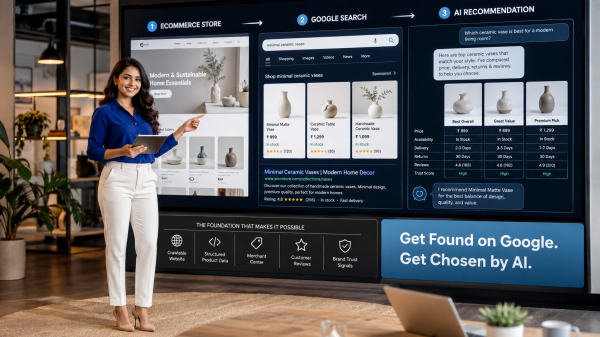
The most expensive mistake growing businesses make is neglecting SEO after launch. Your store will not appear on Google's first page without deliberate, sustained effort. Fill in meta titles and descriptions for every product and category. Build a blog that answers the real questions your target customers are searching for. Write original product descriptions — copying from suppliers harms your rankings. SEO compounds over time and delivers organic traffic that costs nothing per click.
Another costly oversight is ignoring the mobile experience after launch. Themes behave differently as browsers update, and new features you add may not render correctly on smaller screens. Browse your own store on your phone at least once a week, as a first-time customer would, and fix anything that feels slow or confusing.
Finally, many businesses underuse the integrations their platform supports. Beyond payment and shipping, modern platforms connect with accounting tools like Tally, inventory systems like Zoho Inventory, and marketing automation tools for email and WhatsApp. Each active integration reduces manual work and increases operational accuracy. Audit your integrations quarterly and ask whether there is a connection that could save your team hours each week.
How to Scale Your Ecommerce Store Sustainably
Scaling an online store is not just about increasing traffic. It is about building systems that can handle more — more orders, more customers, more products, more markets — without proportionally increasing the complexity of your operations or the size of your team.
Retention is the lever that makes scaling profitable. A loyalty and reward point program gives customers a financial reason to return. A referral program turns your happiest buyers into a marketing channel that acquires new customers at a fraction of your usual acquisition cost. Personalised marketing — showing customers products relevant to their purchase history, or sending automated reorder reminders — drives repeat purchases without requiring a large marketing team.
Know when to upgrade your plan or expand your capabilities. Signs that you have outgrown your current setup include: your team regularly struggling to fulfill orders on time, inventory errors becoming frequent, customer complaints about site speed or checkout failures, and marketing campaigns being constrained by what your platform supports. Recognising these signals early — and acting on them before they become crises — is the hallmark of a business that scales well.
The businesses that grow fastest are not those that run the biggest discounts or spend the most on ads. They are the ones that build the right operational foundation from the start — a reliable platform, efficient processes, strong retention strategies, and a customer experience that earns repeat business and word-of-mouth recommendations. Shopping cart software is where that foundation begins.
Final Thoughts
Choosing the right shopping cart software is not a small decision. It affects every aspect of how your business operates — from the first impression your store makes on a new visitor to how smoothly your team processes the hundredth order of the day. Make it with the same seriousness you would apply to any major business investment.
Evaluate platforms against your actual business model, not just a generic feature checklist. Use the free trial meaningfully. Calculate the real cost at scale. Ask hard questions about performance, support, and scalability before committing. The right platform will not just help you sell — it will help you grow.
FAQs
Shopping cart software is an ecommerce tool that allows customers to browse products, add items to a digital cart, and complete purchases online. It manages the entire buying process — from product display and pricing to payment processing, order confirmation, and inventory updates — all within a single platform.
The best online shopping cart for small business balances ease of use with essential features like product management, payment gateway support, mobile optimization, and marketing tools. Look for platforms with transparent pricing, zero transaction fees, and a free trial so you can test before committing.
Key features include multi-variant product management, mobile-friendly checkout, multiple payment gateway integrations, automated order and inventory management, coupon and loyalty programs, and shipping integrations. For B2B sellers, account-based pricing, MOQ settings, and approval workflows are also essential.
Yes. Modern online shopping cart software supports B2B commerce with features like customer group pricing, minimum order quantities, credit term management, invoice-based payments, and approval workflows. These tools allow wholesalers and distributors to manage business buyers efficiently on the same platform as their B2C store.
Pricing varies by platform and plan. Most SaaS-based shopping cart solutions charge a monthly subscription ranging from a few hundred to a few thousand rupees per month. Some platforms also charge per-transaction fees, which can add up at scale. Choose platforms with flat monthly fees and no transaction charges for predictable costs.
Yes. Many modern ecommerce shopping cart platforms support global commerce with multi-currency checkout, multi-language storefronts, and region-specific pricing. This allows Indian businesses to sell to customers in the UAE, the US, the UK, and other markets without building a separate international store.
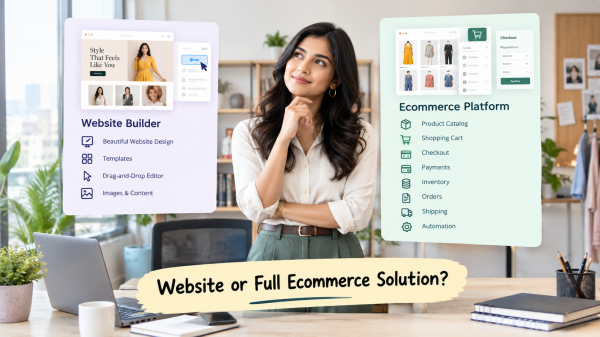
A shopping cart is technically the checkout component of an online store. An ecommerce platform is the complete system — it includes the storefront, product catalog, shopping cart, payment processing, order management, and marketing tools. Most modern solutions offer everything together, so the terms are often used interchangeably.
Cart abandonment can be reduced by simplifying the checkout process, offering multiple payment options, enabling guest checkout, and setting up automated abandoned cart recovery messages via email or WhatsApp. Displaying trust signals like secure payment badges and easy return policies also encourages customers to complete their purchase.