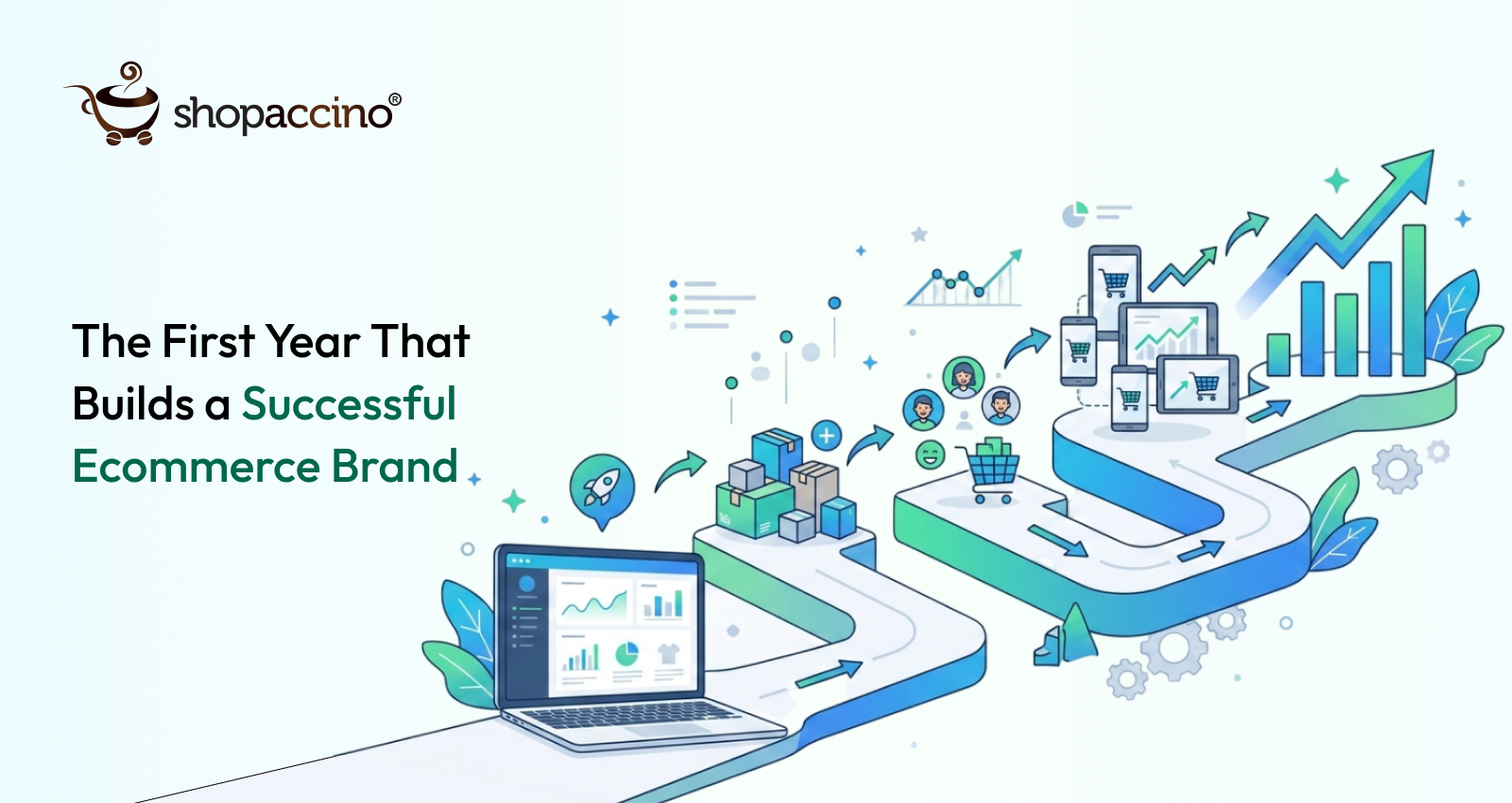
The First 12 Months That Decide the Future of an Ecommerce Business
Launching an online store is exciting. Many entrepreneurs decide to start e-commerce business ventures every year because digital commerce continues to grow rapidly. However, while starting an online store is relatively easy today, building a sustainable e-commerce brand requires careful planning and consistent effort.
The first twelve months of an ecommerce journey are often the most important. During this period, businesses test their products, understand customer behavior, and build the systems that will support long-term growth. Decisions made during this early stage often determine whether a business grows steadily or struggles to survive.
Understanding how to start an ecommerce business successfully requires more than simply launching a website and listing products. Entrepreneurs must develop a clear strategy that combines marketing, operations, and customer experience. This is where a strong ecommerce business plan becomes essential.
Why the First Year Is Critical for Ecommerce Success
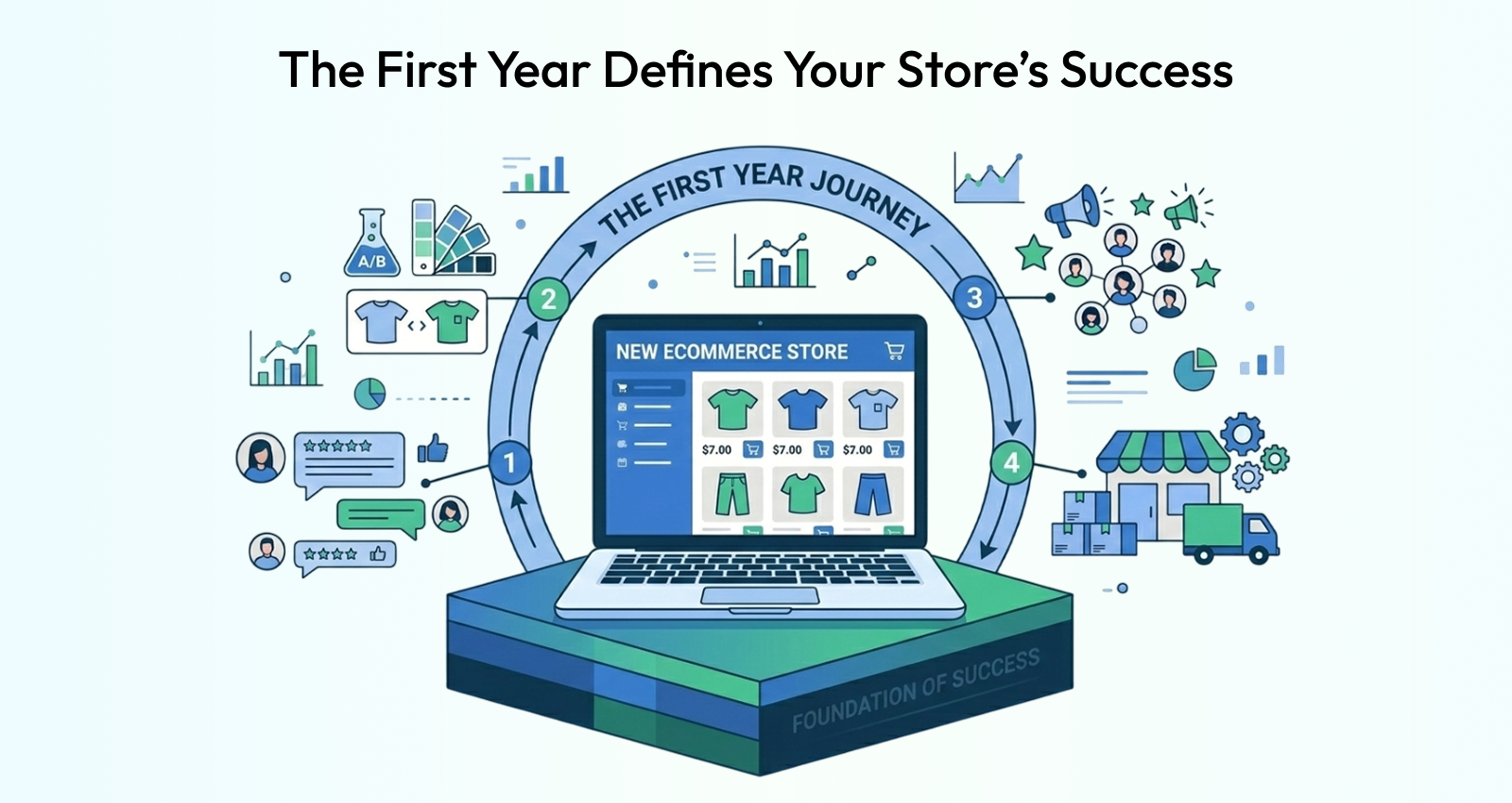
The early phase of an ecommerce business is when the foundation of the brand is built. During the first year, businesses gather important insights about their customers, products, and market positioning.
If this phase is handled carefully, it becomes easier to implement effective online business growth strategies in the future.
During the first year, ecommerce businesses usually focus on several key objectives:
- Identifying the right target customers
- Testing product demand in the market
- Building brand awareness
- Creating reliable operational systems
- Developing consistent marketing channels
Each of these elements contributes to the long-term sustainability of the business.
Businesses that start ecommerce business operations without a clear direction often struggle because they react to problems instead of planning ahead.
Read Also :The Foundation Behind Every Successful Ecommerce Brand
The Difference Between Businesses That Survive and Those That Fail
Many ecommerce stores close within the first few years. One common reason is that entrepreneurs focus only on launching the store but overlook long-term planning.
Successful businesses approach the first year differently. They focus on building a structured ecommerce business plan that guides their decisions and helps them manage growth more effectively.
The difference between these approaches can be summarized below.
|
Short-Term Approach |
Strategic Approach |
|
Launch store quickly without planning |
Create a clear ecommerce business plan |
|
Focus only on products |
Focus on customer needs |
|
Depend only on advertising |
Build multiple marketing channels |
|
Ignore long-term strategy |
Implement online business growth strategies |
These differences highlight why businesses must plan carefully when they start ecommerce business ventures.
Building the Right Foundation From Day One
A successful ecommerce brand is built on a strong foundation. Entrepreneurs who understand how to start an ecommerce business properly usually invest time in planning before launching their store.
Some of the most important steps during this stage include:
- Conducting market research to understand customer needs
• Identifying a clear product niche
• Creating a brand identity that stands out
• Setting up reliable order and inventory management systems
• Designing a website that provides a smooth shopping experience
Platforms like Shopaccino help entrepreneurs build organized ecommerce stores that support product management, order processing, and customer engagement from the beginning.
Having the right infrastructure allows businesses to focus on implementing effective online business growth strategies instead of dealing with operational challenges.
Read Also : Why Visitors Don’t Become Buyers
The First-Year Growth Timeline
The first year of an ecommerce business usually follows a learning curve. Businesses test strategies, gather feedback, and refine their operations based on real customer interactions.
A simplified timeline of the first year may look like this:
|
Business Phase |
Focus Area |
|
Months 1–3 |
Launch store and validate product demand |
|
Months 4–6 |
Improve marketing and customer acquisition |
|
Months 7–9 |
Optimize website and operations |
|
Months 10–12 |
Implement long-term online business growth strategies |
Following this structured approach helps entrepreneurs start ecommerce business ventures with a clearer direction.
The Key Decisions That Shape an Ecommerce Business in the First Year
Once entrepreneurs start ecommerce business ventures, the next step is making decisions that will shape the direction of the company. The first year is not only about selling products; it is also about learning how the market responds to your brand.
During this period, businesses experiment with pricing strategies, marketing channels, and customer engagement methods. These decisions influence how quickly the brand grows and whether the business can sustain itself in the long run.
Entrepreneurs who understand how to start an ecommerce business effectively treat the first year as a learning phase. Instead of focusing only on short-term profits, they focus on building systems that support future growth.
A well-structured ecommerce business plan helps founders stay organized while testing different strategies.
Read Also : Build & Scale Your Online Store in India
Finding the Right Product–Market Fit
One of the most important goals during the first year is identifying the right product–market fit. This means ensuring that the products being offered truly meet customer needs.
Even if a product seems promising, real customer feedback often reveals opportunities for improvement. Successful ecommerce brands continuously analyze customer behavior and adjust their offerings accordingly.
Some ways businesses evaluate product–market fit include:
- Monitoring which products receive the most interest
- Studying customer reviews and feedback
- Tracking repeat purchases
- Identifying products that generate the highest engagement
Understanding customer demand allows businesses to refine their ecommerce business plan and develop stronger online business growth strategies.
Building Consistent Marketing Channels
Marketing plays a major role in the success of any ecommerce business. However, many new businesses rely too heavily on a single traffic source such as paid advertising.
Successful ecommerce brands build multiple marketing channels that attract visitors consistently.
Common marketing channels include:
- Search engine optimization for organic traffic
- Social media marketing to increase brand awareness
- Email marketing for customer retention
- Paid advertising for targeted campaigns
Using a combination of these Marketing Channels to build an online business growth strategy to helps businesses attract a steady flow of customers instead of depending on one marketing method.
Entrepreneurs who start ecommerce business ventures with diversified marketing strategies usually experience more stable growth.
Read Also : Your Traffic Means Nothing Without Conversions
Improving Customer Experience
Customer experience plays a critical role in determining whether visitors become loyal buyers. During the first year, businesses must focus on creating a smooth and reliable shopping experience.
Customers expect ecommerce stores to provide:
- Fast website performance
- Clear product descriptions and images
- Easy product discovery through organized categories
- Simple and secure checkout processes
When businesses focus on these factors, they create trust with their audience and encourage repeat purchases.
Improving the shopping experience also supports long-term online business growth strategies because satisfied customers are more likely to recommend the brand to others.
Tracking Performance and Learning From Data
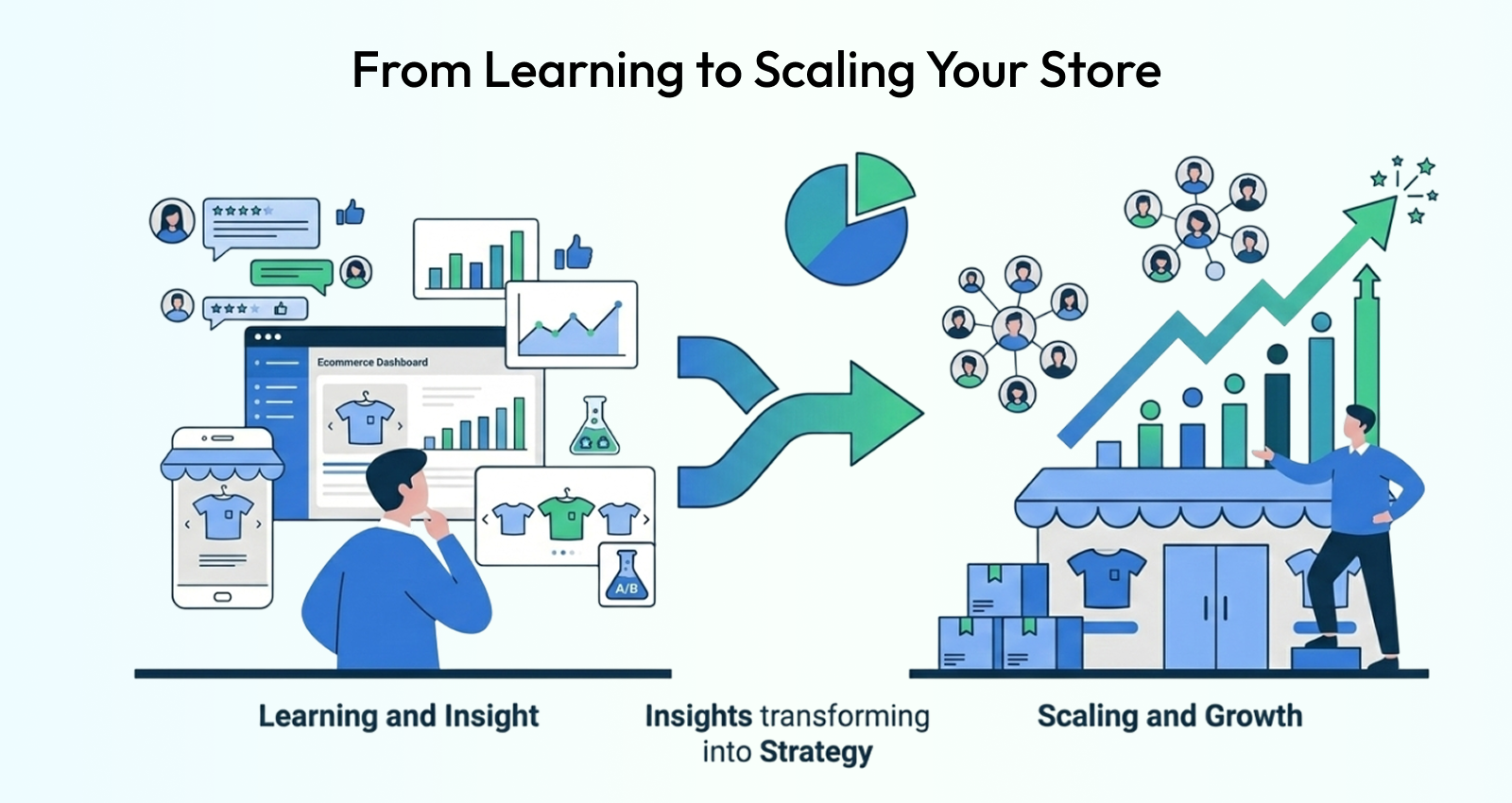
Successful ecommerce brands constantly measure their performance. Data helps entrepreneurs understand what works and what needs improvement.
Important performance indicators often include:
|
Metric |
Why It Matters |
|
Website Traffic |
Indicates marketing effectiveness |
|
Conversion Rate |
Shows how many visitors become buyers |
|
Average Order Value |
Measures how much customers spend |
|
Customer Retention |
Indicates brand loyalty |
By monitoring these metrics, businesses can refine their ecommerce business plan and strengthen their online business growth strategies.
Turning the First-Year Lessons Into Long-Term Growth
By the time an ecommerce business completes its first twelve months, founders usually gain valuable insights about their products, customers, and market positioning. The experiences from this period help entrepreneurs understand what works and what needs improvement.
Businesses that successfully start ecommerce business ventures treat the first year as a learning phase. Instead of expecting immediate large profits, they focus on building systems that will support long-term growth.
The lessons learned during this early stage often help entrepreneurs refine their ecommerce business plan and implement more effective online business growth strategies.
Strengthening the Brand After the First Year
Once the business understands its target customers and product demand, the next step is strengthening the brand. Branding helps businesses stand out in a crowded market and build long-term customer loyalty.
Successful ecommerce brands focus on several branding elements, including:
- A clear brand message that explains the value of the products
- Consistent visual design across the website and marketing channels
- Reliable customer support that builds trust
- Engaging content that connects with the audience
When businesses strengthen their brand identity, it becomes easier to attract customers and support long-term online business growth strategies.
Read Also : Is Your E-commerce Website Killing Your Sales?
Scaling Marketing and Customer Acquisition
After validating their business model during the first year, successful ecommerce brands expand their marketing efforts. Instead of experimenting with random campaigns, they focus on strategies that have already shown positive results.
Businesses often scale marketing by investing more in:
- Search engine optimization to increase organic traffic
- Paid advertising campaigns targeting specific audiences
- Email marketing to encourage repeat purchases
- Social media engagement to build brand awareness
Expanding these marketing activities allows businesses to reach a larger audience while following a structured ecommerce business plan.
Entrepreneurs who understand how to start an ecommerce business effectively know that marketing must evolve as the business grows.
Improving Operational Efficiency
Growth in ecommerce also requires operational efficiency. As order volumes increase, businesses must ensure that inventory management, order processing, and customer support remain reliable.
Successful ecommerce businesses invest in systems that help them manage operations efficiently.
Important operational improvements include:
- Organizing product catalogs for easier navigation
- Automating order processing and inventory updates
- Monitoring product availability to prevent stock issues
- Improving delivery processes for faster shipping
Platforms like Shopaccino help businesses manage these operations by providing structured ecommerce tools that support store management and order tracking.
When operations run smoothly, businesses can focus on expanding their online business growth strategies instead of solving daily operational challenges.
Preparing for the Next Stage of Growth
After completing the first year, ecommerce businesses are better prepared to plan their next stage of growth. At this point, founders usually have a clearer understanding of their market and customer expectations.
A simplified growth framework after the first year may look like this:
|
Growth Stage |
Focus Area |
|
Year 1 |
Test product demand and validate business model |
|
Year 2 |
Expand marketing channels and customer base |
|
Year 3 |
Improve operational efficiency and scale product range |
|
Long-Term |
Strengthen brand authority and market presence |
This structured approach allows businesses to refine their ecommerce business plan while continuing to implement effective online business growth strategies.
Final Thoughts
The first twelve months of an ecommerce journey often determine the future direction of the business. Entrepreneurs who carefully plan how they start ecommerce business ventures and focus on learning during the first year are more likely to build sustainable brands.
Understanding how to start an ecommerce business involves more than launching a website. It requires building a clear ecommerce business plan, developing strong marketing channels, and implementing effective online business growth strategies.
By focusing on strategy, customer experience, and operational efficiency during the first year, ecommerce founders create a solid foundation for long-term success.
Platforms like Shopaccino provide the tools that help businesses manage their ecommerce operations effectively, allowing entrepreneurs to focus on growing their brand and expanding their digital presence.