Why Most Ecommerce Stores Fail to Convert Visitors Into Buyers
Launching an ecommerce store has become easier than ever. With modern platforms and store builders, businesses can create online stores quickly and start selling products to customers across the world. However, building an ecommerce store and generating traffic is only the first step. The real challenge is turning visitors into paying customers.
Many ecommerce businesses struggle with this problem. They may receive thousands of website visitors every month but still experience very few sales. This happens because attracting traffic and converting that traffic into buyers are two completely different challenges.
This is where e-commerce conversion rate optimization becomes extremely important.
Conversion rate optimization focuses on improving the experience of visitors so that more of them complete a purchase. When businesses invest time in understanding customer behavior and improving their website structure, they can significantly improve ecommerce conversion rate and increase revenue without increasing marketing costs.
Unfortunately, many ecommerce stores ignore this critical aspect of online selling.
Understanding Ecommerce Conversion Rate
Before exploring why many ecommerce stores fail to convert visitors, it is important to understand what conversion rate actually means.
The ecommerce conversion rate represents the percentage of website visitors who complete a desired action, usually making a purchase. For example, if 100 visitors come to your store and only two people buy a product, your conversion rate is 2%.
While traffic is important, conversion rate determines whether that traffic generates real business results.
A simplified example can help illustrate this:
|
Monthly Visitors |
Conversion Rate |
Monthly Orders |
|
10,000 |
1% |
100 orders |
|
10,000 |
3% |
300 orders |
In this example, increasing the conversion rate from 1% to 3% triples the number of orders without increasing website traffic.
This is why businesses invest in ecommerce website optimization strategies that improve how visitors interact with their store.
Read Also : Your Traffic Means Nothing Without Conversions
Why Traffic Alone Does Not Guarantee Sales
Many ecommerce businesses focus heavily on attracting traffic through advertising, social media marketing, or search engine optimization. While these strategies can bring visitors to the website, they do not guarantee that those visitors will actually make purchases.
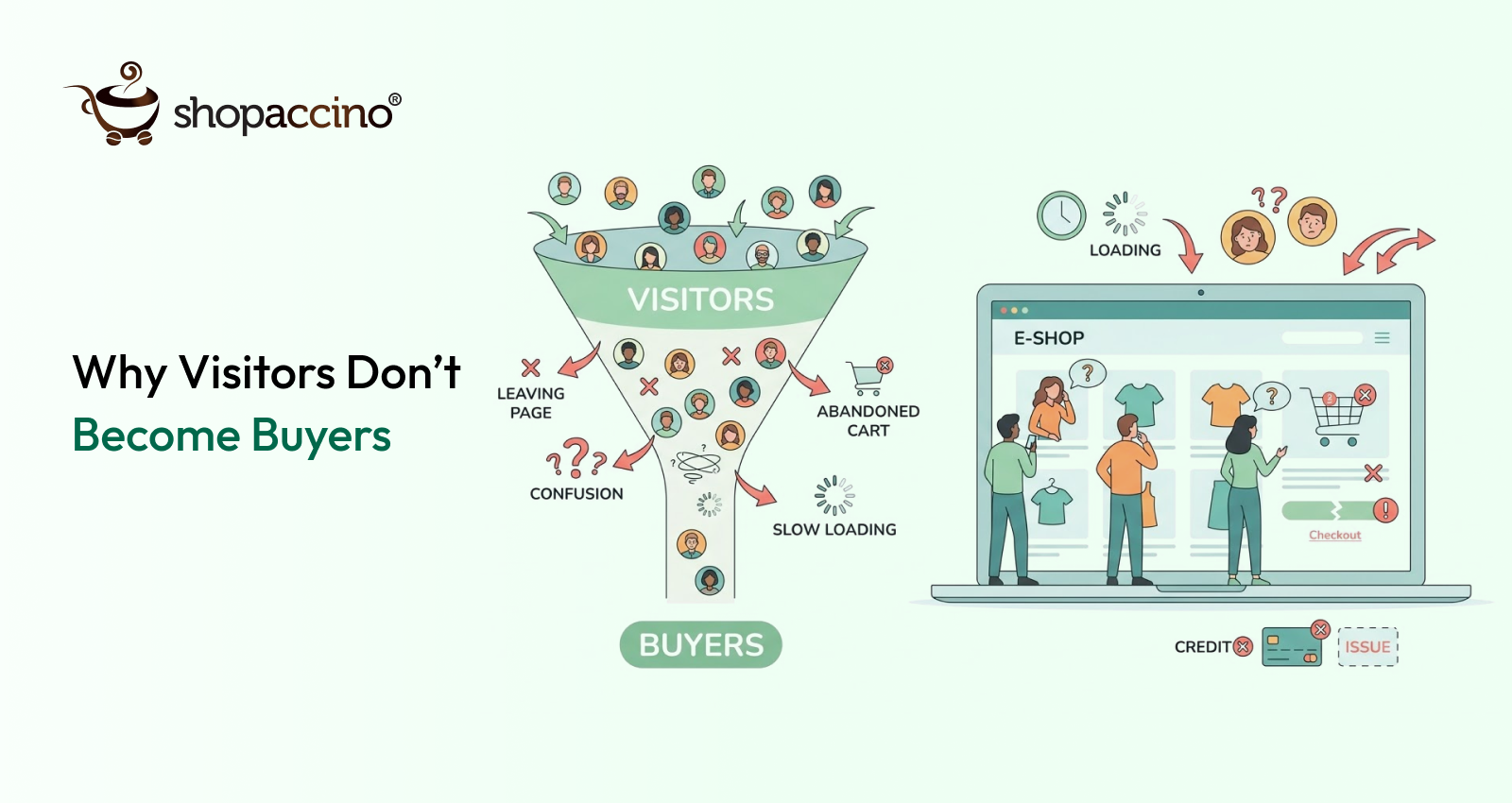
Visitors may leave the website for many reasons:
- The website loads slowly
- Product information is unclear
- Navigation is confusing
- Pricing is not transparent
- Checkout processes are complicated
These issues often prevent customers from completing their purchase even when they are interested in the product.
This is why businesses must focus on ecommerce conversion rate optimization alongside traffic generation.
When a website is optimized for conversion, visitors find it easier to browse products, understand pricing, and complete purchases without frustration.
The Hidden Problems That Hurt Ecommerce Conversions
Many ecommerce businesses believe their website is functioning properly simply because it looks visually appealing. However, a good-looking website does not always guarantee a strong ecommerce conversion rate.
Several hidden issues may prevent visitors from becoming customers.
Some of the most common problems include:
- Slow website performance that discourages visitors from exploring the store
- Unclear product descriptions that fail to answer customer questions
- Lack of trust signals such as reviews or secure payment indicators
- Complicated checkout processes that create friction during purchase
- Poor mobile experience for customers shopping on smartphones
These challenges highlight why ecommerce website optimization is essential for modern ecommerce businesses.
By identifying and fixing these issues, businesses can significantly improve ecommerce conversion rate and create a smoother customer journey.
Read Also : Is Your E-commerce Website Killing Your Sales?
The Role of Website Experience in Conversions
Customer experience plays a major role in determining whether visitors will become buyers. Online shoppers expect websites to be fast, easy to navigate, and trustworthy.
If visitors encounter obstacles during their shopping journey, they may leave the website and purchase from a competitor instead.
A well-optimized ecommerce website should guide visitors through a clear path:
|
Stage |
Customer Action |
|
Discovery |
Visitor lands on product page |
|
Evaluation |
Visitor reads product information |
|
Decision |
Visitor adds product to cart |
|
Purchase |
Visitor completes checkout |
When businesses focus on ecommerce conversion rate optimization, they analyze each stage of this journey and identify opportunities to improve the experience.
Platforms like Shopaccino help ecommerce businesses build structured online stores where product pages, navigation systems, and checkout processes are designed to support better conversions.
Major Reasons Ecommerce Stores Fail to Convert Visitors Into Buyers
Many ecommerce businesses believe that once they attract visitors to their website, sales will automatically follow. In reality, converting visitors into buyers requires a carefully designed shopping experience. Even small problems on a website can discourage customers from completing their purchase.
This is why businesses must focus on ecommerce conversion rate optimization instead of relying only on traffic generation. When a website is optimized properly, visitors can easily find products, understand their value, and complete purchases without friction.
Below are some of the most common reasons why ecommerce stores struggle with low ecommerce conversion rate.
Read Also : From ₹1L to ₹1Cr in Ecommerce Sales
Slow Website Speed
Website speed is one of the most important factors affecting customer behavior. Online shoppers expect websites to load quickly, especially when they are browsing products or comparing prices.
If an ecommerce store takes too long to load, visitors often leave before exploring the products. Even a delay of a few seconds can significantly reduce engagement.
A slow website can cause several problems:
- Visitors abandon the page before it loads
- Product pages take too long to display images
- Checkout pages feel unresponsive
- Mobile users experience frustration
Improving website performance is an essential part of ecommerce website optimization. Faster websites create a smoother experience and encourage customers to continue browsing.
Confusing Website Navigation
When customers visit an online store, they expect to find products quickly and easily. If navigation is confusing or product categories are poorly organized, visitors may struggle to locate the items they are interested in.
Clear navigation helps customers move smoothly through the website and discover relevant products.
Common navigation issues include:
- Too many product categories
- Poorly structured menus
- Difficult search functionality
- Hidden product filters
These issues make it harder for visitors to explore the store, which negatively affects the ecommerce conversion rate.
Well-structured navigation is a key part of ecommerce conversion rate optimization because it guides visitors toward products that match their needs.
Read Also : Build your own ecommerce store and keep 100% of your revenue
Weak Product Pages
Product pages play a crucial role in the purchasing decision. Customers rely on product descriptions, images, and pricing details to evaluate whether a product meets their expectations.
When product pages lack important information, visitors may hesitate to make a purchase.
Effective product pages should include:
- Clear product descriptions
- High-quality images from multiple angles
- Transparent pricing information
- Customer reviews and ratings
- Shipping and return policies
When these elements are missing, customers may leave the website to search for more information elsewhere.
Improving product pages is one of the most effective ways to improve ecommerce conversion rate.
Lack of Trust Signals
Trust is a major factor in ecommerce. When customers shop online, they want to feel confident that the website is secure and reliable.
If an ecommerce website does not display trust signals, visitors may hesitate to complete their purchase.
Important trust signals include:
- Customer reviews and ratings
- Secure payment icons
- Clear return policies
- Contact information and support options
These elements help reassure customers that the business is legitimate and trustworthy.
Including strong trust signals is an important part of ecommerce website optimization because it reduces hesitation during the buying process.
Complicated Checkout Process
A complicated checkout process is one of the most common reasons ecommerce stores lose potential customers. When the checkout process requires too many steps or asks for unnecessary information, visitors may abandon their cart.
An effective checkout process should be simple and fast.
A streamlined checkout experience typically includes:
- Minimal form fields
- Guest checkout options
- Multiple payment methods
- Clear order summary
When the checkout process becomes too complex, it creates friction that lowers the ecommerce conversion rate.
This is why many ecommerce businesses invest heavily in ecommerce conversion rate optimization strategies that simplify the purchase journey.
Poor Mobile Shopping Experience
A large percentage of ecommerce traffic now comes from mobile devices. If a website is not optimized for mobile users, it may lose a significant number of potential customers.
Mobile shopping issues may include:
- Buttons that are difficult to tap
- Text that is hard to read
- Slow loading pages
- Checkout forms that are difficult to complete
These problems can discourage mobile visitors from completing their purchase.
Improving mobile usability is an important step in ecommerce website optimization and plays a major role in helping businesses improve ecommerce conversion rate.
Summary of Key Conversion Barriers
The most common reasons ecommerce stores fail to convert visitors can be summarized as follows:
|
Conversion Problem |
Impact on Business |
|
Slow Website Speed |
Visitors leave before browsing |
|
Poor Navigation |
Customers cannot find products |
|
Weak Product Pages |
Visitors lack confidence to buy |
|
Lack of Trust Signals |
Customers hesitate to purchase |
|
Complicated Checkout |
Cart abandonment increases |
|
Poor Mobile Experience |
Mobile visitors drop off |
Addressing these issues through ecommerce conversion rate optimization can significantly improve sales performance without increasing marketing expenses.
Practical Strategies to Improve Ecommerce Conversions
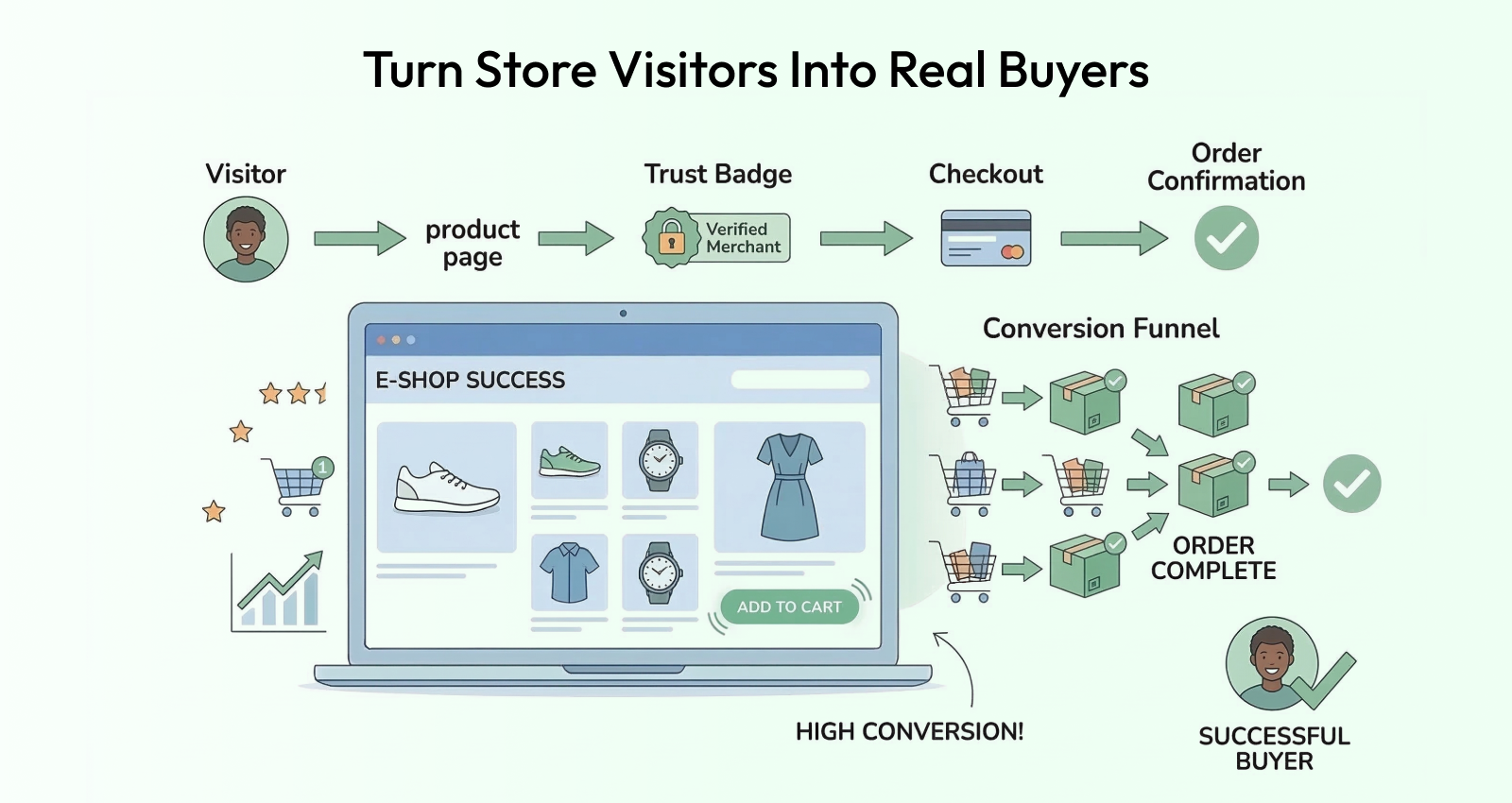
After identifying the problems that prevent visitors from completing purchases, the next step is implementing strategies that improve the overall shopping experience. Conversion improvement does not usually require drastic changes. Often, small improvements in website structure, product presentation, and checkout flow can significantly increase sales.
Businesses that focus on ecommerce conversion rate optimization analyze customer behavior and continuously improve their website based on real user interactions.
When ecommerce stores focus on customer experience and remove friction from the buying journey, they naturally improve ecommerce conversion rate.
Below are some practical strategies that help ecommerce stores turn more visitors into buyers.
Simplifying the Customer Journey
Customers prefer websites that are easy to understand and navigate. When visitors arrive at an online store, they should immediately understand what the business offers and how to find the products they are looking for.
Simplifying the customer journey means reducing unnecessary steps and guiding visitors toward the purchase decision.
Important improvements include:
- Clear product categories and navigation menus
- Simple search functionality to find products quickly
- Easy access to product filters and sorting options
- Clear calls to action such as “Add to Cart” or “Buy Now”
These improvements play a major role in ecommerce website optimization because they help visitors move smoothly from browsing to purchasing.
Strengthening Product Pages
Product pages are often the deciding factor in whether a visitor becomes a buyer. Customers rely on these pages to evaluate product quality, pricing, and value.
Effective product pages should provide enough information to answer common customer questions.
Some important elements of strong product pages include:
- High-quality product images
- Clear product descriptions explaining benefits and features
- Customer reviews and ratings
- Transparent pricing and shipping information
- Frequently asked questions about the product
Improving product pages is one of the most powerful ways to improve ecommerce conversion rate because it builds confidence in the purchasing decision.
Creating Trust and Credibility
Trust plays a critical role in online shopping. Customers are more likely to purchase from websites that appear reliable and secure.
A trustworthy ecommerce website usually includes elements that reassure visitors during the buying process.
Some trust-building elements include:
- Verified customer reviews
- Secure payment badges
- Clear return and refund policies
- Visible contact information for customer support
- Professional website design
Adding these elements strengthens customer confidence and contributes to successful ecommerce conversion rate optimization.
Read Also : Convert Mobile Browsers into Fashion Buyers
Optimizing Checkout Experience
The checkout stage is where many ecommerce businesses lose potential sales. Even if customers are interested in purchasing a product, complicated checkout processes may discourage them from completing the transaction.
An optimized checkout experience should remove friction and make the purchase process simple.
Best practices for checkout optimization include:
- Reducing the number of checkout steps
- Offering guest checkout options
- Supporting multiple payment methods
- Displaying shipping costs clearly before payment
These improvements reduce cart abandonment and directly increase the ecommerce conversion rate.
Using Data to Improve Conversions
Successful ecommerce businesses continuously analyze their website performance. They monitor customer behavior, identify where visitors leave the website, and make improvements based on real data.
Data-driven ecommerce conversion rate optimization allows businesses to test different website elements and discover what works best for their audience.
Some commonly tracked metrics include:
|
Metric |
Why It Matters |
|
Conversion Rate |
Shows percentage of visitors who buy |
|
Cart Abandonment Rate |
Indicates checkout issues |
|
Page Load Speed |
Impacts user experience |
|
Product Page Engagement |
Shows customer interest |
Monitoring these metrics helps businesses refine their ecommerce website optimization strategies and steadily improve ecommerce conversion rate.
The Role of the Right Ecommerce Platform
Technology also plays an important role in conversion performance. Ecommerce platforms that provide structured store management tools help businesses create better shopping experiences for their customers.
Platforms like Shopaccino allow businesses to build organized product catalogs, manage orders efficiently, and design user-friendly shopping journeys. When the platform supports both operational efficiency and customer experience, it becomes easier for businesses to implement effective ecommerce conversion rate optimization strategies.
A well-structured ecommerce platform makes it easier to improve product pages, simplify checkout flows, and optimize website performance.
Final Thoughts
Many ecommerce stores struggle to convert visitors into buyers not because of poor products, but because of problems in the customer experience. Slow websites, confusing navigation, weak product pages, and complicated checkout processes can all reduce the ecommerce conversion rate.
By focusing on ecommerce conversion rate optimization, businesses can improve their website structure, strengthen product pages, and create a smoother shopping journey for customers.
Effective ecommerce website optimization does not require drastic changes. Small improvements in usability, trust signals, and checkout processes can significantly improve ecommerce conversion rate and increase overall sales performance.
For ecommerce businesses looking to grow sustainably, conversion optimization should be treated as an ongoing strategy rather than a one-time improvement. When businesses continuously refine their website experience, they can turn more visitors into loyal customers.
FAQs
Ecommerce conversion rate optimization is the process of improving an online store so that more visitors complete desired actions such as making a purchase. It focuses on improving user experience, product pages, checkout flow, and website performance to increase sales.
The average ecommerce conversion rate usually ranges between 2% and 3%, although it can vary depending on the industry and type of products sold. Stores that invest in ecommerce conversion rate optimization can often achieve higher conversion rates.
Many stores fail to convert visitors because of slow website speed, confusing navigation, weak product pages, lack of trust signals, or complicated checkout processes. These issues reduce the ecommerce conversion rate and prevent visitors from completing purchases.
Ecommerce website optimization improves the overall shopping experience by making websites faster, easier to navigate, and more reliable. When customers can find products easily and complete purchases quickly, conversion rates increase.
Slow websites often cause visitors to leave before exploring products. Faster loading pages improve user experience and increase engagement, which helps improve the ecommerce conversion rate and reduce bounce rates.
Product pages provide the information customers need to make purchasing decisions. High-quality images, clear descriptions, pricing details, and customer reviews help build trust and significantly improve ecommerce conversion rate.