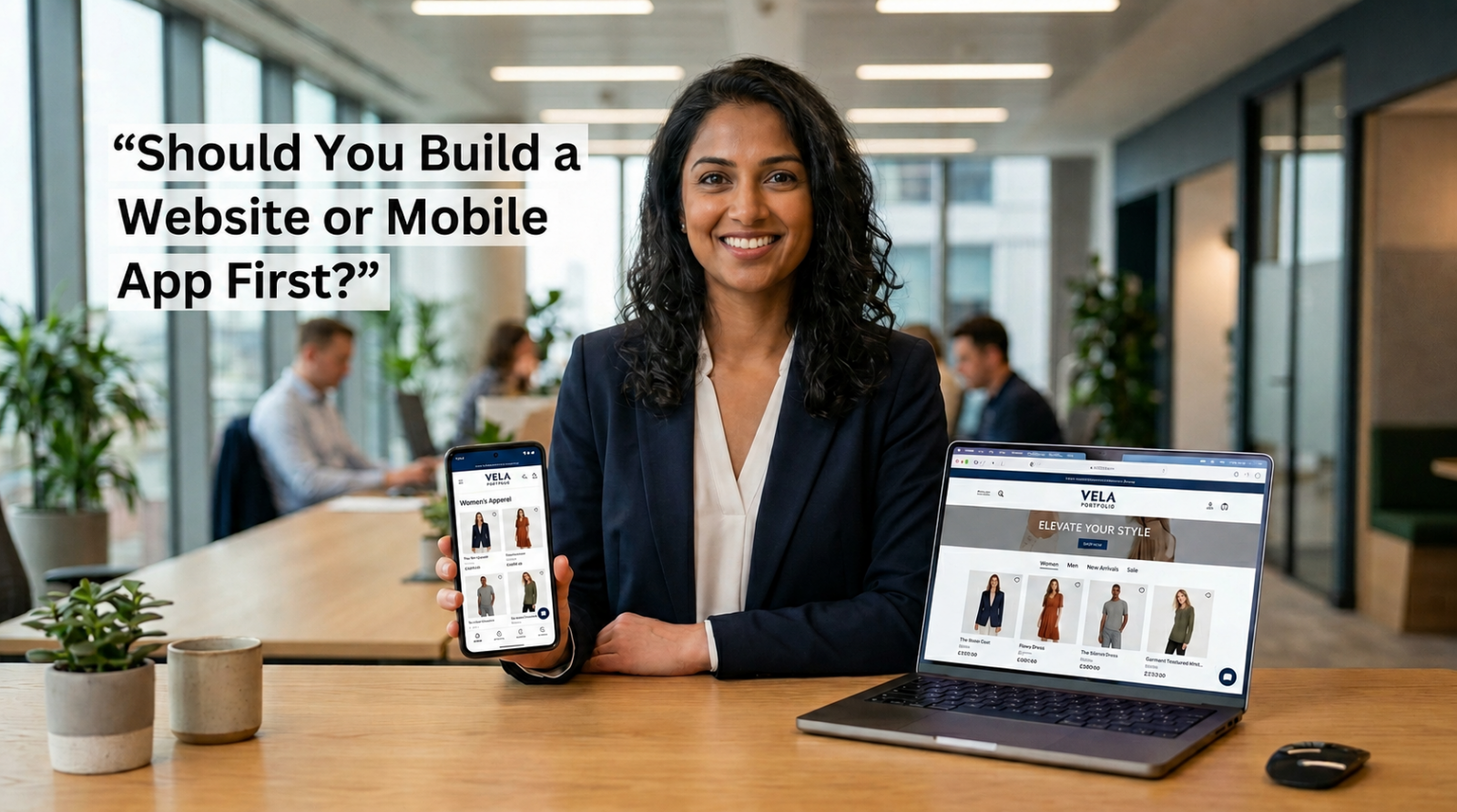
Website First or Mobile App First? What Works Best for Ecommerce Growth?
What Does Website First or Mobile App First Actually Mean? Website first or mobile app first refers to the sequencing decision an ecommerce business makes about which channel to launch before the other. Website first means launching a branded ecommerce website as the primary sales channel, then adding a mobile app later. Mobile app first means launching with only an app, often skipping the website until later. Most ecommerce businesses succeed with the website first approach. This decision connects directly to broader ecommerce trends 2026 affecting store growth. |
Most new ecommerce founders ask this question at exactly the wrong time. The Website First or Mobile App First decision gets debated for weeks, often before the business has its first 100 customers. Six months later, both options look obvious in hindsight. By then, time and money have been spent in places they did not need to be.
This guide gives you the honest answer up front: website first, mobile app second. Then it explains why that order works for most businesses, when the exception applies, how long to wait before adding the app, and which platforms make the sequencing simpler. If you came here looking for a balanced 'both have pros and cons' analysis, this article will not deliver that. The honest answer for almost every ecommerce business in 2026 is sequencing, not choosing.
What we will cover: why the website does heavier lifting in the early days, what the mobile app genuinely adds once you have repeat customers, the cost and time trade-offs of each, the business types where the answer differs, and how to set up your operational stack so you do not have to migrate platforms when you eventually add the app.
STAGE 1 • Why the Website Comes First
The website does work the mobile app cannot match in the early days of an ecommerce business. Understanding why this is true makes the sequencing decision obvious.
Why Does the Website Work Harder for a New Ecommerce Business?

Four reasons explain why a website earns its position as the foundation of an ecommerce business. Each one matters at a different stage of customer acquisition.
How Does the Website Drive Organic Discovery That Apps Cannot?
Search engines drive the majority of new customer discovery in ecommerce. Google, Bing, and image search index websites. They do not index mobile app content the same way. A buyer searching for 'leather tote bag for work' finds your product page through SEO. They do not find your mobile app screens through Google.
App Store Optimization helps people who already know they want apps. SEO helps people who do not know your brand exists yet. For a new business that needs new customers, SEO is the channel that matters first. The website is what SEO needs.
Why Do First-Time Buyers Trust Websites More Than Apps?
A new buyer hesitates to install an app from a brand they have never heard of. Apps require storage, permissions, push notification rights, and an App Store search. A website needs only a click. The friction difference between visiting a website and installing an app is significant, especially for first-time buyers evaluating whether to trust the brand at all. This pattern is consistent in ecommerce growth strategy data across virtually every region.
How Do Paid Ads Lead People to Websites, Not Apps?
Almost every paid ad channel sends traffic to URLs. Google Ads, Facebook Ads, Instagram Ads, TikTok Ads, LinkedIn Ads, native ads, retargeting, and email all send buyers to web pages. Apps can be promoted through App Install campaigns, but those campaigns target downloads, not purchases. The buyer journey from ad click to first purchase runs through a web page, not an app.
Why Are Websites Easier and Cheaper to Test, Iterate, and Update?
Changing a website takes minutes. Changing an app takes days because every update has to pass App Store and Play Store review. For a new business that needs to test product photography, pricing, messaging, layout, and offers rapidly, the website lets you experiment freely. The app freezes whatever was right last week and forces you to wait days to fix it.
What Does a Website Need to Have to Drive Real Growth?
Not every website grows the business. The ones that do share specific qualities. If your first launch will be a website, these are the elements that matter most.
- Fast loading speed on phones, since most first visits are mobile
- Clear category navigation that lets buyers find products in two clicks
- Consistent product photography across the entire catalogue
- Trust signals visible at checkout (return policy, secure payment logos, customer reviews)
- Multiple payment methods including local options like UPI, cards, wallets, and Cash on Delivery
- Order tracking and customer accounts for returning buyers
- SEO foundations including clean URLs, proper headings, and product schema markup
- Email capture early in the funnel to build the list before paid traffic gets expensive
A website with these qualities, even on a modest budget, outperforms a poorly built app every time. The fundamentals matter more than the channel.
STAGE 2 • When to Add the Mobile App
The mobile app is not optional. It is the next stage. Skipping it means leaving repeat purchase revenue on the table. The question is when, not whether.
How Do You Know When Your Business is Ready for a Mobile App?

Four signals tell you the app will pay off. When you see at least two of these clearly, the timing is right.
What Repeat Purchase Rate Suggests App Readiness?
If 20 to 30 percent or more of your customers are placing a second order within 90 days, you have repeat behaviour. An app multiplies repeat purchase by reducing the friction of reordering. If your repeat rate is under 10 percent, an app is unlikely to fix the underlying problem. Fix the product or the experience first. The app amplifies repeat behaviour. It does not create it.
How Does Mobile Traffic Share Indicate App Readiness?
If 70 percent or more of your traffic comes from mobile devices, an app makes operational sense. Most consumer ecommerce already crosses this threshold within months of launch. B2B and high-ticket categories may take longer. Check your analytics. If mobile dominates, the app will too.
Why Does a Monthly Order Volume Threshold Matter?
A mobile app delivers the most return when you have enough orders to justify the launch effort. As a rough benchmark, 500 to 1,000 monthly orders is the threshold where most ecommerce businesses see clear app-driven uplift. Below that, the operational cost of running an app outweighs the gains. Above it, the app starts paying for itself within a few months.
How Does Customer Segment Behaviour Tell You the App is Worth Launching?
Watch what your customers already do. Are they messaging on WhatsApp asking for reorder reminders? Are they asking 'do you have an app?' in support tickets? Do they bookmark product pages and return to them weekly? These behaviours signal that an app would match real customer demand, not just match a vague growth target. The branded mobile commerce app you build at this stage gets adopted faster because customers were already asking for it.
What Does a Mobile App Actually Add That a Website Cannot?
Four structural advantages make apps fundamentally different from websites, not just smaller versions of them.
How Do Push Notifications Change Customer Re-engagement?
Push notifications reach customers directly. No email inbox to fight through. No ad spend to reach the same person again. A relevant push (restock alert, order update, exclusive launch) gets opened immediately. This is the single biggest engagement difference between websites and apps.
Why Does One-Tap Reordering Drive Repeat Purchase?
On a website, reordering means logging in, finding the product, adding to cart, and checking out again. On an app, with saved address and payment, the same reorder is two taps. The friction reduction directly increases repeat purchase rate in consumable categories like food, beauty, supplements, and grocery by 40 to 60 percent.
How Does Home Screen Presence Build Brand Recall?
Your app icon sits between WhatsApp and the camera on the buyer's home screen. It gets seen daily, often touched accidentally and dismissed, but always present. This passive brand exposure builds recall in a way no website link can match. Three months of home screen presence is worth a significant amount of paid ad spend.
What Native Features Make the App Experience Better?
Native apps integrate with the device. Biometric login (fingerprint, face). Native payment wallets (Apple Pay, Google Pay, Samsung Pay). Camera for review photos. Location for nearest store finder. Push for delivery updates. These features make the app feel meaningfully better than the website experience for tasks the customer does often.
STAGE 3 • How Website and App Work Together
The website and app are not competing channels. They serve different jobs in the customer journey. Once both exist, the magic is in how they reinforce each other.
How Does an Omnichannel Customer Experience Drive Growth?
A omnichannel customer experience means the customer can move between website and app seamlessly. They browse on the website at work, finish the order on the app at home, track delivery on the app, and return to the website to write a review. The brand experience feels unified rather than fragmented.
When website and app are connected to the same backend (same catalogue, same inventory, same customer accounts, same orders), the customer never sees the seam between them. When they are disconnected (separate apps and websites built on different systems), the customer experience breaks. They cannot see web orders in the app, or app orders on the website, or use a discount code that exists on one but not the other.
How Do Customer Journeys Differ Between Website and App?
Understanding what each channel does best helps you design for it deliberately rather than treating them as duplicates.
Customer Stage | Website Strength | Mobile App Strength |
|---|---|---|
Discovery | SEO, paid ads, social media, search | Word of mouth, app store featuring |
First Visit | Frictionless, no install needed | Higher commitment, slower to convert |
First Purchase | Strong (trust signals visible) | Moderate (works if customer is already convinced) |
Repeat Purchase | Moderate (login friction) | Strong (one-tap reorder) |
Re-engagement | Email marketing, retargeting ads | Push notifications (direct, free) |
Loyalty | Account dashboard, email rewards | Home screen presence, instant access |
Brand Recall | Search results, content marketing | App icon visible daily on phone |
Support | FAQ, chat widget, contact form | In-app messaging, push for updates |
Notice the pattern. Website wins discovery and first purchase. App wins repeat purchase and re-engagement. Together they cover the entire customer journey. Separately, each one leaves a gap the other could fill.
Why Should Your Website and App Run on the Same Platform?
Many businesses launch a website on one platform, then add an app from a different vendor a year later, then discover the two systems do not talk to each other cleanly. Orders are double-counted. Inventory desyncs. Customer accounts exist in two places. Promo codes work on one but not the other. The technical debt becomes operational chaos.
The cleaner approach is to start on a platform that supports both website and app on the same backend. Your launch begins with the website only. Six to twelve months in, when the timing is right, you add the app from the same dashboard. Same products. Same inventory. Same customers. Same orders. No migration. No double work. This is structurally simpler than starting with one platform for the website and bolting on a separate app builder later.
How Shopaccino Fits This Sequencing Shopaccino is SaaS ecommerce software that supports both a branded website and a built-in native Android and iOS app on the same platform. The website launches first. The app launches when you are ready, on the same backend, without migration or a separate vendor. Multi-warehouse inventory, B2B plus B2C from one dashboard, multi-currency for global sellers, and zero platform transaction fees apply across both channels. Shopaccino is built for established businesses moving from offline to online, not for first-time entrepreneurs without inventory. |
Which Type of Business Should Launch Website First Versus App First?
The honest answer is that almost every business should launch website first. There are narrow exceptions where launching with a mobile app first makes sense, but they are rare and specific.
Why Should D2C Brands Always Start with the Website?
D2C brands depend on storytelling, content marketing, paid ads, and SEO for customer acquisition. All four work better through websites. The brand identity, the founder story, the production process video, the ingredient sourcing page, the lookbook for a fashion brand all need a web home where Google can index and customers can discover them. The D2C launch sequence of website first, app second, is the pattern that consistently works across categories.
How Should Retailers Moving Online Sequence Their Launch?
Offline retailers already have customers, inventory, and brand recognition. Their first online step should be the website, because their existing customers already know the brand and will search for it online. The app comes once those existing customers shift online and start showing repeat purchase patterns.
Why Do Manufacturers and Exporters Need the Website First?
B2B buyers research before buying. They search for suppliers, read product specifications, check certifications, and compare options. They do this on websites, not apps. A manufacturer or exporter without a strong website is invisible to international B2B buyers. The app, when it comes later, serves the repeat customers, not the prospects.
When Would Mobile App First Actually Make Sense?
Three narrow scenarios. First, hyperlocal delivery businesses (food, grocery) in markets where customers already use apps for ordering and competition is app-driven. Second, gaming, fintech, or content-driven products that are inherently mobile-native. Third, products targeting a specific demographic that lives almost entirely on mobile (very young consumers in specific markets). None of these apply to traditional ecommerce businesses selling fashion, electronics, beauty, home decor, or B2B goods. For those, website first remains the right answer.
What Does Each Approach Cost in Time and Money?
The cost difference between website first and mobile app first is significant. Understanding it before committing helps avoid expensive course corrections.
How Much Does Launching a Website First Cost?
A branded ecommerce website on a modern SaaS platform costs between 20 and 200 USD per month depending on plan. Domain registration adds a small annual fee. Theme customisation, photography, payment gateway setup, and initial inventory load are one-time setup costs typically completed in two to five days for an established business with stock already on hand. Total first-year cost for a serious website launch typically lands between 2,000 and 8,000 USD including all setup work.
How Much Does Launching with a Mobile App First Cost?
Launching a custom mobile app first costs significantly more. Custom Android and iOS app development from agencies typically runs 15,000 to 50,000 USD initial build with 500 to 2,000 USD monthly maintenance. Third-party app builders cost 200 to 500 USD per month on top of an ecommerce subscription. Even with built-in platform apps (which are cheaper), you still need a website for SEO and ad landing pages, so app-only launches are rarely truly app-only in practice.
How Long Does Each Approach Take to Launch?
Website launches in two to five days on a modern SaaS platform if the business already has product inventory and brand assets. Mobile app launches take longer because App Store and Play Store review processes add days to weeks even after the app is built. Custom app development takes three to six months minimum. The time-to-first-revenue is significantly shorter when starting with a website.
What Do Real Ecommerce Patterns Tell Us About the Sequencing?
According to the U.S. Census Bureau Quarterly E-Commerce Report, ecommerce takes a growing share of total retail every quarter. The UNCTAD Ecommerce and Digital Economy reports show mobile-first commerce growing fastest in emerging markets where many users skip the desktop generation entirely. The OECD Digital Economy policy briefs highlight that branded apps consistently outperform mobile websites on retention and repeat-purchase metrics across mature markets.
All three data sources point in the same direction. Mobile commerce is real and growing. But mobile commerce does not require launching with only an app. The majority of mobile commerce still happens on mobile-optimised websites in the first phase of a customer's relationship with a brand. The app becomes important once that relationship is established.
What Are the Common Sequencing Mistakes Ecommerce Businesses Make?
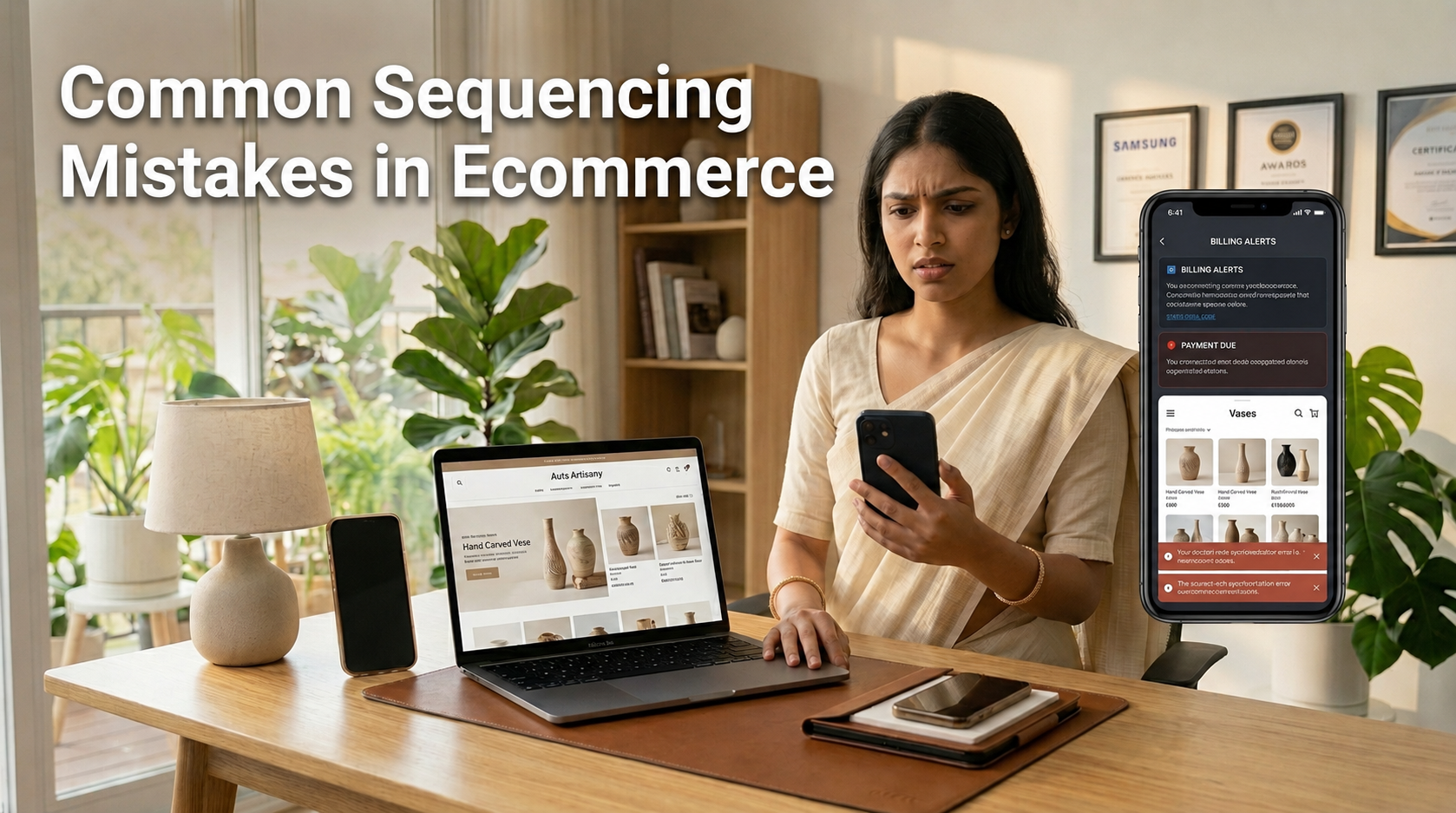
Four mistakes show up repeatedly across ecommerce businesses making this decision. Recognising them early saves months of avoidable rework.
Mistake 1: Launching the App Before the Customer Base Exists
Spending three months and 20,000 USD building an app before the business has its first 100 customers. The app sits empty. No one downloads it. The business spends marketing money trying to drive app installs instead of building the website discoverability that would have brought in customers in the first place.
Mistake 2: Choosing Different Platforms for Website and Future App
Building the website on one platform and assuming an app can be added later from a different vendor. Six months later, the two systems do not sync cleanly. Orders, inventory, and customer accounts live in two places. Operational chaos becomes a daily cost.
Mistake 3: Treating the App as a Mini-Website
Once the app exists, loading the same content into it without taking advantage of native features. Push notifications never configured. One-tap reorder not implemented. Native payment wallets not integrated. The app becomes a duplicate of the website instead of an upgrade over it.
Mistake 4: Skipping the App Forever Because the Website Is Working
The opposite mistake. The website is producing revenue, so the business never adds the app. Two years in, repeat purchase rates plateau. Competitors with apps capture the retention market while you keep paying for paid ads to bring back customers who would otherwise have used your app.
Key Takeaways: Website First or Mobile App First ✓ Launch the website first. It does the heavy lifting for SEO, paid ads, first-time buyer trust, and rapid iteration. ✓ Add the mobile app once you have repeat purchase behaviour, mobile traffic above 70 percent, and roughly 500 to 1,000 monthly orders. ✓ Do not skip the app forever. Repeat purchase rates plateau without it, and competitors with apps win retention. ✓ Choose a platform that supports both website and app on the same backend. Migration later costs time, SEO authority, and customer trust. ✓ Website launch typically takes 2 to 5 days on a modern SaaS platform. Mobile app launches take days to weeks longer due to app store reviews. ✓ Website launch costs 2,000 to 8,000 USD in the first year. Custom app development costs 15,000 to 50,000 USD upfront plus ongoing maintenance. ✓ Mobile app first only makes sense for hyperlocal delivery, gaming, fintech, or content-driven mobile-native products. Not for traditional ecommerce. ✓ The strongest ecommerce businesses run website and app together, not one or the other. Each channel serves a different stage of the customer journey. |
Where Can You Find Authoritative Research on Mobile Commerce Trends?
Government and international sources worth checking when planning your launch sequence:
- U.S. Census Bureau Quarterly E-Commerce Report
- UNCTAD Ecommerce and Digital Economy
- OECD Digital Economy Policies
- World Trade Organization Trade Statistics
Final Thoughts on the Website First or Mobile App First Decision
The Website First or Mobile App First decision is a sequencing question, not a choosing question. Almost every ecommerce business should launch the website first and add the mobile app once repeat purchase patterns appear. The website builds discoverability and first-purchase volume. The app multiplies retention and repeat orders. Both eventually matter. The order in which you build them decides how smoothly your business scales.
Shopaccino is one of the SaaS ecommerce platforms that supports both website and a branded native Android and iOS app on the same backend. The website launches first. The app launches later, on the same platform, with the same inventory, customers, and orders. Multi-warehouse inventory, B2B plus B2C from one dashboard, multi-currency for global sellers, and zero platform transaction fees apply across both channels. For established offline businesses moving online, this sequencing path is structurally simpler than launching the website on one vendor and bolting on an app builder later.
Pick a platform that lets you sequence correctly. Launch the website. Earn the customers. Add the app when the data tells you the timing is right. That is how ecommerce businesses grow without expensive course corrections.
FAQs
Launch the website first. Websites handle SEO, paid ads, first-time buyer trust, and rapid iteration better than apps. Mobile apps should be added later, once you have repeat purchase behaviour and a customer base that already knows your brand. Skipping the website to launch with only an app costs you traffic and trust that take significant time and money to rebuild.
Add a mobile app when you have repeat purchase patterns (20 to 30 percent of customers placing a second order within 90 days), mobile traffic above 70 percent of total visits, and roughly 500 to 1,000 monthly orders. Below these thresholds, the app rarely pays back the launch effort. Above them, the app typically pays for itself within a few months.
Launching a branded ecommerce website on a modern SaaS platform costs 2,000 to 8,000 USD in the first year including subscription, photography, and setup. Custom mobile app development costs 15,000 to 50,000 USD upfront with 500 to 2,000 USD monthly maintenance. Built-in platform apps and third-party app builders sit between these ranges. The website is the cheaper and faster first step.
Yes. Modern SaaS ecommerce platforms like Shopaccino support both a branded website and a native Android and iOS app on the same backend. The website launches first. The app launches later from the same dashboard, with the same products, inventory, customers, and orders. This avoids the operational chaos of running website and app on separate vendors that do not sync cleanly.
Three reasons. First, apps do not get organic discovery the way websites do, so customer acquisition stalls. Second, first-time buyers hesitate to install apps from brands they have never heard of, so first-purchase conversion is low. Third, app development costs more and takes longer than website launch, so the business burns capital before generating revenue. Website first avoids all three problems.
Yes, eventually. The website handles discovery and first-time buyer trust. The mobile app handles repeat purchase and re-engagement. They serve different stages of the customer journey. Running both together delivers stronger growth than either one alone. The right sequence is website first, app added once your business shows repeat purchase patterns and meaningful mobile traffic.