
Want to Start an Online Book Store? A Simple Guide to Launch Your Book Business
The way people buy books has changed dramatically in the digital era. Instead of visiting physical bookstores, many readers now prefer searching, comparing, and purchasing books online. Whether it is novels, academic textbooks, children's books, or competitive exam guides, customers increasingly rely on online platforms to find the books they need.
This shift has created a major opportunity for entrepreneurs who want to build a digital retail business in the book industry.
Launching an online bookstore allows businesses to reach customers beyond their local markets and sell books to readers across cities or even countries. Unlike traditional bookstores that are limited by physical space, an online store can showcase thousands of titles and categories in one place.
However, building a successful online bookstore requires careful planning. Entrepreneurs must select the right book categories, organize their product catalog, manage inventory, and provide a convenient shopping experience for customers.
This is why many entrepreneurs carefully research the process before they start online book store businesses.
In this guide, we will explore how online bookstores work, why they are growing rapidly, and what entrepreneurs need to consider when launching their own online book business.
Why Online Bookstores Are Growing Rapidly
Online bookstores are becoming increasingly popular because they offer convenience and wider product availability compared to traditional bookstores.
Readers today want quick access to books and the ability to explore multiple titles before making a purchase decision. Ecommerce platforms make this possible by providing large book catalogs and easy search features.
Several factors contribute to the rapid growth of online bookstores.
Convenience for Modern Readers
Customers can browse thousands of books from their homes without visiting a physical store. With just a few clicks, readers can place orders and receive books delivered to their doorstep.
Access to Large Book Collections
Online bookstores are not limited by shelf space. They can offer books from multiple publishers and genres, including rare titles or niche subjects.
Easy Price Comparison
Customers can compare prices and reviews before purchasing books, which helps them make better buying decisions.
Growth of Online Learning
The increasing demand for online education and competitive exam preparation has boosted the demand for academic books, study guides, and reference materials.
These trends have created strong demand for online book businesses.
Understanding the Online Bookstore Business Model
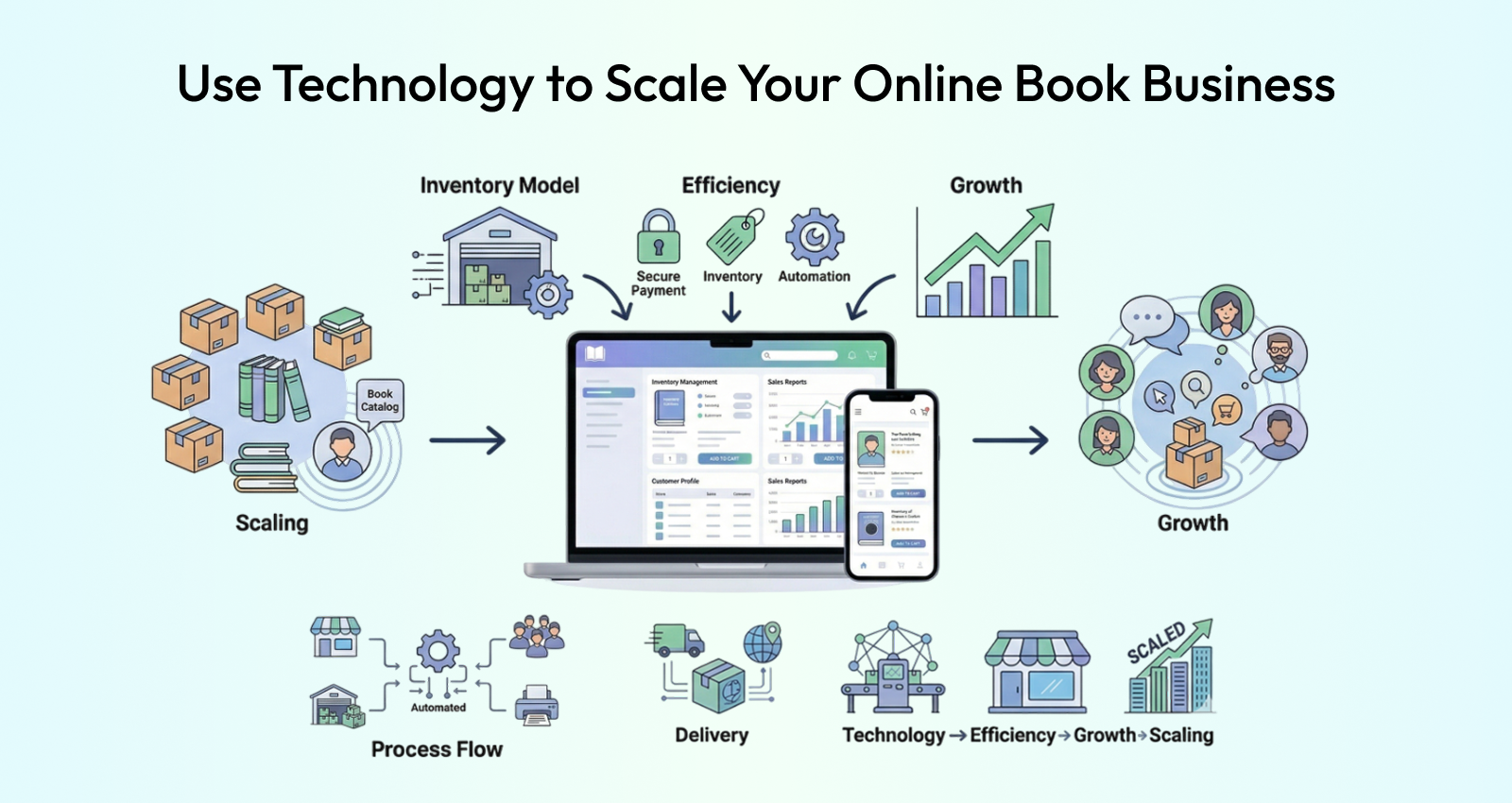
Before launching a bookstore website, entrepreneurs should understand how online book businesses operate.
An online bookstore typically works as an ecommerce platform where customers browse book listings, select titles, and place orders through a website or mobile app — and pairing your store with your own branded app can boost repeat purchases and customer loyalty.
Businesses can operate their bookstore using different business models depending on their resources and strategy.
Inventory-Based Bookstore
In this model, the business purchases books from publishers or distributors and stores them in a warehouse. When customers place orders, the books are shipped directly from the inventory.
Marketplace Model
Some online bookstores operate as marketplaces where multiple sellers or publishers list their books on the platform. The marketplace owner manages the website while sellers handle inventory.
Print-on-Demand Model
In this model, books are printed only when a customer places an order. This approach reduces the need to store large inventories and is commonly used for self-published books.
Each model offers different advantages, and businesses should choose the one that best fits their business goals and available resources.
Key Challenges When Starting an Online Book Business
While launching an online bookstore can be profitable, entrepreneurs must also address several operational challenges.
Understanding these challenges helps businesses build a stronger foundation for their bookstore.
Managing Large Book Catalogs
Online bookstores often carry thousands of titles across different genres. Organizing these books into clear categories is essential for helping customers find what they need.
Supplier and Publisher Coordination
Bookstores must maintain strong relationships with publishers and distributors to ensure consistent product availability.
Competition From Large Marketplaces
Large ecommerce platforms already sell books online, so smaller bookstores must differentiate themselves through niche categories, competitive pricing, or specialized collections.
Customer Experience Expectations
Customers expect easy navigation, fast website loading speed, secure payments, and reliable delivery services.
Addressing these challenges requires the right strategy and the right ecommerce tools.
Essential Features Every Online Bookstore Should Have
To attract customers and generate sales, an online bookstore must provide a smooth and convenient shopping experience.
Several features play an important role in making a bookstore successful.
Well-Organized Book Categories
Books should be organized into categories such as fiction, non-fiction, academic books, children's books, and professional titles.
Powerful Search Function
Customers should be able to search books by title, author, genre, or ISBN number.
Book Reviews and Ratings
Reviews help readers make informed decisions and build trust in the bookstore.
Secure Payment Options
Customers must be able to pay safely using trusted payment gateways.
Reliable Order and Shipping Management
Businesses need systems that track orders and provide delivery updates to customers.
These features improve customer satisfaction and increase the chances of repeat purchases.
Why Choosing the Right Ecommerce Platform Matters
Technology plays a crucial role in the success of an online bookstore. Entrepreneurs who want to build a scalable digital business must choose an ecommerce platform that supports their growth.
A reliable ecommerce platform allows businesses to manage product listings, handle orders, process payments, and track customer activity from one centralized system.
Instead of developing complex systems from scratch, entrepreneurs can use ecommerce platforms that simplify store creation and management.
For example, platforms like Shopaccino allow entrepreneurs to build professional online bookstores with features such as product catalog management, secure payment integration, and order management tools. These platforms help businesses launch their stores quickly and focus more on growing their customer base.
Choosing the right ecommerce platform provides a strong foundation for building a successful online book business.
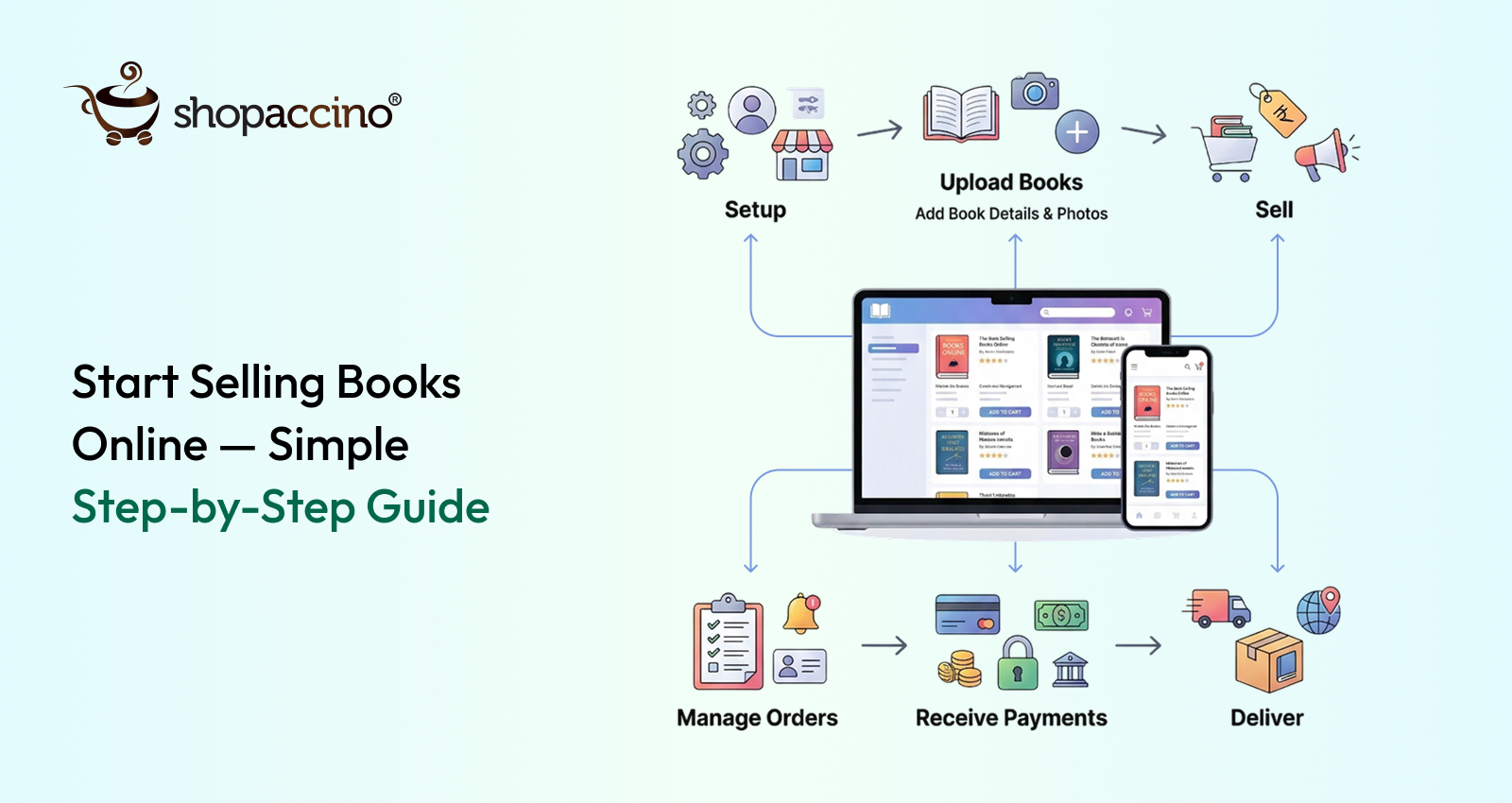
Step-by-Step Guide to Start an Online Bookstore
Starting an online bookstore requires more than simply creating a website and uploading books. Entrepreneurs must plan their business carefully to ensure they can manage inventory, attract customers, and generate consistent sales.
If you are planning to start an online bookstore, following a structured process can help you build a strong foundation for your business.
Step 1: Choose Your Book Niche
The first step is deciding what type of books you want to sell. Some bookstores focus on a wide variety of titles, while others specialize in specific categories.
Common niches include:
- academic and educational books
- fiction and novels
- children’s books
- competitive exam preparation books
- religious or spiritual books
Choosing a niche can help your bookstore stand out and attract a specific audience.
Step 2: Find Reliable Book Suppliers
Once you decide which books to sell, you need to identify reliable suppliers. Bookstores typically source books from:
- publishers
- book distributors
- wholesalers
- independent authors
Maintaining strong relationships with suppliers ensures consistent product availability and competitive pricing.
Step 3: Build Your Online Store
After selecting suppliers, the next step is creating your ecommerce website. Your online store will act as the main platform where customers explore and purchase books.
A professional ecommerce platform allows entrepreneurs to launch their store quickly while managing product catalogs, orders, and payments efficiently.
Important elements of an online bookstore website include:
- organized book categories
- advanced search functionality
- secure payment gateway integration
- order tracking features
These tools make it easier for customers to browse books and complete purchases.
Step 4: Upload Your Book Catalog
Your product catalog is one of the most important parts of your online bookstore. Each book listing should include clear and helpful information.
A good book product page usually includes:
- book title and author name
- book description and summary
- publisher information
- book cover image
- price and availability
Well-written product descriptions help customers understand what the book is about and encourage them to make a purchase.
Step 5: Set Up Shipping and Delivery
Once customers place orders, the bookstore must deliver the books quickly and reliably.
Businesses can partner with shipping providers to handle deliveries. Many ecommerce platforms integrate with shipping services, making it easier to generate shipping labels and track deliveries. If you want to offer same-day or instant delivery for popular titles, it's worth exploring how to set up your own quick commerce platform for faster fulfillment.
Reliable delivery services help build customer trust and improve repeat purchases.
Expanding Your Business by Selling Stationery Products
Many online bookstores increase their revenue by selling stationery products along with books. This approach helps businesses attract students, office professionals, and academic customers who often purchase both books and stationery items together.
This strategy is particularly useful for entrepreneurs interested in starting a stationery business online alongside their bookstore.
Popular stationery products that bookstores can sell include:
- notebooks and journals
- pens and pencils
- school supplies
- art materials
- office stationery
By offering both books and stationery items, businesses can create a complete shopping experience for customers.
For example, students purchasing textbooks may also buy notebooks, highlighters, or exam preparation materials from the same store.
This combination increases average order value and helps grow overall sales.
How to Attract Customers to Your Online Bookstore
Launching a website is only the beginning. To build a successful bookstore, entrepreneurs must actively promote their store and attract readers.
Several marketing strategies can help bookstores grow their customer base.
Search Engine Optimization (SEO)
Optimizing your website for search engines helps customers find your bookstore when they search for books online.
For example, when someone searches for specific book titles or categories, your website can appear in search results if it is properly optimized.
Social Media Promotion
Social media platforms provide opportunities to connect with readers and promote new books.
Bookstores can share:
- new book arrivals
- reading recommendations
- book reviews and summaries
- author interviews or events
These posts help build a community of readers around your brand.
Email Marketing
Email newsletters allow bookstores to inform customers about new book releases, discounts, and special offers.
Regular communication helps maintain engagement with customers.
Special Discounts and Offers
Promotional campaigns, discounts, and bundle offers encourage customers to make purchases.
For example, bookstores may offer:
- discounts on bestselling books
- bundle offers for academic books
- seasonal promotions for students
Marketing strategies help bookstores attract traffic and build long-term relationships with readers.
The Importance of Customer Experience in Online Bookstores
Customer experience plays a major role in determining whether visitors return to your bookstore.
A well-designed online bookstore should provide:
- simple website navigation
- fast page loading speed
- clear product descriptions
- smooth checkout process
- reliable customer support
When customers have a positive experience, they are more likely to recommend the store to others and make repeat purchases.
Providing excellent customer experience helps bookstores build a loyal customer base.
Advanced Strategies to Grow Your Online Bookstore
Launching an online bookstore is only the first step. To build a profitable and sustainable business, entrepreneurs must focus on strategies that help attract more customers and increase sales over time.
Successful online bookstores combine a strong product selection, effective marketing strategies, and efficient operations. By implementing the right approach, entrepreneurs can scale their bookstore business more effectively.
One of the most powerful ways to grow an online bookstore is through content marketing.
Create Content for Readers
Content marketing helps online bookstores build strong relationships with readers and establish authority in the market.
Bookstores can create valuable content such as:
- Book reviews and recommendations
- Reading guides for students
- Curated book lists for specific interests
- Author interviews and book discussions
This type of content attracts readers who are actively searching for information about books and encourages them to engage with your store
How Technology Helps Scale Online Book Businesses
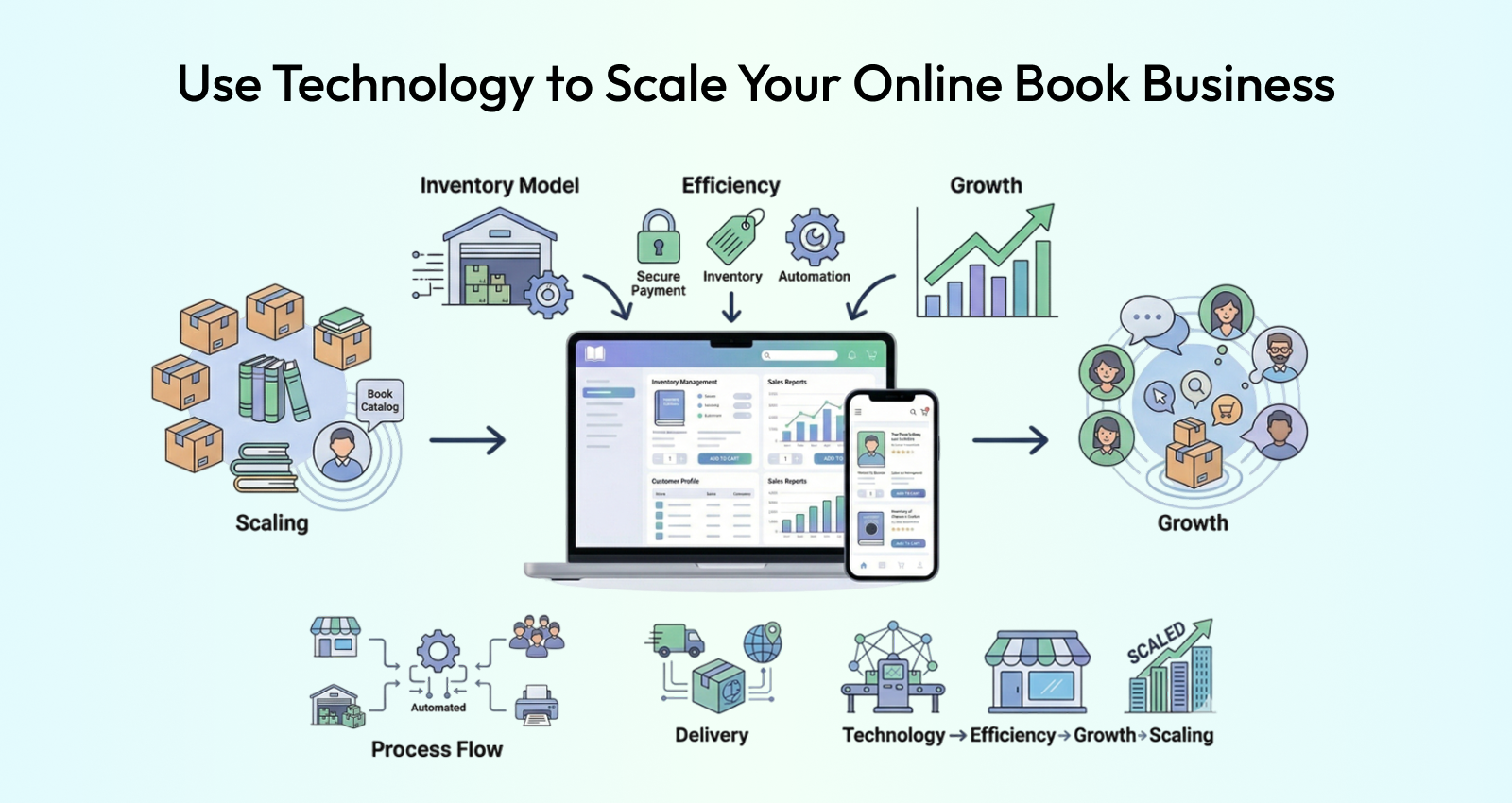
As an online bookstore grows, managing products, orders, and customers manually becomes increasingly difficult. Technology plays a major role in helping businesses handle these operations efficiently.
A reliable ecommerce platform allows bookstore owners to manage their store from one centralized dashboard.
These platforms provide tools that help businesses:
- organize large book catalogs
- track customer orders and deliveries
- manage payments securely
- monitor sales performance
For example, ecommerce platforms like Shopaccino provide features that help entrepreneurs build and manage online bookstores easily. With tools for product management, order tracking, payment integration, and marketing, businesses can focus more on selling books and less on technical challenges — especially when they add the right ecommerce automation tools to handle repetitive tasks as order volume grows.
Using the right technology platform allows bookstore owners to scale their operations without creating additional complexity.
FAQs
To start an online bookstore, begin by selecting a niche such as academic books, fiction, or children's literature. Next, find reliable book suppliers or distributors and create your ecommerce website. Organize your book catalog, add detailed product descriptions, and set up secure payment and delivery systems. Promoting your store through SEO and social media can help attract readers and grow your business.
Building an online bookstore involves choosing an ecommerce platform, designing your website, and uploading your book catalog. Each book listing should include the title, author, description, and price. You also need to integrate payment gateways and shipping services so customers can complete purchases easily. A user-friendly website with good search features helps readers find books quickly.
Yes, many bookstore owners expand their product range by selling stationery products. This strategy is common for entrepreneurs starting a stationery business online along with books. Products such as notebooks, pens, school supplies, and study materials are often purchased together with books, which can increase sales and improve customer convenience.
Popular categories in online bookstores often include academic textbooks, competitive exam preparation guides, children's books, fiction novels, and self-help books. The demand for specific genres may vary depending on the target audience. Researching reader preferences and focusing on a niche category can help bookstores attract loyal customers.
Promoting an online bookstore requires a combination of marketing strategies such as search engine optimization (SEO), social media promotion, email newsletters, and special discounts. Sharing book reviews, reading lists, and author recommendations can also help attract readers and encourage repeat purchases.
Starting an online bookstore can be profitable when entrepreneurs choose the right niche, maintain strong supplier relationships, and promote their store effectively. Offering a wide range of books, providing good customer service, and using digital marketing strategies can help build a steady customer base and generate consistent revenue.
A successful online bookstore should include organized book categories, advanced search options, secure payment gateways, customer reviews, and reliable shipping services. These features make it easier for customers to browse books, place orders, and receive their purchases quickly, improving overall customer satisfaction.