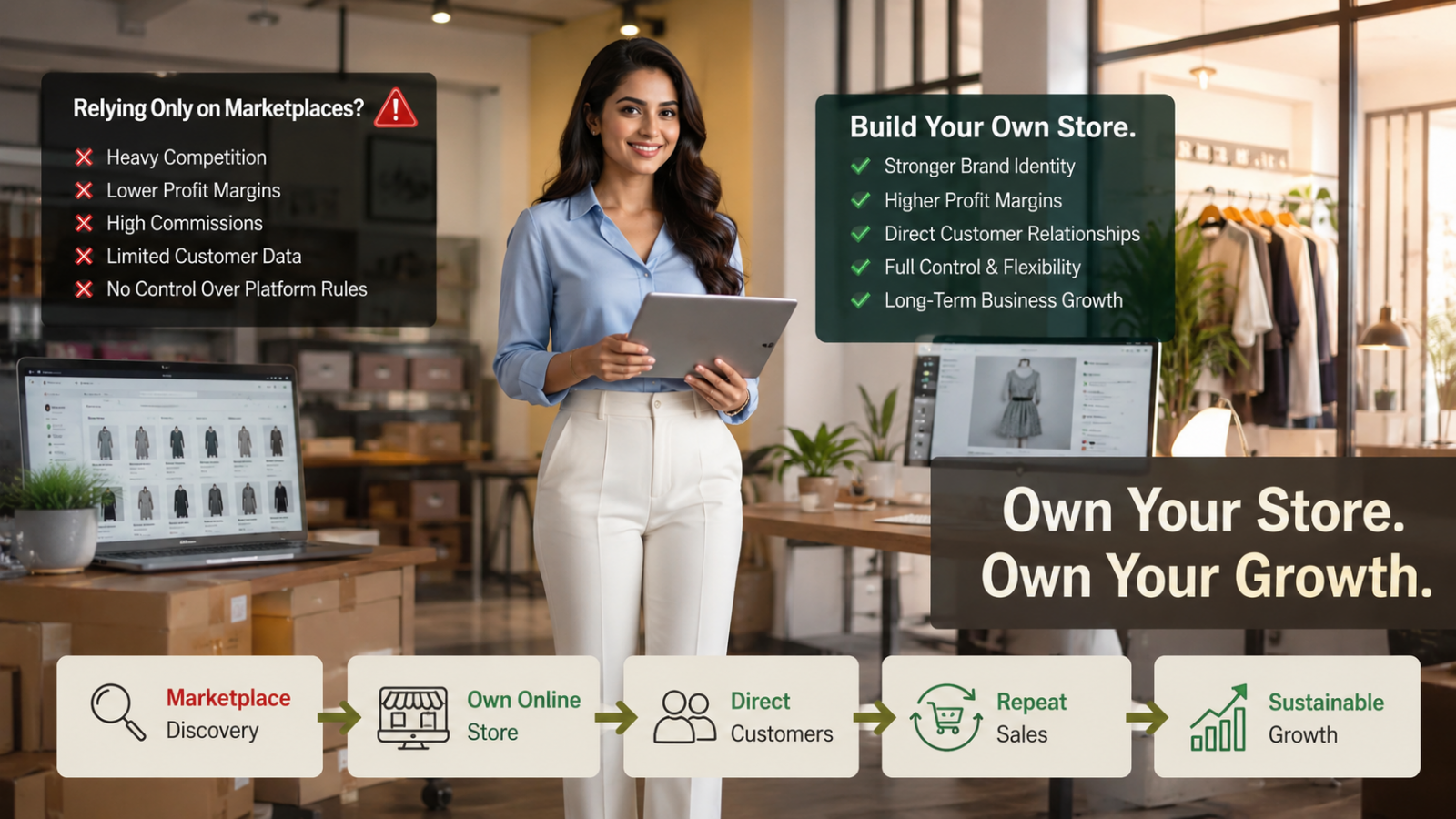
Marketplace Dependency for Brands: The Hidden Risk Growing Ecommerce Businesses Overlook
A single policy update from a marketplace can wipe out a seller's visibility overnight. A sudden account freeze can lock away weeks of revenue with no warning and no one to call. This is the reality that many manufacturers, exporters, distributors, and D2C brands eventually run into once they realise how much of their business sits on rented land.
This is called marketplace dependency for brands, and it is one of the most under-discussed risks in ecommerce today. Marketplaces like Amazon, Flipkart, Etsy, and Alibaba are excellent for discovery and early sales, but building an entire business on top of them, without an owned channel to fall back on, leaves growing brands exposed. This guide breaks down what marketplace dependency actually means, why it quietly creeps into growing businesses, the risks it carries across industries, and the practical steps brands can take to build a safer, more balanced growth model.
What Is Marketplace Dependency for Brands?
Quick Answer Marketplace dependency for brands happens when a business generates most or all of its revenue through third-party marketplaces instead of its own website or app. It means the brand has little control over pricing, customer data, visibility, and policy changes, because a single platform decision can directly affect its income. |
In simple terms, if 80 to 100 percent of your orders come from a marketplace and you have no meaningful direct-to-customer channel, your business is marketplace dependent. The marketplace becomes both your storefront and your landlord, and every rule change, fee hike, or algorithm shift lands directly on your bottom line.
It is worth separating two things here. Selling on a marketplace is not the problem. Selling only on a marketplace, with no owned online store, no customer database, and no independent traffic source, is where the risk builds up.
Why Do So Many Growing Brands Fall Into This Trap?
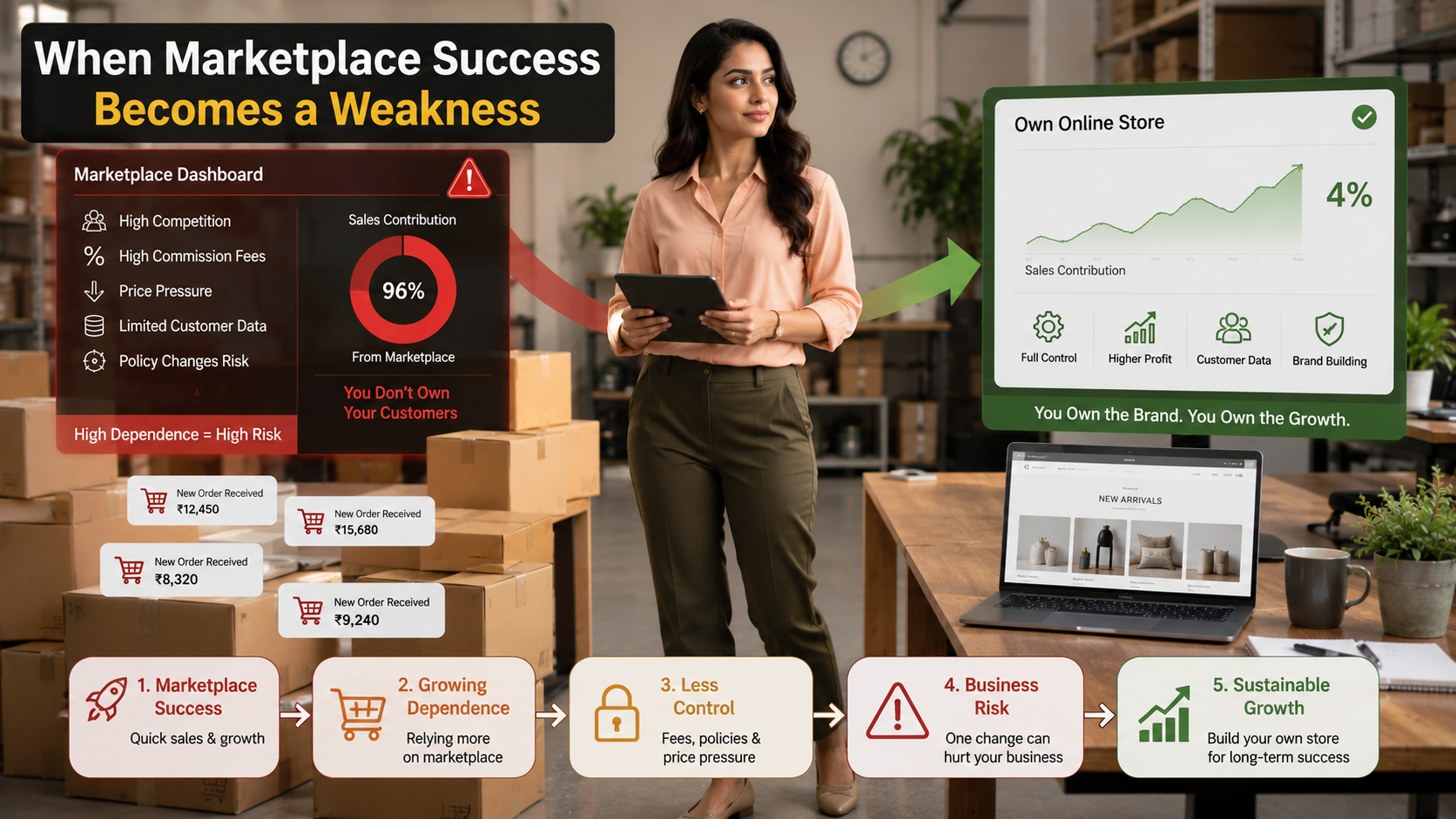
Almost every seller starts on a marketplace for a good reason. It is faster, it comes with ready-made traffic, and it removes the early burden of building a website, running ads, and explaining who you are to a cold audience. For a new fashion label, an electronics reseller, or a small stone and marble exporter, listing on a marketplace can generate the first hundred orders within weeks.
The trouble starts when growth becomes comfort. As monthly orders climb, most founders keep reinvesting in the same channel because it is working, rather than splitting time and budget toward an owned store. A few common reasons this happens:
- Marketplaces already have millions of active shoppers, so acquisition feels effortless compared to building traffic from zero
- Listing a product takes a few hours, while a fully functional branded store feels like a bigger project
- Sellers assume marketplace algorithms will keep rewarding them for good ratings and fast shipping
- There is no immediate financial pain until a suspension, fee hike, or new competitor undercuts pricing
- Many small teams simply do not have the bandwidth to manage two channels at once in the early stage
None of this is a mistake in year one. It becomes a structural weakness in year three or four, once the brand has scaled revenue but never diversified where that revenue comes from. By that stage, teams are often fully occupied managing inventory, fulfilment SLAs, and customer ratings on the marketplace itself, leaving no bandwidth to think about an owned channel until something forces the conversation, usually a fee increase, a suspended listing, or a competitor undercutting prices on the exact same product.
There is also a psychological factor at play. Marketplace dashboards show clear, comforting numbers such as impressions, conversion rate, and daily orders, which makes the channel feel measurable and safe. Building an owned store, on the other hand, feels uncertain in the beginning since traffic and sales take time to build. That short-term comfort is exactly what keeps brands from diversifying until dependency has already set in.
What Are the Hidden Risks of Relying Only on Marketplaces?
This is where marketplace dependency for brands turns from a minor inconvenience into a genuine business risk. Here are the risks that tend to surface only after a brand has scaled.
You Do Not Own Your Customer Data
Marketplaces rarely hand over full buyer information such as email addresses, phone numbers, or purchase behaviour. This means a brand cannot run retargeting campaigns, send a WhatsApp offer, or build an email list from thousands of past orders. Every new sale requires paying for visibility again, because there is no owned audience to sell to directly.
Commission and Advertising Costs Eat Into Margins
Most marketplaces charge referral fees between 8 and 25 percent depending on the category, on top of payment gateway charges and sponsored listing fees. For a product with a 30 percent margin, that can leave very little profit once fulfilment and packaging are accounted for. A business with its own store, especially one with zero transaction fees, keeps a far larger share of every sale.
Sudden Account Suspensions Can Freeze the Entire Business
A policy violation, a customer complaint, a documentation mismatch, or even an automated error can suspend a seller account without much notice. For a brand earning most of its income from that single account, this can mean weeks of zero revenue while an appeal is reviewed, with no alternative channel to lean on in the meantime.
Little Room to Build a Real Brand Identity
Marketplace listings look the same for every seller. Product photos sit in a fixed layout, storytelling is limited to a few bullet points, and there is no way to build a distinct brand experience. Shoppers remember the marketplace, not the seller, which makes it hard to earn repeat customers who search for your brand by name.
Algorithm Changes Can Remove Visibility Overnight
Search ranking on a marketplace is controlled entirely by that platform. A change in ranking logic, a new competitor with lower prices, or a shift toward promoting the marketplace's own private label products can push an established seller off the first page within days.
Constant Price Pressure and Race to the Bottom
Marketplaces make it easy for shoppers to compare prices side by side, which pushes sellers into competing mainly on price rather than value or brand trust. Over time, this pressure can quietly shrink margins across an entire catalogue.
What Does Marketplace Dependency Actually Cost a Brand in Real Numbers?
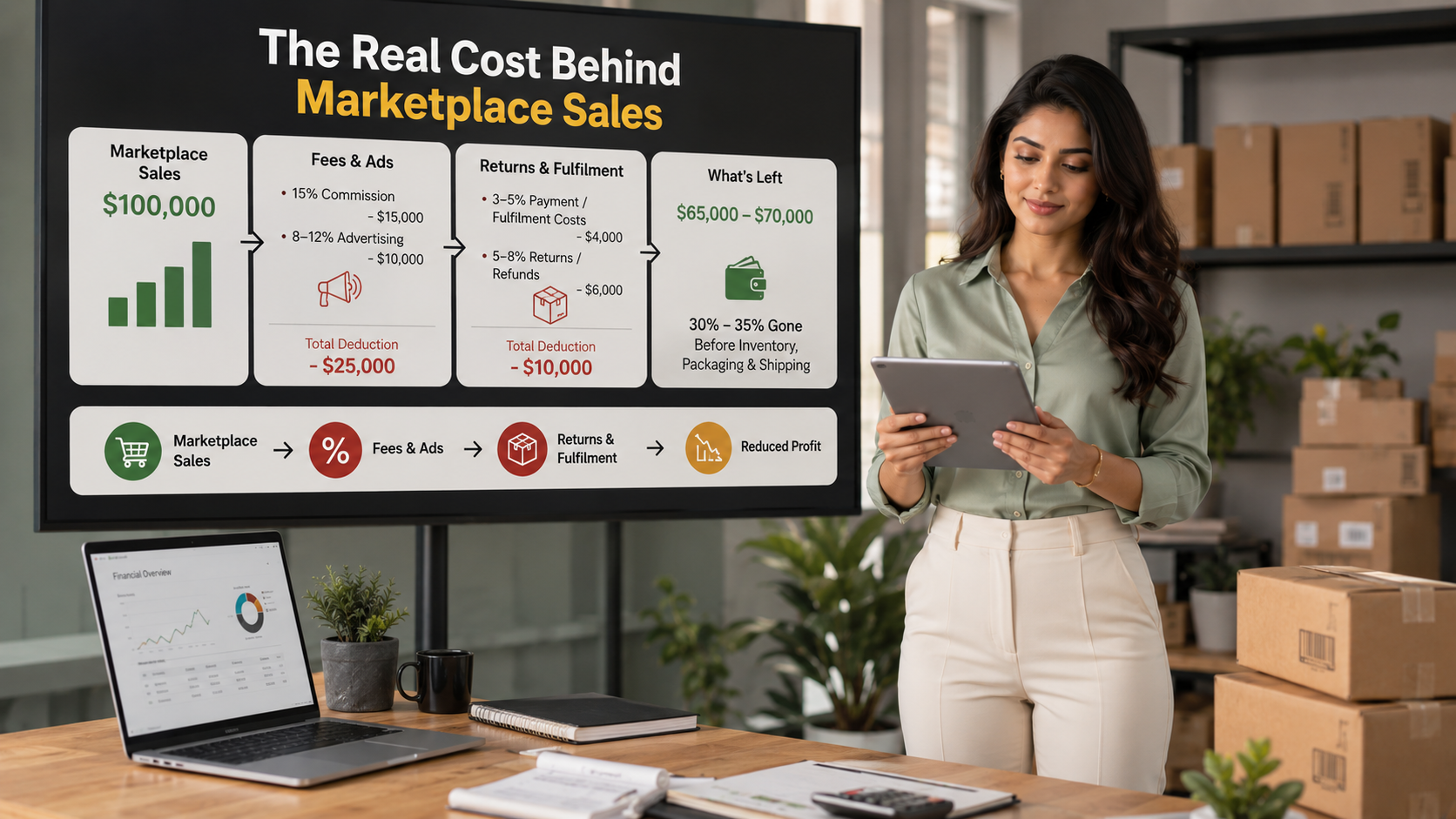
The cost of marketplace dependency rarely shows up as one big number. It quietly stacks up across several small deductions until a brand realises how little of each sale it actually keeps. Consider a mid-sized D2C brand generating 100,000 dollars in monthly marketplace revenue.
- Referral commission at 15 percent removes 15,000 dollars before anything else is counted
- Sponsored listing and ad spend to stay visible often takes another 8 to 12 percent, roughly 10,000 dollars
- Payment gateway and fulfilment charges from the marketplace add another 3 to 5 percent
- Returns and refunds, which tend to run higher on marketplaces due to easy return policies, can quietly remove another 5 to 8 percent
By the time all of this is accounted for, a brand can lose close to 30 to 35 percent of its revenue before it ever touches inventory cost, packaging, or shipping. On an owned store with zero transaction fees, that same 100,000 dollars in sales keeps a significantly larger share in the brand's hands, which compounds into real profit over a year of consistent selling. This is the financial argument for reducing marketplace dependency for brands, not just the operational one.
How Do You Know If Your Brand Has Become Too Marketplace-Dependent?
Quick Self-Check If more than 80 percent of your monthly revenue comes from a single marketplace, if you have no email or WhatsApp list of past buyers, and if you would struggle to survive a 30 day account suspension, your brand is likely over-dependent on marketplace selling. |
Ask these questions honestly about your business:
- Could your business survive financially if one marketplace account was suspended for a month?
- Do you have a list of past customers you can contact directly, outside the marketplace?
- Is your own website generating any meaningful percentage of monthly orders?
- Do you know your true profit margin after marketplace fees, ads, and returns?
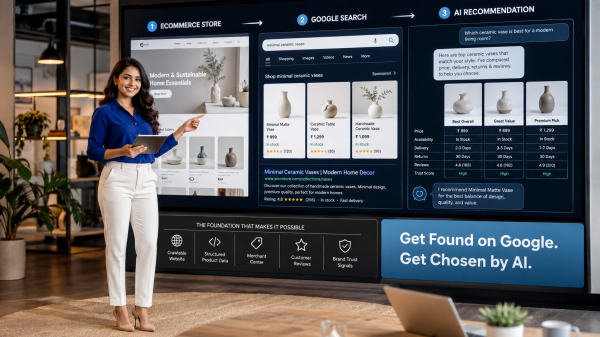
- Can customers find and buy from you if they search your brand name on Google?
If most of these answers are no, it is a strong signal to start building an owned channel alongside your marketplace presence, before a platform decision forces the issue.
What Does Marketplace Dependency Look Like Across Different Industries?
The pattern shows up differently depending on the category, but the underlying risk stays the same.
- Fashion brands often see fast growth on marketplaces during sale seasons, but face heavy return rates and price undercutting from private label competitors, which quietly erodes margins.
- Electronics sellers deal with tight price comparison shopping, where a rival listing just a few dollars cheaper can take away the featured spot instantly.
- Home decor and furnishing brands struggle to showcase texture, craftsmanship, and story within rigid marketplace templates, which matters heavily for a considered purchase.
- Marble, stone, and building material exporters selling through B2B marketplaces often lose direct buyer relationships, since the platform sits between the exporter and the actual importer.
- Beauty and personal care brands face strict listing restrictions on ingredient claims and imagery, limiting how they can educate shoppers compared to their own product pages.
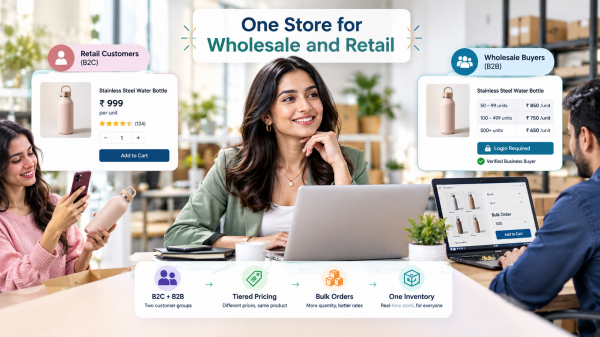
- B2B wholesalers and distributors frequently find that marketplace-only selling makes it difficult to offer custom pricing, credit terms, or bulk order workflows that business buyers expect.
A German home decor label, a Vietnamese electronics reseller, a South African beauty brand, and an Australian marble exporter are all dealing with the same core issue, even though their products and buyers look nothing alike.
What Is the Right Balance Between Marketplaces and Your Own Online Store?
Marketplaces and an owned store are not competitors, they serve different purposes. A marketplace is a discovery engine. An owned store is where a brand builds loyalty, controls margins, and owns the relationship with every customer who buys from it.
Factor | Selling Only on Marketplaces | Owning Your Store + Marketplaces |
Customer data ownership | Mostly hidden or limited | Full access to buyer data |
Fees and commissions | 8% to 25% per sale, plus ad spend | Little to none on a zero-fee platform |
Brand identity and design | Restricted by marketplace templates | Fully customizable storefront |
Risk of account suspension | High, and often sudden | Not applicable, you control the store |
Repeat purchase and loyalty | Hard to build directly | Easy through email, WhatsApp, offers |
Pricing control | Influenced by marketplace algorithms | Set entirely by the brand |
International expansion | Limited to marketplace's reach | Multi-currency, multi-language reach |
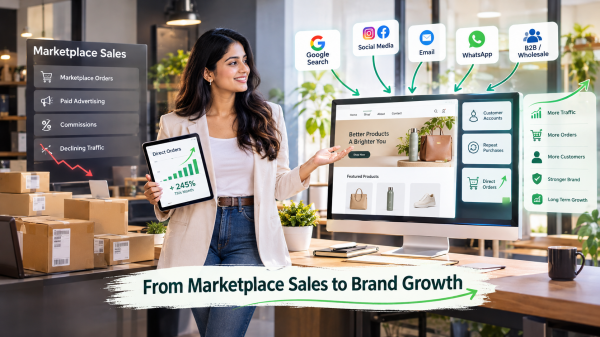
The healthiest model for most growing brands is a hybrid one, where marketplaces bring in new customers and the owned store captures repeat purchases, higher margins, and long-term brand loyalty.
How Can Brands Reduce Marketplace Dependency and Build a Safer Growth Model?
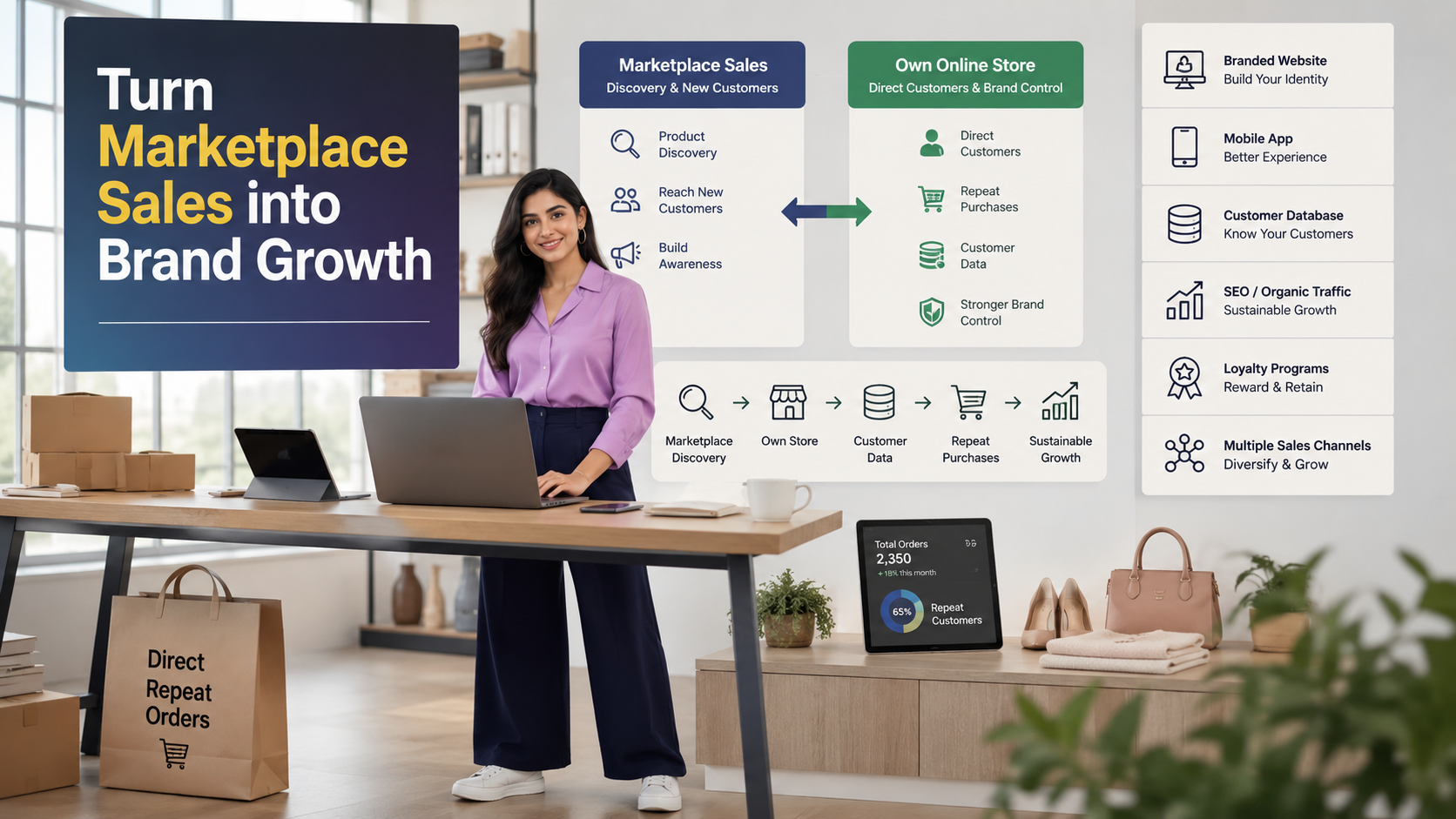
Reducing marketplace dependency does not mean abandoning marketplaces. It means building a second engine that runs in parallel, so the business is never entirely at the mercy of one platform's decisions.
Launch a branded website and mobile app so customers can find, trust, and buy from you directly, without a marketplace acting as the middleman.
Start collecting customer information through every channel available, such as newsletter sign-ups, WhatsApp opt-ins, and loyalty programs, so you own a database that no platform can take away.
Invest in SEO and organic content so your brand shows up when people search for your products by name, reducing reliance on paid marketplace advertising.
Offer something on your own store that the marketplace cannot, such as bundle pricing, early access to new products, custom orders, or better after-sales support.
Diversify across two or three marketplaces instead of one, so a single suspension or policy change does not stop revenue completely.
Track your true numbers separately for each channel, including fees, ad spend, and returns, so you always know where your real profit is coming from.
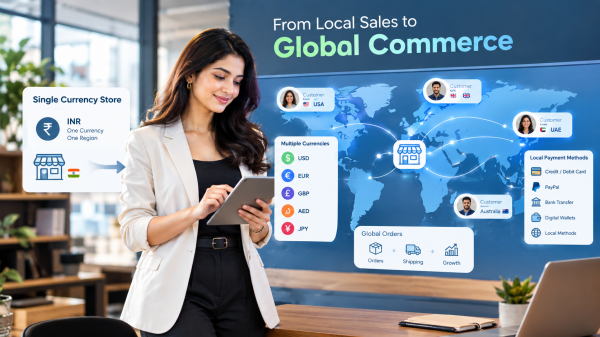
This is exactly the gap platforms like Shopaccino are built to close. Shopaccino gives manufacturers, exporters, distributors, and D2C brands their own branded website and mobile app, with built-in inventory, multi-warehouse fulfilment, payments, and logistics handled from a single dashboard, and zero transaction fees so brands keep what they earn. For businesses selling across borders, it also supports multi-currency pricing, multi-language storefronts, and region-based pricing, which makes it easier to serve international buyers directly instead of relying only on a marketplace's reach.
Marketplace Dependency for Brands: The Bottom Line
Marketplaces will always have a place in a smart ecommerce strategy, they bring in discovery, volume, and trust that new brands cannot build overnight on their own. But treating a marketplace as your only channel puts the future of your business in someone else's hands. Reducing marketplace dependency for brands is not about walking away from platforms that work, it is about building an owned store, an owned customer list, and an owned brand identity that keeps generating revenue no matter what a marketplace decides to change next. The brands that grow steadily over the next decade will be the ones that treated marketplaces as one channel among several, not as their entire business.
FAQs
It is when a business relies on one or two third-party marketplaces for most of its sales, with no significant owned website or customer database. This leaves the brand's revenue, visibility, and pricing largely controlled by decisions made outside its own business.
Marketplaces can change fees, algorithms, or policies at any time, and accounts can be suspended without much warning. Brands with no owned channel have no fallback during these disruptions, which can stop revenue completely until the issue is resolved.
There is no fixed rule, but many ecommerce experts suggest keeping marketplace revenue under 60 to 70 percent of total sales, so an owned store can absorb the impact if a marketplace channel slows down or gets suspended.
Yes, but it is harder in the early stage since marketplaces bring built-in traffic. A more practical approach is starting on marketplaces for visibility, while building an owned website in parallel to reduce dependency over time.
Not necessarily. Marketplaces charge ongoing commissions and advertising fees on every sale, while a platform with zero transaction fees can actually cost less over time, especially as order volume grows.
Shopaccino gives brands their own branded website and mobile app with integrated inventory, payments, logistics, and multi-warehouse fulfilment, along with multi-currency and multi-language support for international buyers, all with zero transaction fees on sales.