What Is B2B Ecommerce? Meaning, Types & Benefits
Picture a mid-sized clothing manufacturer with a solid product line and loyal retail buyers. Every morning starts the same way: the phone rings with a distributor asking if 500 units of a certain size are still in stock, someone scrolls through a WhatsApp thread to figure out what a buyer ordered last night, and a staff member flips through a notebook to confirm the price quoted to a repeat customer last month. By afternoon, half the team is untangling a mixed-up order because two different people wrote down two different quantities.
This is what running B2B sales without a proper system actually looks like on the ground, not a hypothetical, but the daily reality for thousands of manufacturers and distributors. Stock runs out without warning because nobody has a live count. Deliveries slip past their promised dates because orders sit buried in an inbox or a chat thread for two days before anyone processes them. Wrong sizes, wrong quantities, or outdated pricing go out the door because an order taken over a phone call got written down wrong. Buyers get frustrated, some quietly move to a competitor who can confirm stock instantly, and the business never quite figures out why sales stalled last quarter.
None of this is a management failure. It's simply what happens when a growing B2B business keeps running on phone calls, WhatsApp messages, and notebooks long after its order volume has outgrown that system. The fix isn't more staff or longer hours, it's a B2B ecommerce platform built to handle exactly this kind of order volume, pricing complexity, and stock movement without anyone needing to remember it all.
That shift, from daily chaos to steady control, is what this guide is really about. We'll cover what business to business B2B ecommerce actually means, how it works, its types, real examples, and exactly what changes for a business once it moves from manual order-taking to proper B2B ecommerce platform software.
What Is Business-to-Business (B2B) Ecommerce?
B2B ecommerce, short for business-to-business ecommerce, is business commerce, the buying and selling of goods or services between businesses, carried out through an online platform rather than through phone calls, paper catalogs, or in-person sales visits. Instead of selling to an individual shopper, a business sells to other businesses, often dozens or hundreds of them at once, each of which may see its own pricing, catalog, or terms depending on the account.
If you're searching for what is business to business B2B ecommerce in one line, here it is: businesses completing transactions with each other online, usually involving larger quantities, account-specific pricing, and a longer relationship than a typical one-time consumer purchase. A single seller might run this with one buyer or with thousands of them, each seeing their own catalog and price list.
This is different from a retail checkout page. A B2B online store usually shows different prices to different logged-in accounts, allows minimum order quantities, and supports payment terms like net 30 or net 60 instead of requiring payment upfront.
B2B vs B2C Ecommerce: What's the Difference?
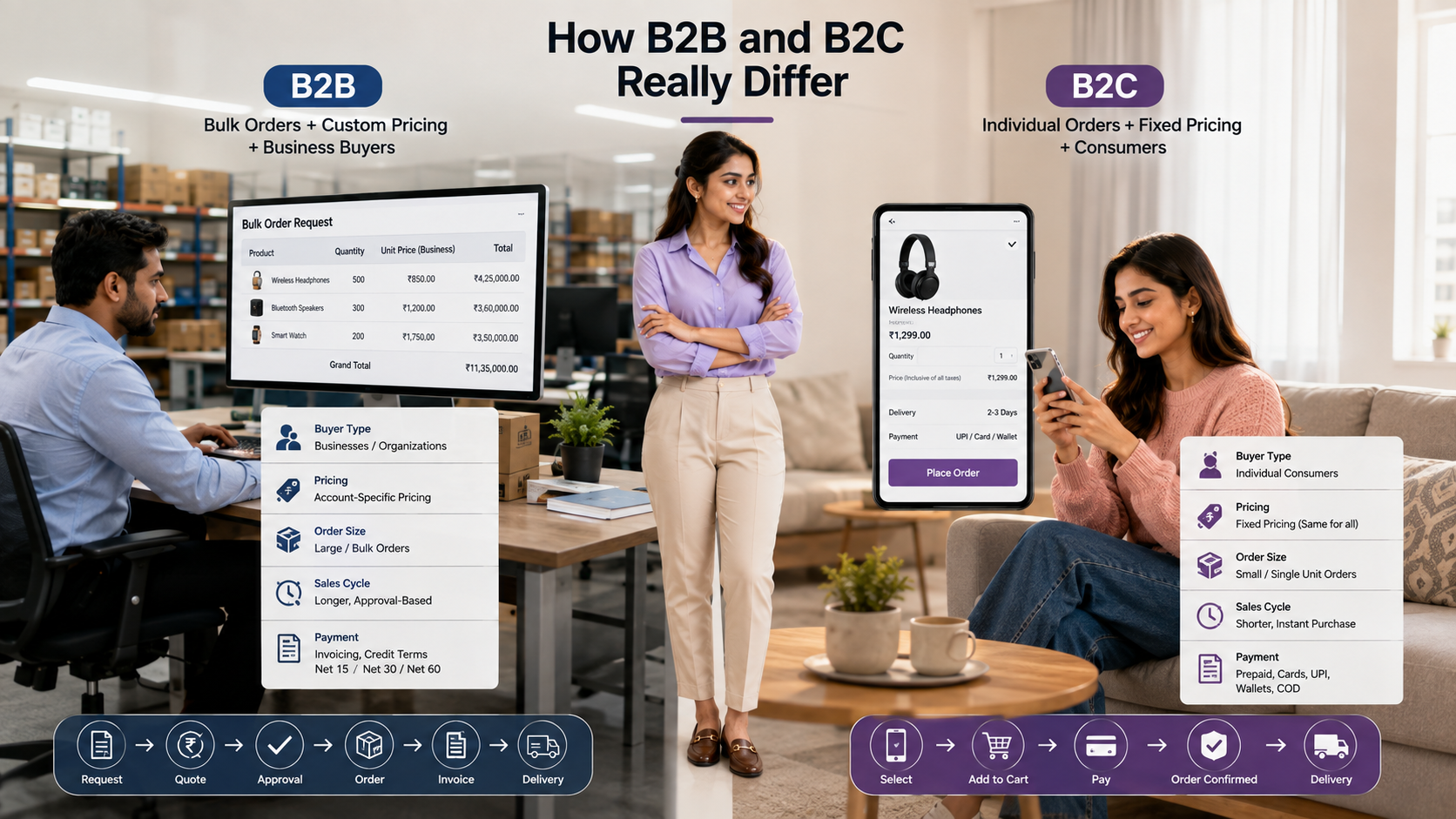
At a glance, a B2B storefront and a B2C storefront can look almost identical. Both have product listings, a cart, and a checkout button. The real difference shows up the moment you look at who's buying and how the sale actually happens.
In B2C ecommerce, an individual shopper buys one or a few items for personal use, pays the listed price instantly, and expects the order shipped within days. There's no negotiation, no internal approval chain, and rarely a second conversation before the sale closes.
In B2B ecommerce, the buyer is a business, not a person shopping for themselves. Orders are placed in bulk, pricing is often unique to that specific account, and the purchase might need sign-off from more than one person before it's confirmed. A single order can be worth more than an entire month of B2C sales, and the relationship is expected to continue well beyond that one transaction.
| Aspect | B2B Ecommerce | B2C Ecommerce |
|---|---|---|
|
Buyer |
Another business |
An individual consumer |
|
Pricing |
Account-specific, negotiated, tiered by quantity |
One fixed retail price for everyone |
|
Order size |
Bulk quantities, high order value |
Single item or a small basket |
|
Sales cycle |
Days to weeks, sometimes needs approval |
Instant, one click to buy |
|
Payment terms |
Credit terms, part payment, invoicing |
Paid in full at checkout |
|
Relationship |
Long-term, repeat business |
Often one-off or occasional |
A growing number of manufacturers and distributors don't pick one model and stop there. They sell wholesale to other businesses while also selling finished goods directly to consumers, which is exactly why running both B2B and B2C from one connected system, instead of two separate platforms, has become the practical choice rather than a nice-to-have.
What Happens When Manufacturers and Distributors Run B2B Without a B2B Ecommerce Platform?
Go back to that clothing manufacturer for a moment. Without a proper system, a handful of very specific problems show up again and again, and they compound over time.
Stock visibility is the first casualty. When inventory only lives in someone's head or a spreadsheet updated once a day, sales staff end up promising stock that's already gone, and orders get confirmed for products that can't actually ship on time.
Order-taking through calls and WhatsApp introduces mistakes nobody catches until it's too late. A quantity gets misheard, a size gets mistyped, or a price quoted last month gets applied to this month's order by mistake. Each of these seems small until it's multiplied across dozens of buyers placing orders every week.
Delivery timelines slip because orders sit unprocessed. A message in a WhatsApp chat can get buried under fifty other messages within an hour. By the time someone notices it, the buyer's expected delivery window has already passed.
There's no single view of who ordered what, when, or how much they owe. Payment follow-ups, credit limits, and repeat-order patterns all live in someone's memory or scattered notebooks, which makes it nearly impossible to spot which buyers are profitable and which ones are quietly costing the business money.
Stock is available, but it isn't managed properly. The owner often doesn't know which products are currently in stock and which ones have already run out. When an order comes in, they may not be able to fulfill it, not because the product isn't there, but because nobody has accurate information about what's actually on the shelf. At the end of the year, whatever is still sitting unsold gets put on sale just to clear it out. That eats into profit, and some years it turns into an outright loss.
The most expensive part of all this is that it rarely shows up as one dramatic failure. It shows up as a slow leak: a buyer who stops ordering after one bad experience, a shipment that goes out late and damages trust, a pricing mistake that eats into margin without anyone noticing for months. By the time a business owner realizes sales have stalled, the actual causes are usually stock, order, and communication problems that built up quietly over a year.
What Changes After Adopting a B2B Ecommerce Platform?
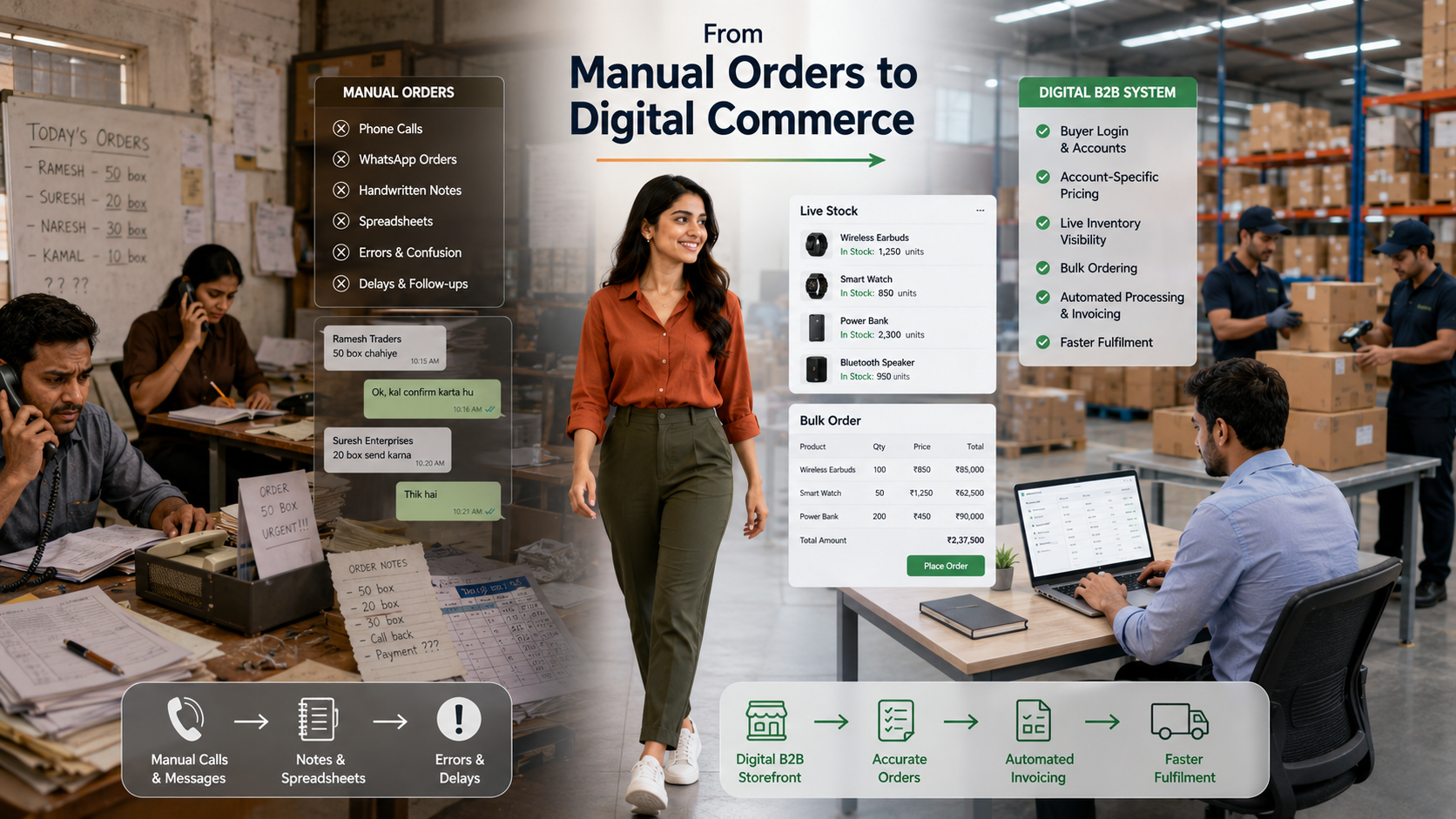
Now picture the same clothing manufacturer six months after moving their B2B sales onto a proper B2B ecommerce platform software.
Every distributor and retailer logs into their own account and sees real stock, not what someone thinks is in the warehouse, but what's actually there right now. If a size or color is sold out, the buyer sees that instantly instead of placing an order that will disappoint them later.
Orders come in through the platform itself, not a phone call or a chat thread, so the exact quantity, size, and price the buyer selected is what gets processed. There's no translation step where a mistake can creep in.
Deliveries go out on schedule because orders don't sit waiting to be noticed. The moment an order is placed and approved, it flows straight into fulfillment, shrinking the gap between placing an order and the warehouse packing it from days to minutes.
Every buyer's order history, pricing, and outstanding balance live in one place, which makes it obvious which accounts are growing, which ones need a follow-up call, and which ones are worth offering better terms to keep.
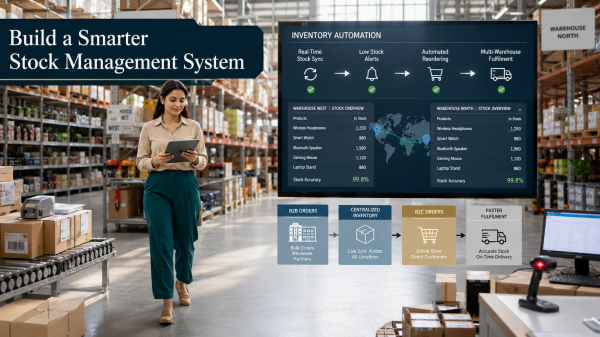
Inventory is tracked accurately, so stock decisions are based on facts, not guesses. The owner always knows exactly which products are in stock and which ones have run out, so orders get fulfilled correctly instead of promised and then let down. With that kind of visibility, slow-moving stock gets noticed while there's still time to sell it at full price, instead of piling up until it has to go on sale at the end of the year. Manage inventory properly and the same business can often make twice the profit it was making before.
Orders don't wait for office hours. A distributor in a different time zone can place an order at midnight and see it confirmed by morning, instead of waiting for someone to pick up a phone call the next day.
Taking on new buyers doesn't mean growing the back office at the same pace. Once pricing, invoicing, and stock sync run on their own, going from a hundred buyer accounts to five hundred doesn't require five times the staff to manage them.
Markets that used to be out of reach start to look realistic. A manufacturer that once relied entirely on trade shows and local relationships can take orders from a distributor on another continent, as long as the platform handles currency conversion, region-based pricing, and cross-border B2B trade properly.
These gains don't depend on any one person remembering everything, which is exactly why manufacturers and distributors who make this shift see steady, compounding results: fewer stock-related losses, fewer delivery complaints, less unsold inventory dumped at a discount, and higher repeat-order rates because buyers trust the process. A B2B ecommerce platform gives a business owner an accurate, real-time view of orders, stock, and payments, and that's what turns year-over-year profit growth from a guessing game into something they can actually plan for and manage.
What Are the Common Myths About B2B Ecommerce?
A lot of manufacturers and distributors hold off on going digital because of a few outdated beliefs. Here's what's actually true.
Myth: B2B buyers still prefer picking up the phone.
Reality: most business buyers now research and compare online before ever contacting a sales rep, and plenty would rather place a repeat order themselves than wait for a callback. The habits people build as consumers don't disappear the moment they're buying for their job.
Myth: B2B ecommerce is just B2C with bigger order quantities.
Reality: the pricing logic alone is different. B2C shows the same price to everyone. B2B often needs a different price for every account, sometimes a different price for the same account depending on order size, plus credit terms, approval workflows, and tax rules a consumer checkout was never built to handle.
Myth: Setting up B2B ecommerce is expensive and takes months.
Reality: that was true when every B2B platform had to be custom-built from scratch. Ready-made platforms with B2B features built in can have a basic self-service storefront running in weeks, not quarters.
Myth: Business buyers don't shop from their phones.
Reality: field sales reps, procurement managers, and warehouse staff check stock and place orders from their phones constantly, especially outside office hours. A storefront that isn't mobile-friendly quietly loses orders nobody ever complains about, they just go to a competitor instead.
Myth: Only small, low-value orders happen online.
Reality: six and seven-figure B2B deals are increasingly closed through digital channels, sometimes without a single phone call, especially once a buyer already trusts the relationship.
How Did Business-to-Business Trade End Up Online?
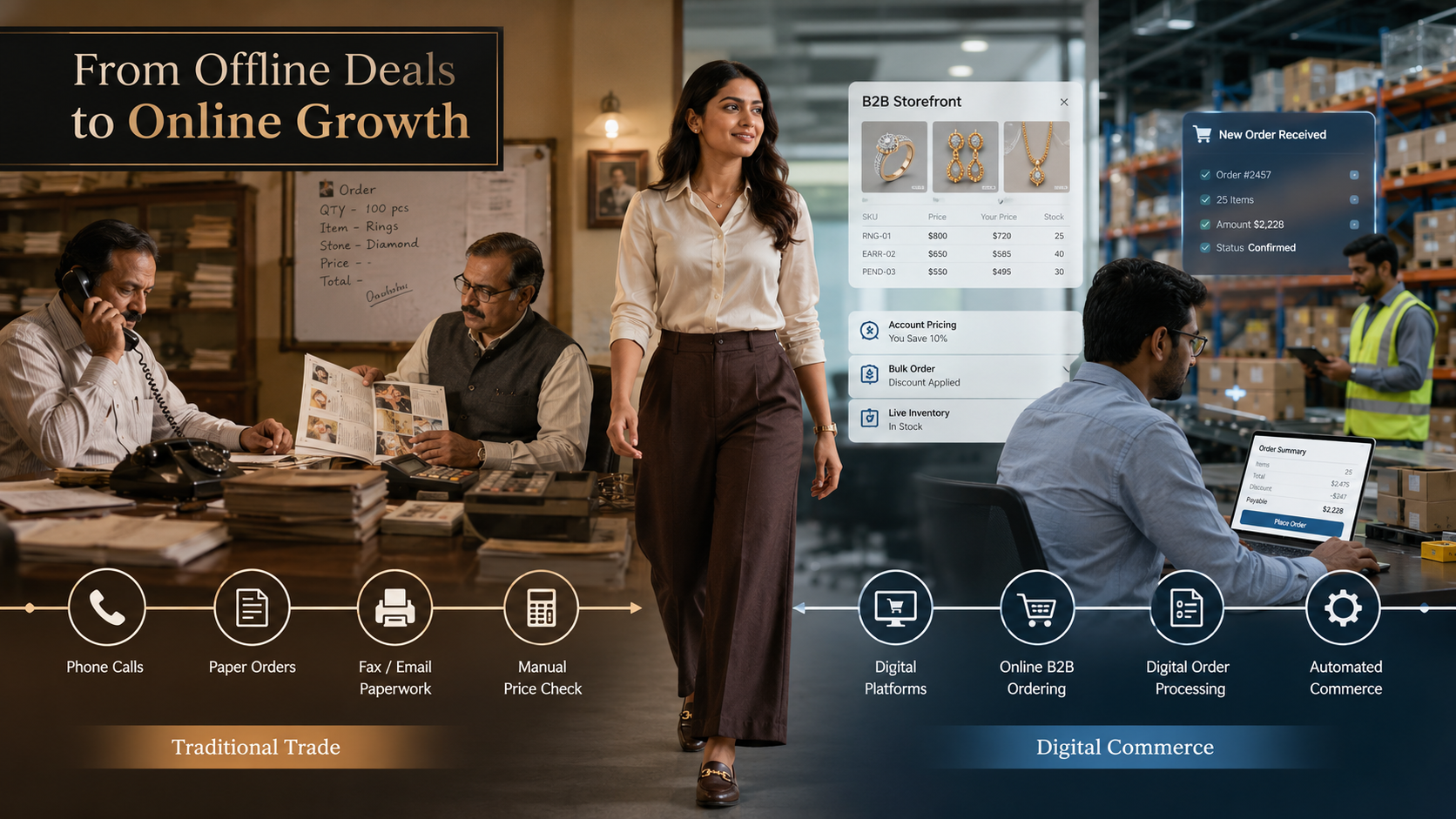
For decades, most business-to-business trade ran on relationships built over the phone and confirmed on paper. A distributor called their supplier, read out a list of items, and waited for a fax or email confirming stock and price. It worked, but it was slow and depended heavily on a handful of people remembering pricing agreements correctly.
The shift started when large platforms like Alibaba and Amazon Business proved that business buyers were willing to search, compare, and order online, the same way consumers had already been doing on B2C sites for years. Once that trust was established, smaller manufacturers, wholesalers, and exporters realized they didn't need to build anything from scratch. They could run their own storefront with account-based pricing and let buyers place orders any time, from anywhere in the world.
Today, this isn't limited to giant marketplaces. A mid-sized manufacturer in Vietnam or a stone exporter in Turkey can run the same kind of digital storefront a distributor in Chicago uses to order raw materials.
How Does Business-to-Business (B2B) Ecommerce Actually Work?
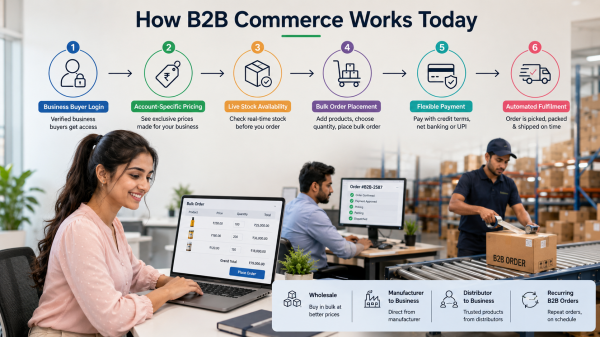
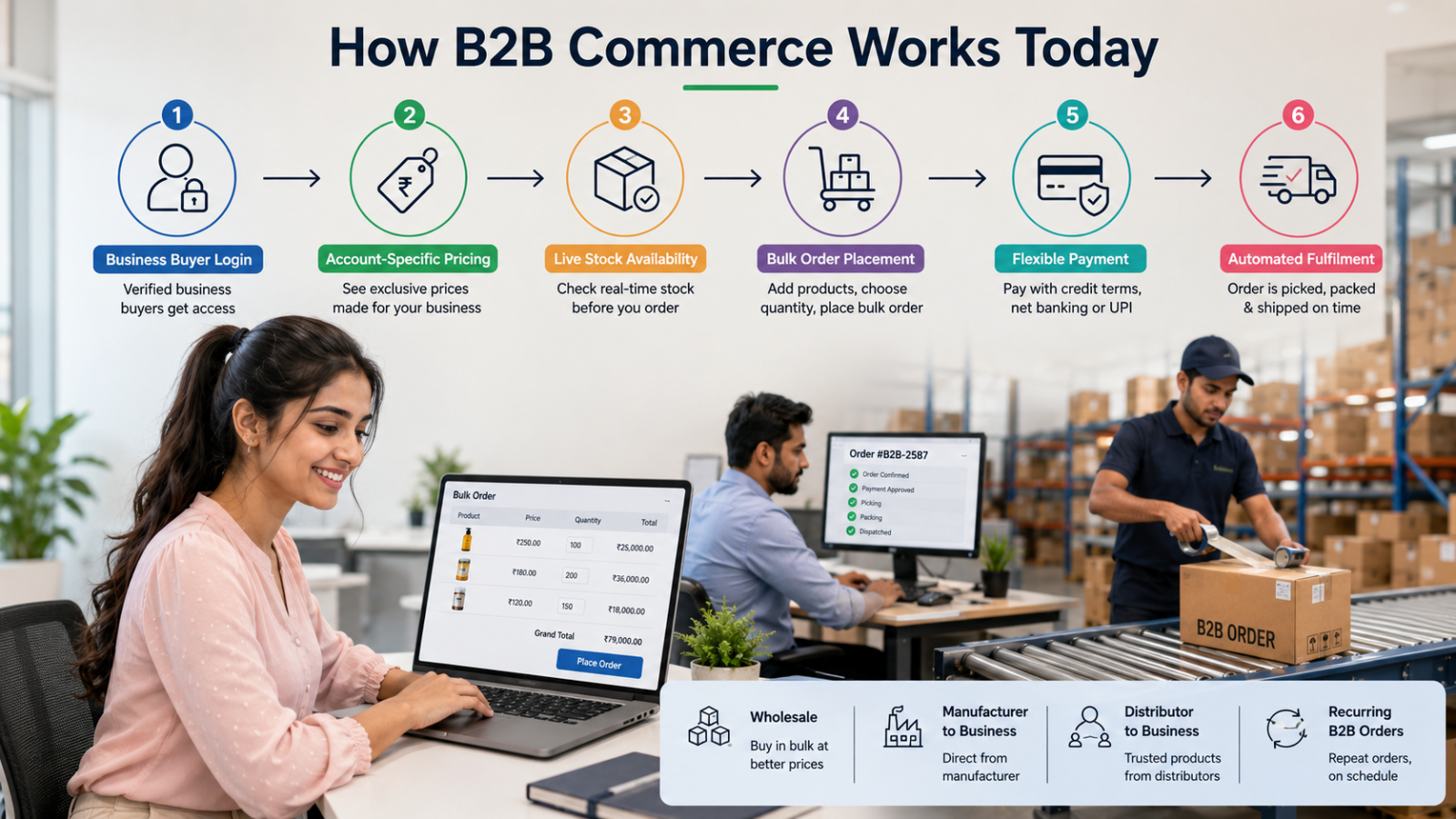
Say a distributor named Elena runs a hardware supply business in Poland. She needs to restock bolts and fittings from a manufacturer she's ordered from twice before. Here's what that looks like on a modern B2B platform.
- She logs in. Her account is tied to her business, so she sees the specific catalog and pricing set up for her account, which might differ from what a buyer in another country or order-size tier would see.
- She checks live stock. Instead of emailing to ask if 2,000 units are available, she sees real-time inventory pulled straight from the warehouse system.
- She places a bulk order. Because she's ordering above the minimum order quantity, she gets the wholesale rate automatically, no negotiation needed for a repeat purchase.
- The order might need approval. If Elena's company requires internal sign-off above a certain amount, the order sits in an approval queue before it's confirmed, all inside the same system.
- She pays on her terms. Depending on what's been agreed, she might pay instantly online, pay a deposit with the rest due on delivery, or use extended credit terms.
- The order syncs automatically. On the seller's side, it updates inventory, triggers a warehouse pick, and creates an invoice, all without anyone manually retyping the order into a spreadsheet.
That's the core loop behind almost every B2B transaction happening online right now: log in, see account-specific catalog and pricing, order in bulk, get approval where needed, pay flexibly, and let fulfillment happen automatically. The details change by industry, but this sequence rarely does.
What Are the Different Types of B2B Ecommerce?
Not all B2B ecommerce looks the same. The right setup depends on where a business sits in the supply chain.
Wholesale ecommerce is bulk selling to retailers or other resellers, usually with tiered pricing based on quantity. A textile wholesaler selling in bulk to boutique clothing stores is a straightforward example.
Manufacturer-to-business (M2B) selling means manufacturers sell components, raw materials, or finished products directly to other businesses, sometimes skipping traditional distributors altogether.
Distributor-to-business (D2B) selling puts distributors between manufacturers and smaller buyers, managing dozens or hundreds of accounts, each with different pricing tiers, territories, and order histories.
B2B2C happens when a business sells to another business, which then sells to the end consumer. A private-label skincare manufacturer supplying a retail brand that sells under its own name is a common setup.
A B2B marketplace is a neutral platform where many sellers list products for business buyers to browse and purchase, similar in structure to how Alibaba or IndiaMART work, just built around business accounts rather than individual shoppers.
Recurring or subscription B2B selling covers businesses that sell repeat supplies or services, like a packaging supplier that ships materials to a factory on a set schedule, or software sold to other businesses on a subscription basis.
| Type | Who's selling | Who's buying | Example |
|---|---|---|---|
| Wholesale | Wholesaler | Retailer / reseller | Textile wholesaler selling to boutique clothing stores |
| Manufacturer-to-business | Manufacturer | Another business | Auto parts maker selling to an assembly plant |
| Distributor-to-business | Distributor | Smaller businesses | Electronics distributor selling to local retailers |
| B2B2C | Business | Another business, then the consumer | Private-label manufacturer supplying a retail brand |
| B2B marketplace | Multiple sellers | Business buyers | Alibaba or IndiaMART-style platforms |
| Recurring / subscription B2B | Supplier | Business (repeat orders) | Packaging supplier shipping on a set schedule |
Most growing businesses don't fit into just one row. A manufacturer might sell wholesale to distributors while also running a B2B2C relationship with a retail partner, and increasingly, the same business also sells directly to consumers through its own website. That's exactly why manufacturers and distributors are moving toward platforms that can run B2B and B2C from one system instead of stitching together separate tools for each.
What Are Some Real Examples of B2B Ecommerce?
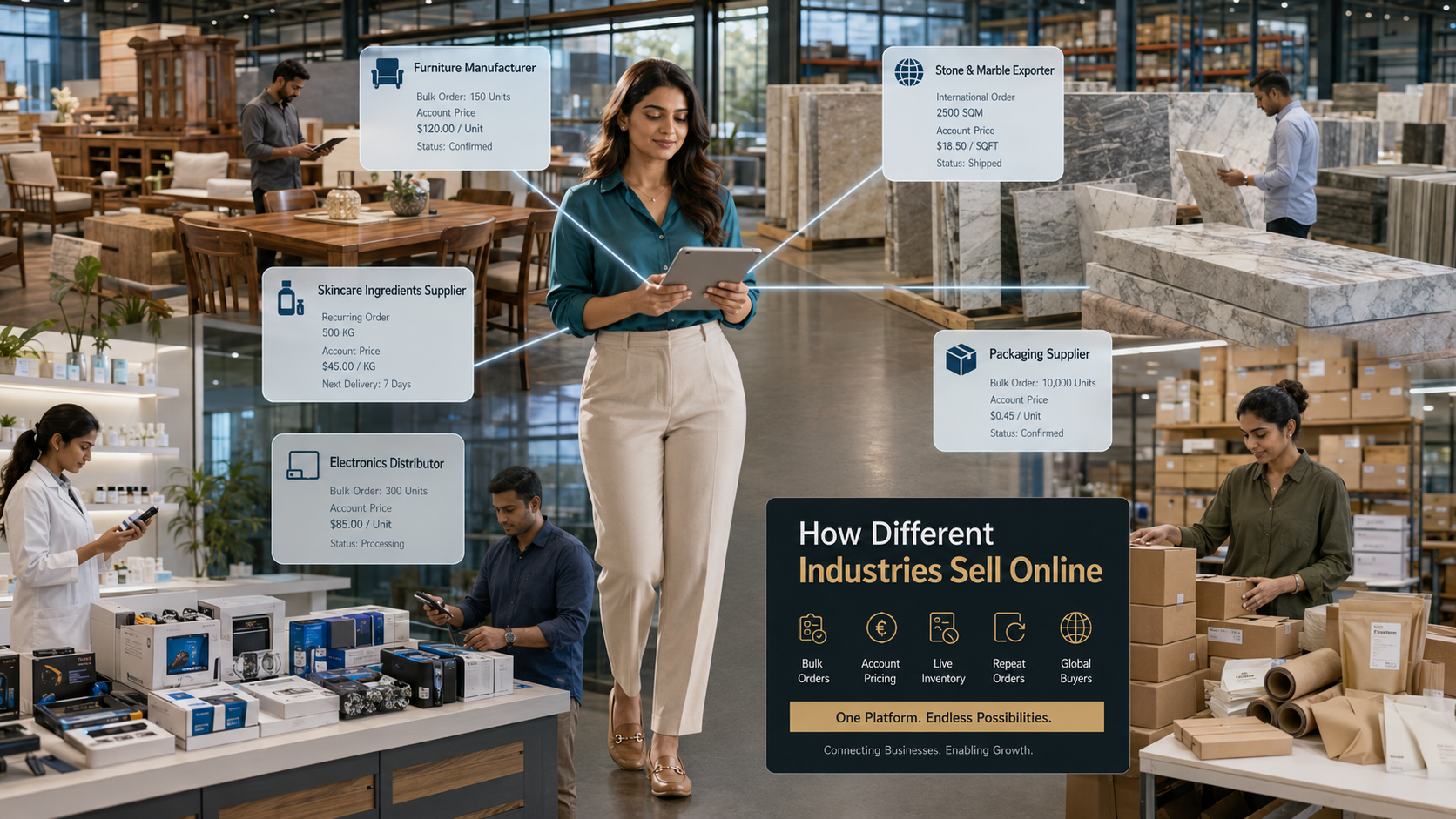
Seeing this in practice makes it easier to picture for your own business.
- A furniture manufacturer in Vietnam lists its catalog on a B2B marketplace and also runs its own branded storefront for repeat international buyers, giving each major client custom pricing based on order history.
- A stone and marble exporter in India sets up region-based pricing so a buyer in the Middle East sees pricing and shipping estimates different from a buyer in Europe, without maintaining two separate websites.
- A skincare ingredients supplier lets cosmetic brands place recurring monthly orders through a self-service portal instead of calling a sales rep every time they need to restock.
- An electronics distributor manages hundreds of retailer accounts, each with negotiated pricing, and lets those retailers check stock and reorder without ever picking up the phone.
- A packaging company sells directly to smaller ecommerce brands, offering low minimum order quantities so a growing D2C brand can order exactly what it needs without overcommitting to a warehouse full of boxes.
What connects all of these examples is that the seller isn't treating every buyer the way a retail store treats a walk-in customer. Pricing, minimum quantities, payment terms, and even the catalog itself can change depending on who's logged in, and that flexibility is the whole point.
How Do B2B Ecommerce Needs Change as a Business Grows?
What you need from B2B ecommerce on day one isn't what you'll need three years later. It helps to think about it in four rough stages.
Just starting out. The goal here is simply proving that buyers will order online at all. A basic storefront with a handful of buyer accounts and manual approval for anything unusual is enough. You're testing pricing and catalog structure more than chasing volume.
Gaining traction. Once repeat orders start coming in predictably, the priority shifts to cutting manual work: automated invoicing, saved reorder lists, and clearer stock visibility so your team isn't fielding the same questions over and over.
Scaling up. This is when businesses usually start feeling real pain if their systems don't talk to each other. Multiple warehouses, growing buyer accounts across regions, and rising order volume turn manual pricing updates and disconnected inventory from a minor inconvenience into a serious liability.
Established and optimizing. At this stage, the focus moves from just running B2B ecommerce to getting more value out of it: personalizing catalogs by buyer segment, using order history to predict reorders before the buyer even asks, and expanding into new regions or product lines without rebuilding the whole system.
Most manufacturers and distributors don't plan for this progression in advance, which is exactly why so many end up migrating platforms twice: once when they outgrow a bare-bones setup, and again when they outgrow a system that couldn't handle multiple warehouses or regions. Picking a platform that can grow with you saves that second migration entirely.
Why Does B2B Ecommerce Matter for Exporters, Manufacturers, and D2C Brands ?
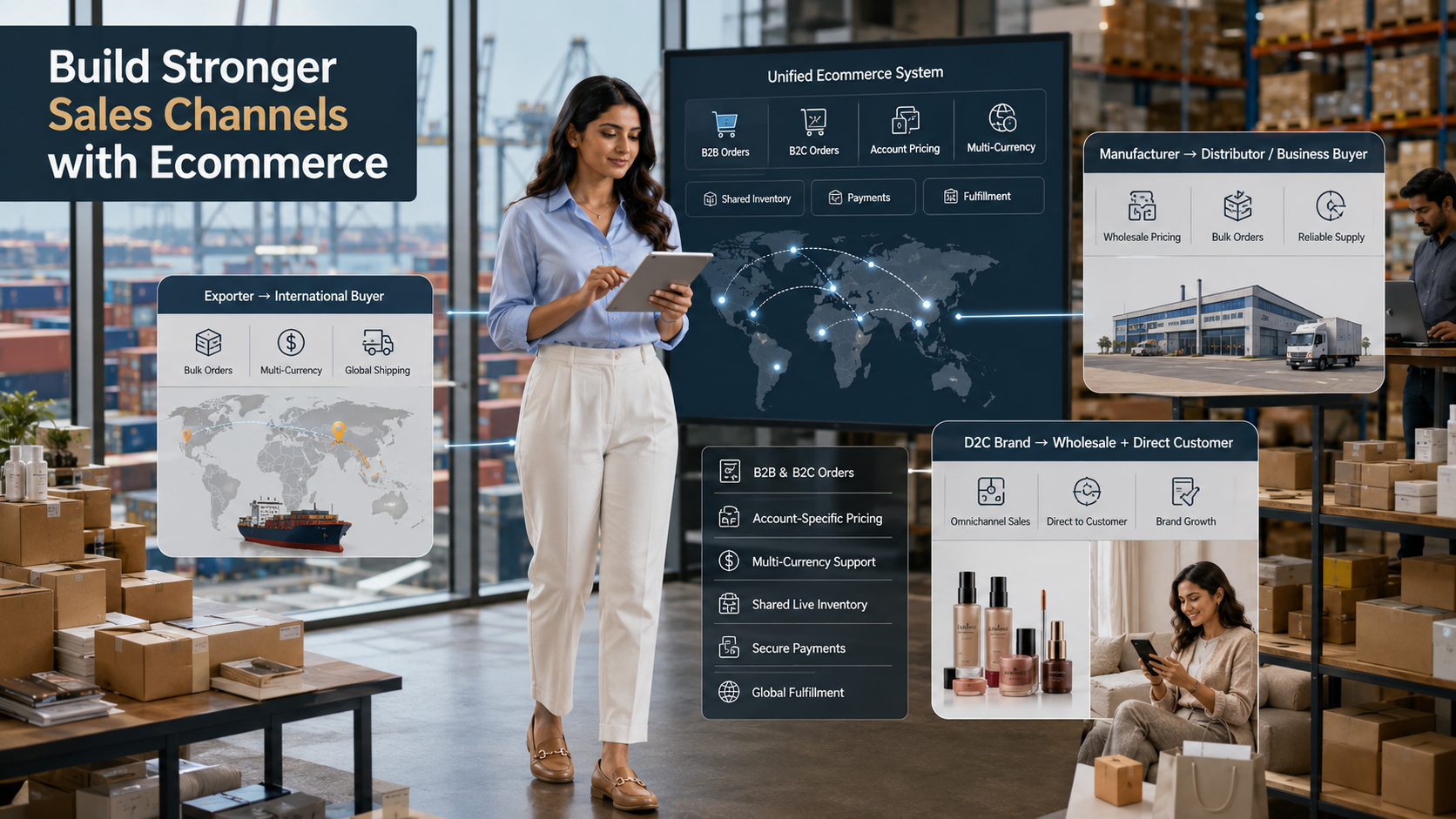
The benefits look a little different depending on where a business sits.
For exporters, going digital means reaching buyers in new countries without opening a local office. Multi-currency pricing, multiple languages, and region-based shipping rules make it possible to sell to a buyer in Dubai and a buyer in Berlin from the same storefront.
For manufacturers and distributors, the biggest shift is running B2B and B2C sales from a single system instead of two disconnected ones. A manufacturer might sell in bulk to distributors while also selling finished goods directly to consumers, and keeping both under one roof means inventory, payments, and fulfillment stay in sync instead of living in separate spreadsheets.
For D2C brands that are starting to attract wholesale interest, B2B ecommerce is often the next stage of growth. A brand that built its name direct-to-consumer eventually gets approached by boutique retailers wanting to stock its products in bulk, and having a B2B-ready storefront already in place means that opportunity doesn't get stuck in email threads and manual invoicing.
In each case, the underlying need is the same: fewer manual processes, accurate account-specific pricing, and a system that scales as order volume grows, rather than one that needs to be replaced the moment the business outgrows spreadsheets.
What Are the Benefits of Moving B2B Sales Online?
- Fewer errors in every order. When pricing and quantities are pulled automatically from a buyer's account instead of typed manually from a phone call, mistakes drop sharply.
- Faster reordering. A buyer who's ordered before can repeat that order in a couple of clicks instead of re-explaining requirements from scratch every time.
- Round-the-clock ordering. Business buyers aren't limited to a seller's working hours. A distributor in a different time zone can place an order at midnight and have it confirmed by morning.
- Lower cost per transaction. Self-service ordering means a sales team spends less time processing routine repeat orders and more time on relationships that actually need a human conversation.
- Clearer visibility for both sides. Buyers see live stock and order status without picking up the phone, and sellers get one view of demand across every account instead of guessing from scattered emails.
- Room to grow without adding headcount at the same rate. Once account-based pricing, automated invoicing, and inventory sync are in place, taking on new buyer accounts or entering a new region doesn't require hiring a proportional number of new staff.
- Access to markets that used to be out of reach. A business that once relied entirely on trade shows and local relationships can now take orders from a distributor on another continent, provided the platform handles currency conversion, region-based pricing, and cross-border B2B trade properly.
None of this happens automatically just by putting a catalog online. It depends on the platform actually being built for how business buyers order, not a retail checkout with a few extra fields bolted on.
How Do Businesses Market Their B2B Ecommerce Store?
Building the storefront is only half the job. Getting the right buyers to actually use it is the other half, and it works differently than consumer marketing.
Search visibility for very specific searches. Business buyers often search for exact part numbers, material specifications, or industry terms rather than broad category names. Ranking for those specific searches brings in buyers who already know what they want.
Direct outreach to named accounts. Unlike consumer marketing, which often targets a broad audience, B2B marketing frequently means reaching out to a known list of target companies and decision-makers directly, sometimes called account-based marketing, rather than casting a wide net.
Trade directories and B2B marketplaces . Listing your catalog on industry-specific directories or marketplaces puts it in front of buyers who are already searching with purchase intent, not browsing casually.
Email built around reordering, not discounts. Consumer email leans heavily on sales and promotions. B2B email tends to work better around restock reminders and account-specific updates, since the buyer already has a relationship with you and just needs a nudge at the right moment.
Case studies and referrals. Business buyers do their homework before committing to a new supplier, and a detailed case study from a similar business often does more convincing than any ad campaign.
None of this replaces having a good self-service storefront. It just makes sure the right buyers find it in the first place.
What Challenges Should You Expect When Switching to B2B Ecommerce?
Moving from manual processes to a digital storefront isn't without friction. Connecting the new system to existing accounting or inventory software takes real setup work, and it's worth getting right the first time rather than patching it together.
Sales teams sometimes resist self-service tools, worried that automation replaces the relationships they've built. In practice, the opposite tends to happen. Reps spend less time on routine reorders and more time on the accounts and deals that need real attention.
Setting up account-specific pricing correctly, especially for a business with many buyer tiers or regions, takes more planning than a standard retail price list.
Keeping stock accurate across multiple warehouses or fulfillment centers gets harder once bulk orders start arriving from several regions at once, and it needs real-time syncing rather than nightly updates.
None of these are reasons to avoid moving online. They're reasons to choose a platform that's actually built to handle B2B complexity from day one, instead of one that treats it as an add-on feature.
How Do You Choose the Right B2B Ecommerce Platform?
A few questions are worth asking before picking a platform.
Can it handle account-specific pricing and minimum order quantities without workarounds? Generic retail platforms often need extra plugins just to show different prices to different logged-in buyers, and that adds complexity instead of removing it.
Does it support selling beyond one country? If your buyers are spread across regions, look for multi-currency pricing, multi-language storefronts, region-based pricing, and support for international payment methods and shipping, not just a single checkout built for one market.
Can it run B2B and B2C together? Many manufacturers and distributors end up needing both, and running them on separate systems usually means duplicate inventory records and mismatched stock counts.
Does it integrate with the tools you already use for inventory, payments, and logistics? A platform that syncs orders automatically across multiple warehouses saves far more time than one that www.shopaccino.com/b2b-ecommerce-platformrequires manual double-entry.
What does it actually cost you per transaction? Some platforms take a cut of every sale on top of the subscription fee, which adds up quickly at B2B order volumes. A platform with zero transaction fees lets a business keep what it earns on every deal, which matters more as order sizes grow.
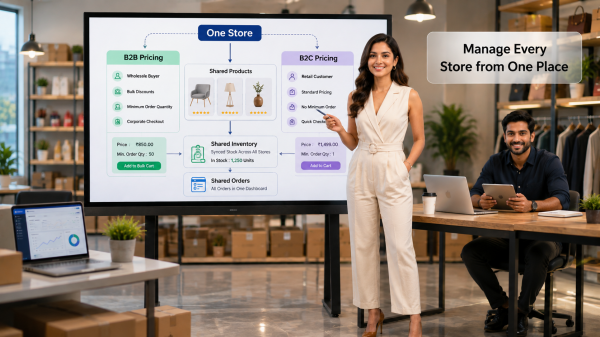
Shopaccino's B2B ecommerce platform was built around exactly this list, for exporters, manufacturers, distributors, and D2C brands that need B2B and B2C running from one system rather than two. It combines multi-currency and multi-language storefronts, region-based pricing, integrated inventory across multiple warehouses, and built-in automation for orders, payments, and logistics, all without taking a cut of every sale. For a business trying to sell the same catalog to a wholesale buyer in one country and a retail customer in another, that kind of setup removes a lot of the manual work that used to sit between a sale and a shipped order.
What's Next for B2B Ecommerce?
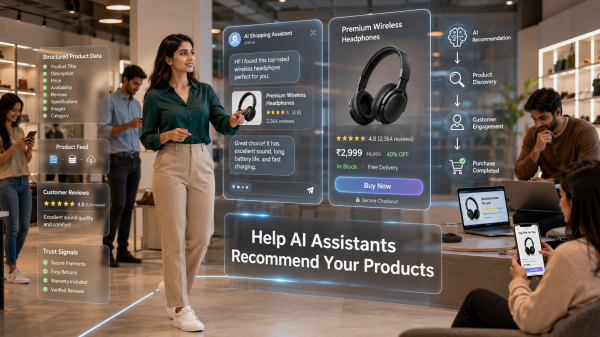
A few shifts are worth watching. Self-service ordering is becoming the default rather than the exception, with buyers increasingly expecting to check stock and place orders without waiting on a sales call. AI-assisted search and reorder suggestions are showing up on B2B storefronts the same way they've been common on consumer sites for years. Mobile ordering is growing too, both for buyers checking stock on the move and for field sales reps taking orders directly from a client visit. And cross-border trade keeps expanding, as smaller manufacturers and exporters realize they can reach international buyers without needing a local office or a distributor in every country.
None of these trends replace the fundamentals. They build on top of the same core need: businesses want to buy from other businesses the way they've gotten used to buying everything else, quickly, transparently, and without unnecessary back and forth.
Bringing It All Together
Strip away the jargon and business to business B2B ecommerce comes down to one thing: taking commerce between two companies that used to depend on phone calls, faxes, and manual paperwork, and giving both sides a faster, clearer way to transact.
Whether you're a manufacturer trying to serve both wholesale and retail buyers, a distributor managing hundreds of accounts, or a D2C brand fielding your first bulk order request, the shift online isn't just a technology upgrade. It's a different way of doing business, one where buyers help themselves, orders flow into your systems automatically, and growth doesn't mean hiring a new person for every new account.
If you're weighing your options, it's worth testing any B2B ecommerce platform against your actual order process, not just its feature list
FAQs
B2B ecommerce is the online buying and selling of goods or services between two businesses. Instead of a company calling or emailing a supplier, both sides use a digital platform to browse catalogs, agree on pricing, place orders, and handle payment, all without manual paperwork.
B2B involves business buyers, account-specific pricing, bulk orders, and often credit terms. B2C involves individual consumers, fixed retail pricing, and instant checkout. Many manufacturers now run both models from a single platform.
The main types include wholesale, manufacturer-to-business, distributor-to-business, B2B2C, B2B marketplaces, and recurring or subscription-based B2B sales. Most businesses use a mix rather than fitting into just one category.
Yes. Even a small manufacturer or exporter benefits from account-based pricing, automated order processing, and the ability to sell internationally without opening offices abroad. Platform costs have dropped enough that this is no longer limited to large enterprises.
No. Many B2B platforms support multi-currency pricing, multiple languages, and international payment and shipping options, which makes cross-border trade realistic for exporters and manufacturers selling to buyers in other countries.
Look for account-specific pricing, support for bulk and minimum order quantities, integration with your inventory and accounting systems, multi-currency and multi-language capability if you sell internationally, and transparent costs without high per-transaction fees.
B2B marketing often targets specific named accounts and decision-makers rather than a broad audience, relies more on case studies and trade directories, and uses email for reorder reminders rather than promotional discounts.
No. A new business typically needs a simple self-service storefront, while an established one needs automated pricing, multi-warehouse inventory sync, and personalization. Choose a platform that can grow through these stages without a full rebuild.